






.svg)
The political landscape of Bangladesh stands on the precipice of a historic transformation as Tarique Rahman, the Acting Chairman of the Bangladesh Nationalist Party (BNP), prepares for his monumental return to Dhaka. After nearly 18 years in exile, his homecoming on December 25 is not merely a personal milestone but a seismic shift in the nation’s democratic trajectory. As the eldest son of the late President Ziaur Rahman and three-time Prime Minister Begum Khaleda Zia, Rahman represents a bridge between a storied legacy and a modern, reformed future for the Bangladeshi people. However, as the capital braces for a turnout that could reach five million people, the shadows of history loom large, whispering a stern warning about the price of dynastic prominence.
During his nearly two decades in the United Kingdom, Rahman demonstrated a masterclass in tactical political management. Despite the geographical distance, he maintained a sophisticated, tech-savvy command over the BNP, ensuring the party remained a cohesive force against years of autocratic pressures. His ability to mobilize millions of grassroots activists via digital platforms and coordinate nationwide movements from London has solidified his reputation as a modern strategist. He transformed his exile into a period of intellectual fortification, preparing a comprehensive blueprint for a "Rainbow Nation" based on social justice, accountability, and economic stability.
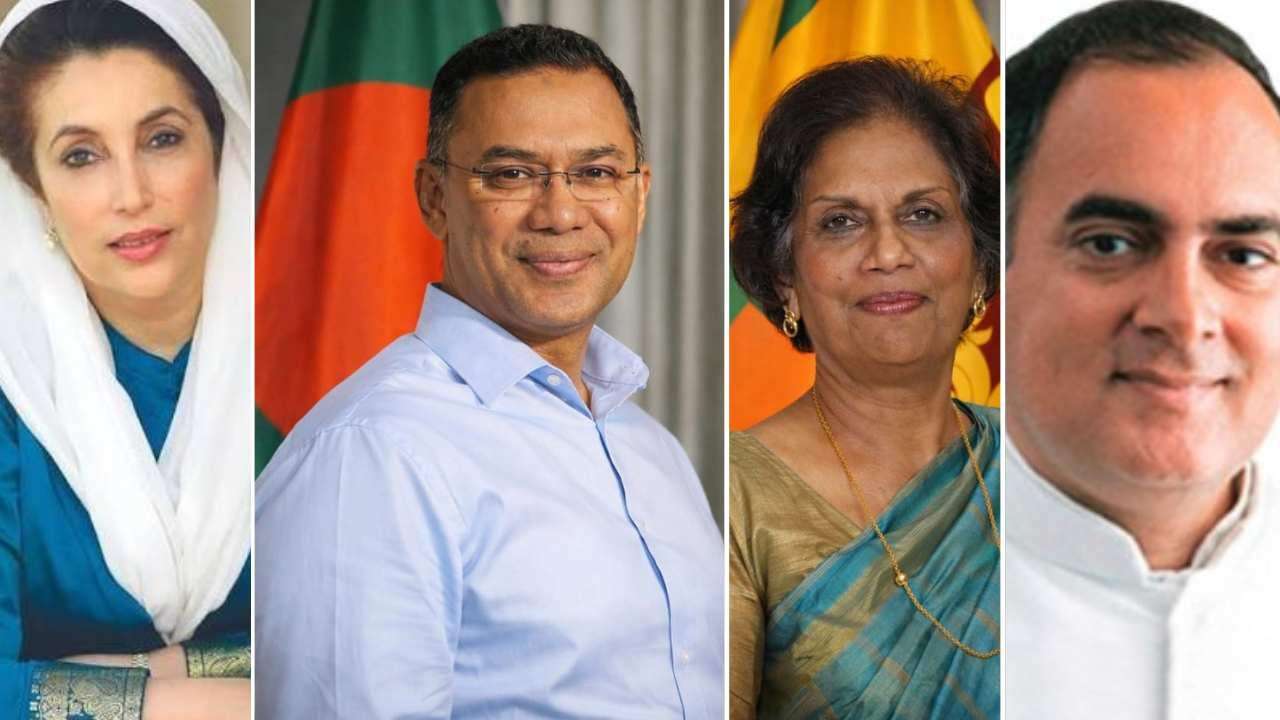
The world of global geopolitics offers rare parallels to Rahman’s unique position, most notably in the lives of Sri Lanka’s Chandrika Kumaratunga, Pakistan’s Benazir Bhutto, and India’s Rajiv Gandhi. Like Rahman, Kumaratunga was born into political royalty; her father, S.W.R.D. Bandaranaike, was Prime Minister, and her mother, Sirimavo Bandaranaike, was the world’s first female Prime Minister. Kumaratunga eventually rose to the Presidency, marking a rare historical instance of generational leadership. Similarly, Benazir Bhutto faced years of exile before returning to lead her nation after her father, Zulfikar Ali Bhutto, served as both President and Prime Minister. In neighboring India, Rajiv Gandhi followed a similar path, taking the mantle of leadership after his mother, Indira Gandhi, and grandfather, Jawaharlal Nehru, had both shaped the nation.
Yet, these parallels carry a dark underside. The tragedies of Benazir Bhutto and Rajiv Gandhi—both assassinated during the fervor of election campaigns—serve as a grim reminder of the volatility inherent in South Asian transitions of power. Security analysts and political observers emphasize that Rahman must be more careful than ever regarding his security protocols. The assassination of Bhutto in Rawalpindi was famously linked to severe security lapses and a failure to maintain a "sterile" perimeter around her vehicle. Similarly, the suicide bombing that claimed Rajiv Gandhi’s life underscored the danger of allowing unregulated public access during moments of high emotional intensity. As Rahman returns to a charged environment with a "double-layer" security cordon in place, the lessons from Rawalpindi and Sriperumbudur remain more relevant than ever.
The historical significance of this lineage is echoed in the political trajectory of Chandrika Kumaratunga. Born in 1945 to a family that defined Sri Lankan politics, Kumaratunga’s rise to the presidency after her parents both served as Prime Ministers remains a rare global phenomenon. If Tarique Rahman ascends to the premiership following the upcoming general elections on February 12, he will join this elite global club where both parents and the child have held the highest offices of state. Analysts suggest this is not merely about inheritance but reflects a deep-seated connection between a specific lineage and a national identity. Experts believe that such political successions represent a country's history of struggle and the continuity of leadership through generational shifts.
Related News: The US & Army Factor: Why Tarique Rahman is Barred from Returning to Bangladesh
From these icons, Rahman draws vital lessons. From Kumaratunga, he learns the art of navigating post-conflict reconciliation in a fractured society. From Benazir Bhutto, he draws the courage to face democratic challenges despite immense personal risk, while also inheriting the cautionary tale of her security failures. From the legacy of Rajiv Gandhi, he can learn the importance of balancing technological modernization with rural grassroots values. Analysts suggest that Rahman’s return will act as a massive catalyst for the BNP’s electoral machinery, galvanizing the youth vote. As Rahman steps back onto Bangladeshi soil, he brings the experience of a statesman who has observed global governance firsthand. The eyes of the international community are now firmly fixed on Dhaka, anticipating the dawn of a new chapter under a leader whose journey has been defined by struggle, strategy, and a heightened need for vigilance.








.jpeg)