





.svg)
The United Kingdom is currently grappling with what transport analysts describe as the busiest festive travel period in over a decade. As millions of Britons attempt to reach their destinations for Christmas, a "perfect storm" of record passenger volumes, critical infrastructure failures, and pre-planned engineering works has triggered widespread disruption across the nation's rail, road, and air networks.
Rail Networks Paralyzed by Signalling Issues
The final countdown to Christmas Day has been marred by significant disruption on the UK’s two primary rail arteries. On the East Coast Main Line, tens of thousands of passengers faced delays of over two hours on December 23 following a major signalling failure between York and Newcastle. While LNER has confirmed that tickets from yesterday are valid for travel today, the operator has moved to a reduced timetable, warns of severe overcrowding, and expects services to remain "exceptionally busy."
Simultaneously, the West Coast Main Line is suffering from a signalling fault at Rugby, causing significant cancellations for Avanti West Coast services between London Euston and Birmingham New Street. To mitigate the impact, ticket acceptance has been arranged with Chiltern Railways, but passengers are advised that many services will conclude much earlier than usual this evening.
Looking ahead, the post-Christmas period offers little relief. London Waterloo will close its doors from tonight until December 28, while the West Coast Main Line will see a total closure between Milton Keynes and Rugby until January 5 for junction replacements.
Road Chaos Peaks as Millions Hit the Tarmac
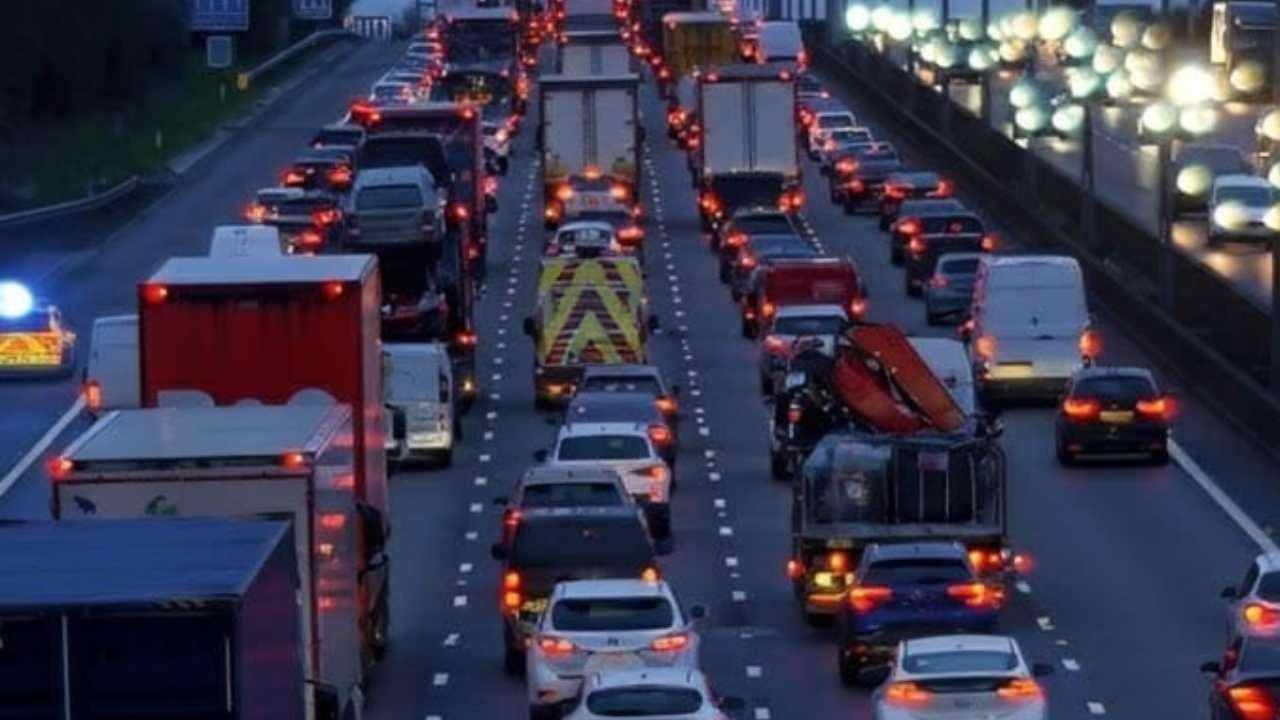
On the roads, the RAC reports that Christmas Eve is set to be the single busiest day for getaway travel since the pandemic. Approximately 4.2 million leisure journeys are expected today, converging with regular commuters and last-minute shoppers.
Traffic hotspots have become increasingly congested, particularly on the M25 near Heathrow and the M60 around Manchester’s Trafford Centre. Motorists in Hampshire face additional hurdles as the M27 has scheduled a full closure between junctions 9 and 11 starting at 8:00 PM tonight, a shutdown that will remain in place until the early hours of January 4. For those yet to depart, Christmas Day itself is predicted to be the quietest window for long-distance driving.
Aviation Records Shattered Amid Technical Glitches
UK airports are bracing for a record-breaking season, with over 7.8 million seats scheduled across the festive fortnight. However, technical issues have already caused significant distress for holidaymakers. EasyJet was forced to cancel a flight from Tenerife to Manchester due to a technical fault, while Delta and Qatar Airways have reported "knock-on" delays affecting transatlantic and long-haul passengers.
Heathrow remains the busiest hub, accounting for one in five UK departures. Despite the high volume, airline analysts note that Christmas Day will see nearly 900 flights—a 10% increase from last year and a definitive sign that festive travel has fully rebounded to pre-pandemic levels. Travelers are reminded to be vigilant regarding security rules, as items like snow globes and Christmas crackers continue to cause delays at checkpoints.
Maritime and Coach Alternatives
At the Port of Dover, officials are managing high volumes by rebooking passengers who miss their slots due to local traffic. The port will cease operations following the 3:05 PM P&O sailing today, reopening on Boxing Day. In Scotland, the CalMac ferry network has been forced to cancel several Oban to Mull sailings due to technical problems, adding to the frustration of island residents.
In contrast, coach operators National Express and Flixbus have added thousands of extra seats to their schedules. These services are proving to be a vital lifeline for those affected by rail closures, as they will continue to operate a significant number of routes on Christmas Day and Boxing Day when the rail network is almost entirely dormant.
As the UK moves into the heart of the holiday, the message from transport authorities is clear: check your connections until the moment you depart and allow for significantly more time than usual to reach your destination.