






.svg)
The United Kingdom is preparing for a landmark shift in its legal and economic landscape as 2026 approaches. From a fundamental overhaul of workplace protections to significant digital transformations at the border, the coming year will bring a series of legislative updates that impact every household, business, and traveler. As the government moves forward with its mission to modernize the economy and strengthen social security, staying informed on these statutory deadlines is essential for legal compliance and financial planning.
The Great Workplace Overhaul: Employment Rights and Wages
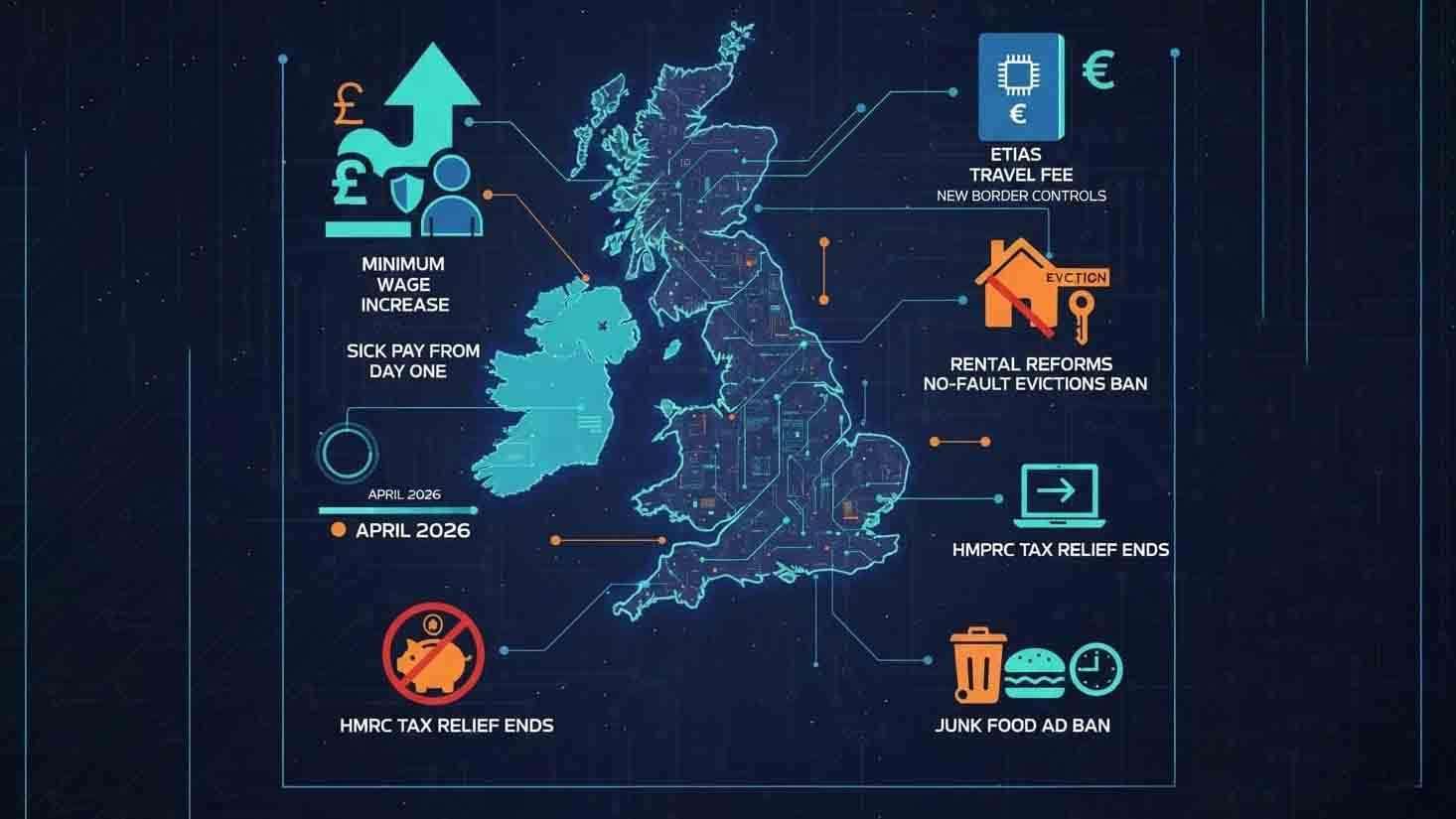
The most significant legislative milestone of the year is the implementation of the Employment Rights Bill. Passed by Parliament at the end of 2025, this Act introduces protections that experts describe as the biggest upgrade to workers' rights in a generation. Starting in April 2026, Statutory Sick Pay will undergo a radical transformation. The current three-day waiting period will be abolished, granting workers the right to sick pay from their very first day of illness. Simultaneously, the lower earnings limit will be removed, extending these benefits to the lowest-paid members of the workforce.
Family leave rights are also receiving a substantial boost. Both paternity leave and unpaid parental leave will become "day-one" rights, meaning employees no longer need to meet a minimum length of service to qualify. To keep pace with inflation, statutory family pay rates—including maternity and adoption pay—are scheduled to rise to £194.32 per week.
Wage increases will further define the spring period. The National Living Wage for those aged 21 and over is set to rise by 4.1 percent, reaching £12.71 per hour. Younger workers will see even more significant percentage gains as the government moves toward a "single adult rate," with 18-to-20-year-olds receiving a hike to £10.85 per hour.
By October 2026, the second phase of the Bill will take effect, targeting controversial corporate practices. The legal loophole allowing "fire and rehire" tactics will be virtually closed, making it automatically unfair to dismiss staff simply to reintroduce them on inferior contracts. Additionally, the Fair Work Agency will launch as a new unified enforcement body to ensure these holiday pay and minimum wage standards are strictly upheld across all sectors.
HMRC Adjustments and New DWP Enforcement Powers
Taxation and benefits will see a tightening of rules in 2026. After years of temporary measures following the pandemic, HMRC will officially abolish the tax relief for individuals working from home starting April 6. This means the fixed-rate deduction of £6 per week will no longer be available, resulting in a modest but noticeable tax increase for approximately 300,000 remote workers.
The Department for Work and Pensions is also set to debut "modern fraud prevention powers." New legislation allows the DWP to work directly with banks to identify overpayments and instances of benefit fraud. Crucially, these powers include the ability for debt collectors to withdraw money directly from the bank accounts of those who have been found to owe welfare debts but refuse to pay. In extreme cases of non-compliance, the government may even seek court orders to suspend driving licenses for debts exceeding £1,000.
A New Era for UK Immigration and European Travel
International travel will become more digital and more expensive in 2026. For those arriving in Britain, the Electronic Travel Authorisation (ETA) scheme will be fully operational by February. This mandates that visitors from 85 nationalities—including the US, Canada, and various European nations—must obtain digital permission to enter the UK at a cost of £16.
Conversely, British citizens traveling to the Schengen Area will face two distinct hurdles. The Entry-Exit System (EES), which requires fingerprinting and facial scans at the border, will complete its rollout by April. Following this, the European Travel Information and Authorisation System (ETIAS) is expected to launch in the final quarter of 2026. This will introduce a €7 (approximately £17) fee for most adult travelers, acting as a pre-travel authorization valid for three years.
Housing Reform and the End of No-Fault Evictions
The rental market is poised for its most significant change in decades starting May 1, 2026. The ban on Section 21 "no-fault" evictions will finally come into force, providing 11 million tenants with greater long-term security. All new and existing tenancies will shift to periodic monthly agreements, ending the era of fixed-term contracts that often locked tenants into unsuitable conditions.
Landlords will also face new restrictions on "bidding wars," as they will be legally required to stick to the advertised rent price. Furthermore, the government is preparing to launch a new digital Landlord Register toward the end of the year, alongside a private landlord ombudsman designed to resolve disputes without the need for expensive court proceedings.
Public Health and Environmental Mandates
2026 will also see the government take a firmer stance on public health and waste management. A long-awaited ban on junk food advertising before 9:00 PM will hit television screens and online platforms in January, aimed at reducing childhood obesity. This will be paired with a proposed ban on the sale of high-caffeine energy drinks to children under 16, which is currently undergoing final legislative review.
On the environmental front, the "Simpler Recycling" regulations will require all English local authorities to collect four distinct categories of waste—food, garden waste, paper/cardboard, and dry recyclables—from March 31. This will likely result in a "four-bin" system for many households that previously had commingled collections.
Finally, the live events industry will see a major crackdown on ticket touts. New laws are set to make it illegal to resell tickets for concerts, sports, or theater above their original face value, a move the government estimates will save British consumers over £112 million annually.