




.svg)
The high-speed rail link between the United Kingdom and mainland Europe has finally flickered back to life this afternoon, Tuesday, December 30, 2025, following a grueling day of total paralysis. Engineering teams successfully cleared a failed Le Shuttle train and restored power to the overhead lines that had been dormant since a major electrical fault struck overnight. While the first Eurostar services began moving just after 4:00 PM GMT—starting with the 3:04 PM departure from London to Brussels—the atmosphere at major terminals remains one of exhausted frustration rather than relief.
The Major Point: Resumption Amidst a "Postpone Travel" Mandate
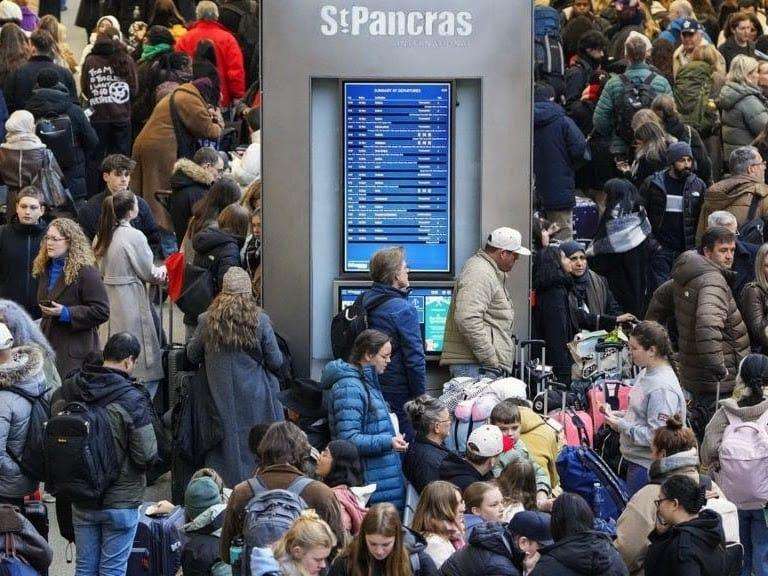
Despite the partial restoration of the undersea route, Eurostar officials have taken the extraordinary step of urging all passengers to postpone their journeys if at all possible. The operator has made it clear that while the tunnel is technically open, the schedule is in a state of total disarray. Out of the sixteen originally planned departures from London to Paris today, only two evening services are expected to actually leave the platform. The ripple effect of today’s blackout means that even the trains that do run are subject to extreme delays and the threat of last-minute cancellation. At St Pancras International, departure boards remain a sea of red text, and staff are actively advising travelers to return home rather than wait in the increasingly overcrowded station.
Read Also: Channel Tunnel Power Collapse: Eurostar Grounded Amid Holiday Travel Chaos
The human cost of this infrastructure failure is becoming visible as the "travel trip of a lifetime" turns into a logistical nightmare for thousands. From a Mexican family whose long-planned holiday is now in jeopardy to couples celebrating milestone anniversaries stranded at Gare du Nord, the disruption has struck at the peak of the New Year’s Eve travel rush. For those who choose to abandon their plans, Eurostar has activated an emergency refund and exchange policy, offering full cash refunds or free rebookings for up to three months. However, with many alternative services—including cross-channel ferries and regional flights—already reaching maximum capacity, the path home remains uncertain for many.
Conditions at the vehicle terminals in Folkestone and Calais are equally challenging. Le Shuttle has reported that while crossings have resumed, the backlog of cars and freight has created waiting times exceeding six hours. Drivers are currently trapped in ten-lane queues with limited access to facilities, as the port’s holding areas are pushed to their absolute limits. As the sun sets on one of the most disruptive days in the tunnel's recent history, the focus shifts to whether the network can stabilize in time for the final New Year's Eve departures tomorrow, or if the "undersea gridlock" will haunt travelers into the start of 2026.