





.svg)
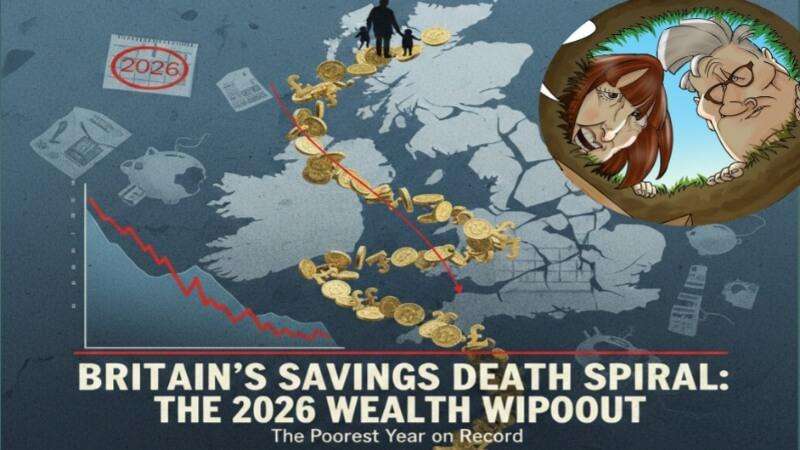
As the UK enters 2026, the promise of economic renewal is being overshadowed by a stark reality for the nation's most vulnerable households. Despite government pledges to stabilize the economy, the latest fiscal data confirms that the poorest families in Britain have seen their financial security erode at the fastest rate in decades, Daily Dazzling Dawn realized.
The Erosion of British Living Standards-The decline in UK living standards is not a sudden tremor but the result of a decade-long stagnation compounded by recent policy shifts. Data from the Office for National Statistics (ONS) and the Office for Budget Responsibility (OBR) indicates that real household disposable income is projected to grow by a mere 0.6% in 2026, following a period where typical UK incomes actually fell by 2% when adjusted for purchasing power. This represents the worst outcome for living standards of any parliament since records began in 1961. The "why" behind this decline is a cocktail of structural issues: wages have failed to keep pace with a cumulative 20% rise in the cost of essentials over the last four years, while the continued freeze on income tax thresholds—set to last until 2031—is dragging middle and low-income earners into higher tax brackets. Even as inflation settled at 3.8% in late 2025, the legacy of the "cost of living crisis" means that lower-income families are effectively running to stand still, with their spare cash shrinking by 2.1% since July 2024.
The Vanishing Safety Net: Why Savings Are Tanking-The average UK household is now finding it nearly impossible to maintain a "rainy day" fund, with the household savings ratio dropping to 9.5% in the third quarter of 2025. This decline is driven by the necessity of "dissaving"—the act of dipping into existing pots to cover monthly bills. Approximately 46% of all UK households report they are saving significantly less than they did two years ago, while one in six adults now has no savings at all. For those in the bottom income quintile, this figure rises to 55%. The primary driver is the "essentials squeeze," where the cost of housing, energy, and food has absorbed the surplus that previously went into ISAs and high-interest accounts. Furthermore, as the Bank of England began cutting interest rates in late 2025, the incentive and the return on cash savings have diminished, leaving many to feel that their hard-earned money is being eroded by persistent service-sector inflation.
Ethnic Wealth Disparities and the Savings Gap-New analysis of the UK’s financial landscape reveals a profound disparity in how different ethnic communities are weathering the economic storm. Indian and White British households currently hold the highest levels of financial resilience. Indian households lead with a median net financial wealth of approximately £9,100, followed closely by White British households at £8,900. At the opposite end of the spectrum, the Black African community reports the lowest median savings, with some data points showing as little as £100 in liquid assets. Bangladeshi and Pakistani households also face significant challenges, with wealth levels often sitting at just 10% to 50% of the White British average. These groups are also twice as likely to opt out of workplace pension schemes due to immediate cash flow pressures, a trend that experts warn will lead to a long-term retirement poverty crisis within these specific communities.
A Nation Divided by Discretionary Income-The gap between the "haves" and "have-nots" has reached a new peak in 2026. While the most affluent households saw their discretionary income—the money left over after essentials—climb by 10.3% over the last 18 months, the bottom 20% of the population saw theirs vanish. The Centre for Policy Studies (CPS) notes that the current tax regime means a worker earning £50,000 will be £505 worse off in real terms by the end of the decade despite nominal pay rises. As political figures like Nigel Farage and Jeremy Corbyn prepare for a fierce battle in the May local elections, the government faces a daunting task: proving that its "growth mission" can reach the kitchen tables of the millions who currently feel worse off than their parents were at the same age.