





.svg)
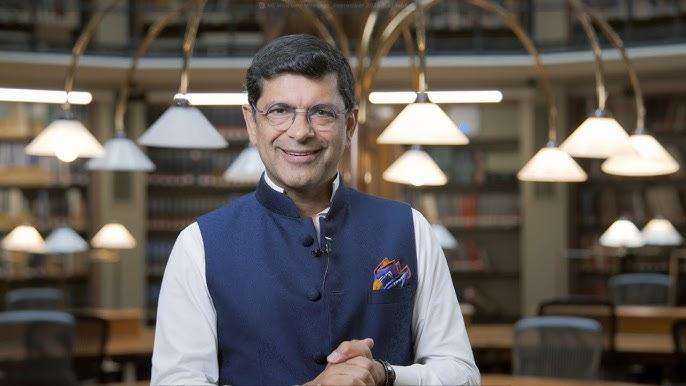
The UK is facing an oversupply of university graduates, and students should no longer assume that earning a degree will automatically lead to upward social mobility, according to Prof Shitij Kapur, Vice-Chancellor of King’s College London.
Kapur argued that universities can no longer guarantee strong job prospects for graduates, especially now that almost half of young people go into higher education. He said a degree should now be viewed more as a “visa” rather than a “passport” to social mobility—offering opportunity, but no certainty—amid falling graduate wage advantages, economic stagnation, global competition, and the rise of artificial intelligence.
He noted that competition for graduate jobs is not driven solely by AI, but also by weak economic growth and the sheer number of graduates. As a result, the value of a degree increasingly depends on factors such as the institution attended and the subject studied.
Kapur reflected that university education was once widely seen as a guaranteed route to social advancement. Today, however, it merely provides a chance at that advancement, with no assurance of success.
The debate over the value of degrees has intensified in recent years. In 2025, Labour leader Keir Starmer rejected the long-standing goal of having 50% of young people attend university, a target first set by Tony Blair in 1999. This echoed earlier criticism by former Prime Minister Rishi Sunak, who described the target as a misguided aspiration.
Kapur pointed to the work of sociologist Martin Trow, who predicted decades ago that mass participation in higher education would reduce the prestige and financial rewards associated with degrees. As university education shifts from an elite privilege to a common necessity, social esteem for graduates declines and the wage premium diminishes.
According to Kapur, the UK has now reached this stage. Although government data still shows graduates earning more and having higher employment rates than non-graduates, younger graduates’ real wages have barely improved over the past decade. He linked this stagnation to weak economic growth and the introduction of £9,000 tuition fees and student loans in 2012, calling it a poorly timed policy shift.
Kapur previously described UK higher education as caught in a “triangle of sadness” involving indebted students, underfunded universities, and overworked staff. He now believes the situation has worsened, with tuition fees frozen at levels that fail to cover teaching costs.
Despite these challenges, Kapur insists UK universities remain world leaders, partly due to higher fees paid by international students. These fees support research excellence and help maintain strong global rankings, which in turn benefit domestic students through better teaching and broader course options.
However, tighter immigration policies, restrictions on international student visas, and proposed levies on overseas student fees threaten this model. Kapur warned that international students are not a luxury but a vital component of the UK higher education system, contributing both to universities and the wider economy.
He cautioned policymakers that undermining universities could further damage productivity, stressing that economic renewal will not come from low-skilled service jobs, but from sustained investment in education and research.
“It will only turn around if we are able to ride the new wave of technology better than others, that we are the makers and not the takers of the next technological revolution, and universities will have a central role in doing that.”