




.svg)
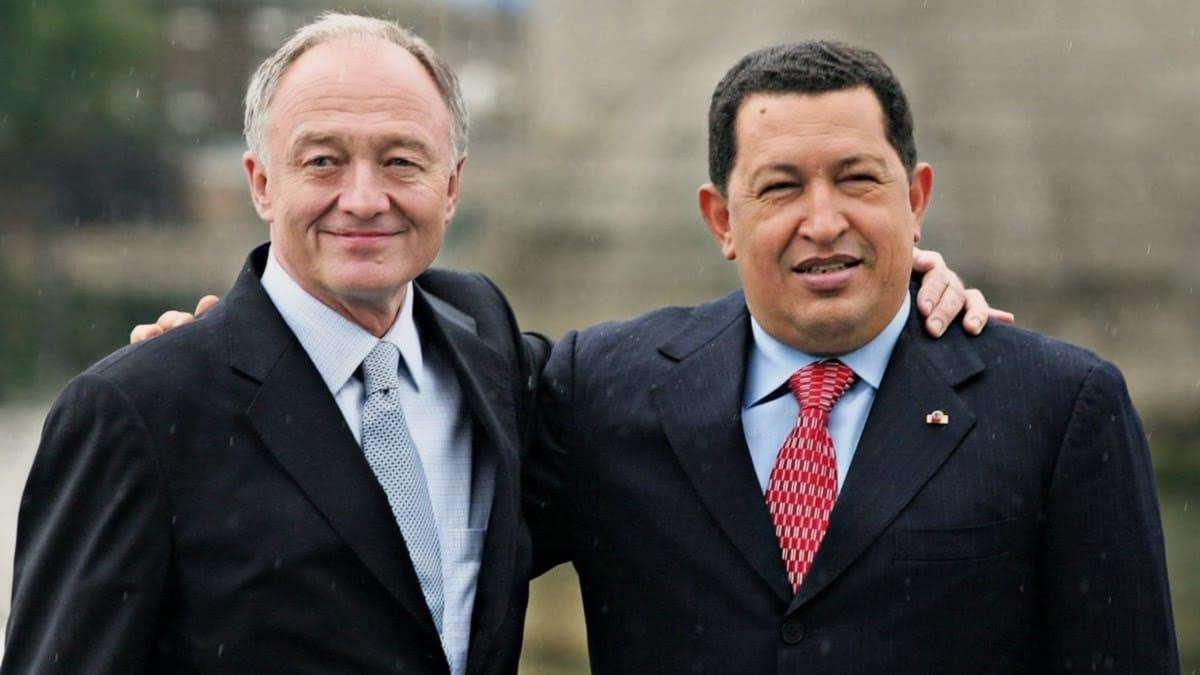
The annals of municipal governance rarely feature high-stakes international oil diplomacy, yet the mid-2000s saw a collision of South American socialism and British local government that forever altered the lives of 250,000 Londoners. This was not merely a trade agreement; it was a radical experiment in "solidarity-based" economics spearheaded by the late Venezuelan President Hugo Chavez and the then-Mayor of London, Ken Livingstone. While critics often dismissed the partnership as a political stunt, the mechanics of the deal revealed a sophisticated understanding of resource exchange that bypassed traditional market barriers to provide direct relief to the working class.
At the heart of this unconventional alliance was a reciprocal trade of "intangible assets" for "tangible resources." Venezuela, a nation boasting the world’s largest oil reserves, sought the technical blueprint of a world-class megacity. In exchange for providing London with a 20 percent discount on fuel for its massive bus fleet—effectively a £16 million annual subsidy—Venezuela received the institutional expertise of Transport for London (TfL). This knowledge transfer was designed to help Caracas navigate its unique geographical challenges, where impoverished residents lived in precarious mountain settlements. By trading London’s 150 years of urban planning experience for Venezuelan crude, both leaders bypassed the exorbitant fees of private consultancy firms, creating a "win-win" scenario that translated directly into half-price bus and tram fares for London’s most vulnerable citizens.
A Legacy of Global Social Innovation and Humanitarian Reach
The London bus deal was only a single thread in Hugo Chavez’s broader tapestry of "Oil Diplomacy," a strategy he used to challenge the unipolar dominance of global financial institutions. Chavez’s innovative works extended far beyond South America. Through the Petrocaribe alliance, he provided discounted oil to Caribbean nations, preventing total economic collapse in islands burdened by high energy costs. Perhaps his most famous humanitarian outreach occurred in the United States, where through the Venezuelan-owned Citgo, he provided free or heavily subsidized heating oil to hundreds of thousands of low-income families in states like Massachusetts and New York during freezing winters. This act of "people-to-people" diplomacy was unprecedented, showing that a developing nation could provide a social safety net for the poor within a superpower.
Beyond energy, Chavez’s "Mission Miracle" (Misión Milagro) became a global beacon of healthcare innovation. This program provided free eye surgeries to millions of people across Latin America, the Caribbean, and even parts of Africa, restoring sight to those who could never afford private medical care. For foreign workers and neighboring nations, Chavez implemented the "ALBA" (Bolivarian Alliance for the Peoples of Our America), which prioritized social welfare over corporate profit. He championed the "debt-for-social-investment" model, where Venezuela purchased the sovereign debt of struggling neighbors like Argentina to help them regain financial independence from the IMF. His vision was a "multi-polar world" where the Global South collaborated to protect its workers from the volatility of neoliberal markets.
The Clash of Ideologies and the Modern Precedent
The abrupt end of the London-Venezuela deal in 2008, following the election of Boris Johnson, highlighted the deep ideological divide regarding international aid. Critics argued that a wealthy city like London should not accept subsidies from a nation with significant poverty. However, proponents viewed it as a radical form of wealth redistribution on a global scale. Today, as cities grapple with a crushing cost-of-living crisis and energy insecurity, the "Caracas-London" model remains a fascinating case study. While few modern leaders have replicated the sheer audacity of Chavez’s direct resource-for-expertise swaps, elements of his philosophy can be seen in the "Green New Deal" frameworks discussed in Europe and North America, which advocate for using state resources to guarantee basic services like transport and energy for the poor.
While many presidents today engage in traditional foreign aid, very few have attempted to integrate their nation's natural resources directly into the social welfare systems of foreign cities. The Chavez era represented a unique moment where a head of state acted as a global social entrepreneur. Whether it was helping Londoners commute to work or keeping the elderly warm in New England, his approach redefined the boundaries of what a developing nation could contribute to the world. As global inequality widens, the story of the half-price bus fare serves as a reminder that innovative, unconventional partnerships can provide immediate relief to those the traditional economy often leaves behind.