


.svg)
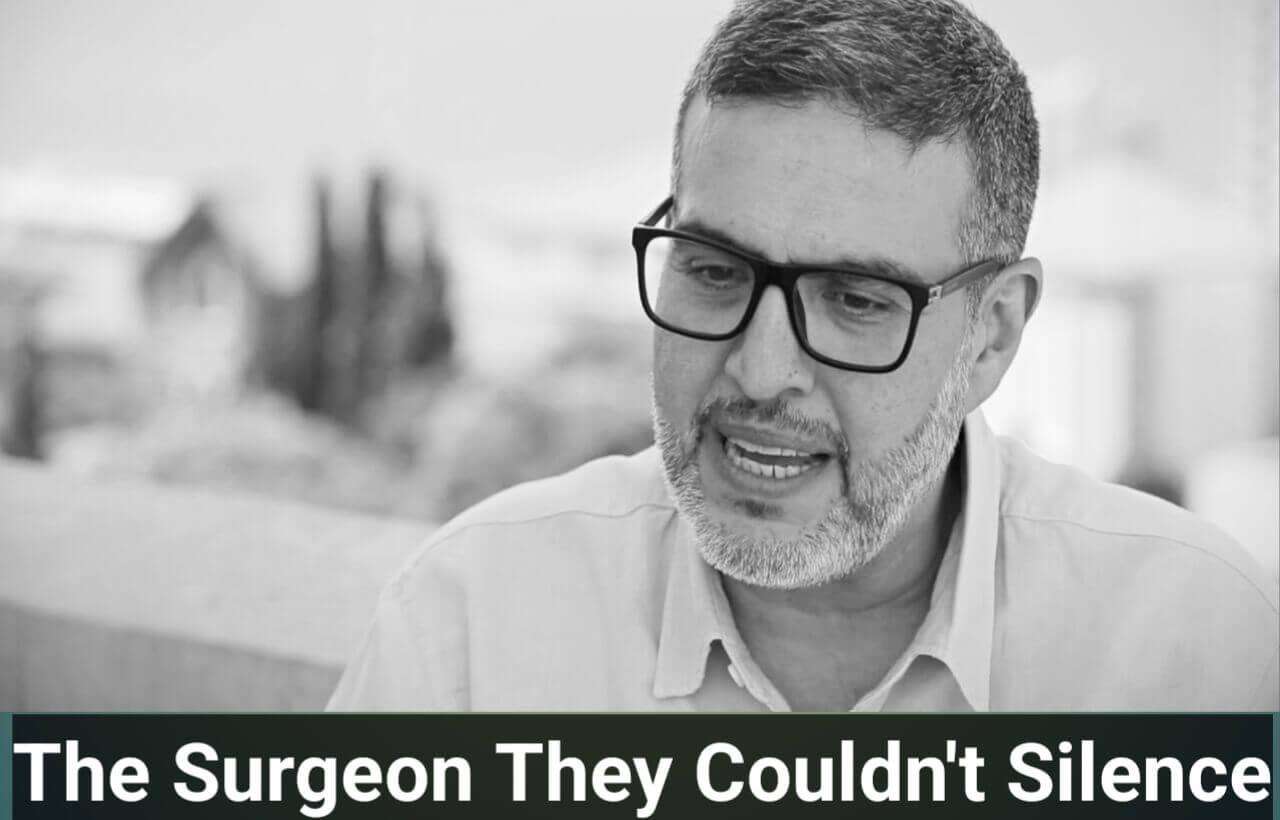
The global medical community is closely watching a landmark case in Manchester as Dr. Ghassan Abu-Sitta, the world-renowned British-Palestinian plastic surgeon and elected Rector of the University of Glasgow, defends his right to speak on the Palestinian struggle. The fitness-to-practice hearing before the Medical Practitioners Tribunal Service (MPTS) has become a focal point for the debate over freedom of expression, with supporters arguing that the attempt to sanction Dr. Abu-Sitta is a politically motivated effort to silence one of the most prominent witnesses to the humanitarian crisis in Gaza, Daily Dazzling Dawn realized.
A Career Defined by Healing and Humanity-Dr. Ghassan Abu-Sitta’s journey is one of immense professional achievement and tireless service. Born in 1969 in Kuwait to a Palestinian father and a Lebanese mother, he belongs to a family displaced during the 1948 Nakba. This history of displacement fueled a lifelong commitment to conflict medicine. After arriving in the UK in 1988, he earned his medical degree from the University of Glasgow in 1993. His postgraduate career is a testament to excellence, featuring specialized fellowships in craniofacial surgery and trauma reconstruction at prestigious institutions like Great Ormond Street Hospital and the Royal London Hospital.
Throughout his career, Dr. Abu-Sitta has been a pioneer in "Conflict Medicine," a field he helped formalize as a founding director of the Conflict Medicine Program at the American University of Beirut. He has served on the front lines of numerous conflicts, including in Yemen, Iraq, Syria, and Lebanon. However, it was his work at Gaza’s Al-Ahli and Al-Shifa hospitals during the 2023 bombardment that turned him into a global figure. Working 16-hour days under siege, often performing surgeries without anesthesia, he became a primary source for the world’s media, documenting the catastrophic toll on civilians and healthcare infrastructure.
The Battle for Freedom of Speech-The current tribunal centers on social media posts and an article from 2018, which critics allege demonstrate support for prohibited groups. However, Dr. Abu-Sitta’s legal team and a growing chorus of advocates argue that these charges are a "dog-whistle" used to racialise Palestinian identity. His defense emphasizes that the comments were "intellectually and culturally interesting" observations on Arab political discourse rather than an endorsement of violence. They argue that interpreting professional concern for his people as "misconduct" sets a dangerous precedent that could penalize any doctor for speaking out against human rights abuses.
Supporters point to a significant legal victory in Germany as a harbinger for the current case. In late 2025, German courts ruled that authorities acted unlawfully when they previously barred Dr. Abu-Sitta from entering the country to speak at a conference. The court found no evidence that his participation posed a threat to public order, reinforcing the principle that political speech regarding Palestine is protected under international law. In Glasgow, his landslide election as Rector—securing 80% of the vote—shows that the student body views him not as a controversial figure, but as a moral leader who represents their commitment to justice and divestment from the arms trade.
Protecting the Voice of the Marginalized-The hearing has sparked a wider conversation about the "racial profiling" of Palestinian professionals in the West. Dr. Abu-Sitta has expressed that the complaints against him are part of a coordinated effort to "destroy his life" and drain him mentally and economically. His supporters argue that the Medical Practitioners Tribunal should not be used as a tool for political censorship. They maintain that a surgeon who has dedicated his life to reconstructing the shattered bodies of children in war zones should be celebrated for his ethics, not persecuted for his heritage or his advocacy for his people’s freedom.
As the proceedings continue, the outcome will likely define the boundaries of professional conduct for medical practitioners who are also political activists. For Dr. Abu-Sitta, the mission remains clear: healing the wounds of war and ensuring that the voice of the Palestinian people is heard in the halls of academia and beyond. His supporters remain firm that supporting Palestine is not a crime—it is a fundamental expression of human rights and the very essence of the "humanism" he has been honored for throughout his storied career.