





.svg)
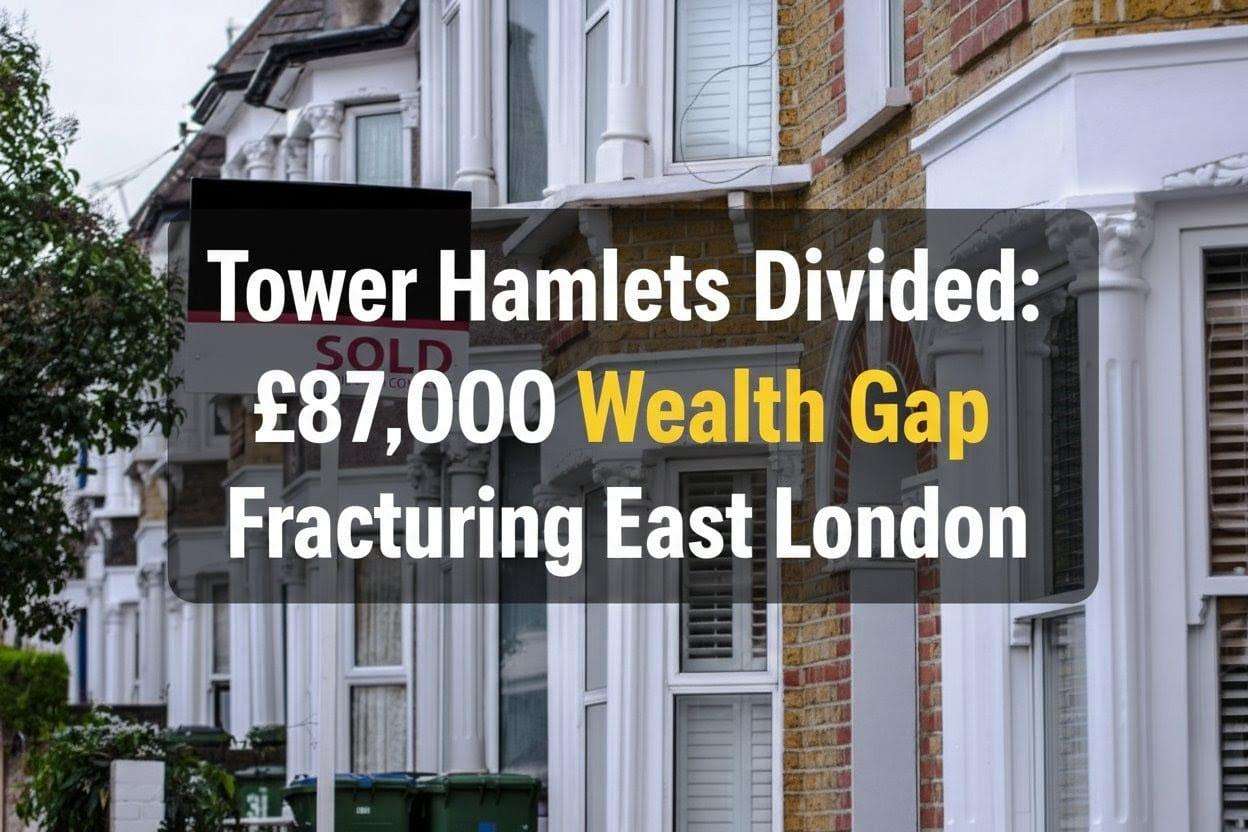
The latest financial data from the Office for National Statistics has pulled back the curtain on a dramatic and widening economic schism in the heart of East London. Tower Hamlets now serves as the national epicenter for income inequality, playing host to both the wealthiest and some of the most financially strained households in the United Kingdom. While the glistening riverside developments of Leamouth have ascended to the top of the national earnings league, the traditional heartlands of the British Bangladeshi community in Shadwell and Poplar remain locked in a cycle of stagnant disposable income, highlighting a stark ethnic and religious divide in the shadow of Canary Wharf.
The Rise of the Leamouth Elite and the Professional Shift
In the financial year ending 2023, Leamouth emerged as the UK’s wealthiest neighbourhood, boasting an average annual disposable income of £107,600 after tax. This represents a surge driven largely by high-density, luxury residential towers that cater to young, secular, and high-earning professionals working in the financial and technology sectors. This demographic, often aged between 25 and 40, stands in sharp contrast to the broader borough average. The influx of global capital into these "island" communities has created a localized economy where the spending power of a single household in Leamouth now exceeds that of five households in the country’s poorest regions.
Economic Hardship in the British Bangladeshi Heartlands
Directly adjacent to this extreme wealth, the British Bangladeshi community—which makes up approximately 34.6% of the Tower Hamlets population—faces a vastly different reality. In Shadwell North, the average disposable income sits at a modest £33,800. The disparity is even more pronounced in Poplar Central, where income averages £35,000, nearly three times less than neighbouring Leamouth. These areas are characterized by larger multi-generational households and a higher concentration of Muslim residents. Statistics show that the British Bangladeshi community continues to face systemic hurdles, including a higher reliance on the service and transport sectors, which have seen slower wage growth compared to the corporate sectors fueling the Leamouth boom.
Religion Age and the Widening Opportunity Chasm
The widening gap is not merely a matter of geography but is deeply rooted in age and community infrastructure. While the high-earners in the riverside wards are predominantly younger, single-occupancy or dual-income-no-kid households, the lower-earning wards like Shadwell and Stepney feature a younger median age within the British Bangladeshi community but a higher "dependency ratio" due to larger family sizes. Younger members of the Muslim community in these areas are increasingly attaining higher education, yet the "class ceiling" and the high cost of local living mean that disposable income remains trapped. Nationally, the gap between the richest and poorest neighbourhoods has ballooned by 73% in just three years, but in Tower Hamlets, this is felt most acutely as a cultural and religious divide, where the mosque-going community in the west of the borough navigates a completely different economic world than the high-rise residents to the east.
A Borough of Two Tales as the Income Gap Peaks
Tower Hamlets now holds the unenviable title of having the largest internal income gap of any local authority in Britain. The £73,800 difference between Shadwell North and Leamouth is more than just a statistic; it represents a failure of "trickle-down" economics in one of the world's most successful financial hubs. While 45% of London neighbourhoods now sit in the top 10% of national earners, the concentration of this wealth in specific ethnic and social enclaves suggests that the British Bangladeshi community is being squeezed out of the very prosperity they helped build in the East End. As the cost of living remains high into 2026, the pressure on lower-earning ethnic minority households continues to mount, even as their neighbours across the street reach record levels of affluence.


.jpg)