






.svg)
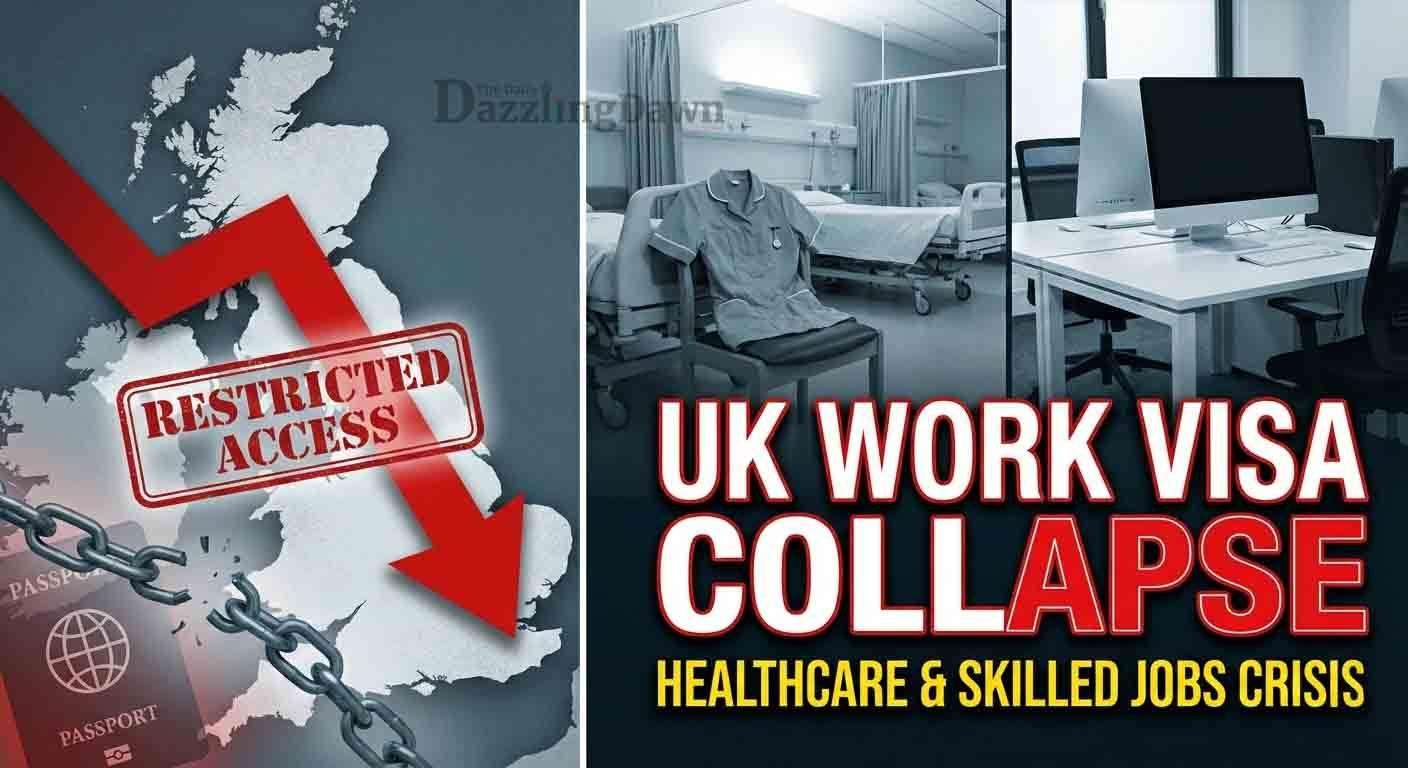
New Home Office figures released this January reveal a staggering decline in the number of foreign nationals seeking to work in the United Kingdom, as the government’s aggressive strategy to slash net migration takes a visible toll on the healthcare and professional sectors. In a year defined by sweeping policy shifts, the data confirms that applications for Health and Care Worker visas have plummeted by over 50%, sparking urgent warnings from industry leaders about a looming staffing catastrophe.
The statistics paint a stark picture of a changing Britain. Total visa applications across all categories fell to 737,100 in 2025, a 42% collapse from the 1.26 million seen just two years prior. This decline is largely attributed to a "pincer movement" of policies enacted by both the previous Conservative administration and the current Labour government, aimed at ending the UK's reliance on "cheap overseas labour."
The Great Healthcare Exodus: Recruitment Grinds to a Halt
The most dramatic fallout is visible within the NHS and social care sectors. In 2025, only 61,000 people applied for Health and Care Worker visas, including dependants—a 51% drop from 123,300 in 2024. When compared to the 2023 peak of 382,700, the trajectory represents an 84% decline in interest.
The collapse follows a series of controversial July 2025 reforms, including a total ban on overseas recruitment for lower-skilled care workers and the removal of the right for care staff to bring family members to the UK. While Migration Minister Mike Tapp hailed the figures as proof that the government is "restoring order to a broken system," the Royal College of Nursing (RCN) has warned that nearly 50,000 nursing staff could eventually leave the UK due to the increasingly hostile immigration environment.
Skilled Workers Priced Out by Salary Hikes
The professional sector has not been spared. Applications for Skilled Worker visas fell 36% year-on-year, dropping from 132,700 to 85,500. This shift coincides with the July 2025 decision to raise the minimum salary threshold for most skilled roles from £38,700 to a staggering £41,700.
Critics argue these thresholds are out of step with regional market rates, effectively "pricing out" essential medium-skilled roles in engineering, data analysis, and construction. For those already in the country, the pressure is mounting; the government has recently proposed doubling the time required to qualify for Indefinite Leave to Remain (ILR) from five years to ten, while adding stringent new "A-level standard" English requirements and criminal record checks.
The Sponsorship Trap: When Companies Lose Their Licences
As the government ramps up enforcement, a secondary crisis is emerging for those already living and working in the UK: the loss of employer sponsorship. In the second quarter of 2025 alone, the Home Office suspended 869 sponsor licences and revoked 767 others—the highest numbers on record.
For a migrant worker, the revocation of their employer’s licence is a professional death sentence. Under current rules, if a company loses its licence, the worker's visa is typically curtailed to just 60 days. During this window, the individual must find a new licensed sponsor willing to pay the significantly higher 2025 salary thresholds or leave the country immediately. Finding a new sponsor in a shrinking market, while facing increased Certificate of Sponsorship (CoS) costs—which jumped from £239 to £525 in April 2025—has left thousands of legal residents in a state of "visa limbo," vulnerable to exploitation or forced removal.
A System in Transition: Net Migration Hits Five-Year Low
Despite the domestic concerns, the government remains steadfast. Net migration for the year ending June 2025 was estimated at 204,000, a massive 69% reduction from the 649,000 recorded the previous year. This downward trend is bolstered by a 70% drop in dependants arriving via work and study routes and a temporary pause on all refugee family reunion applications announced last September.
Home Secretary Shabana Mahmood has indicated that the "era of easy migration" is over, with future reforms likely to link settlement status to a migrant’s specific "economic contribution" to the UK. However, as the social care sector struggles to fill thousands of vacancies with domestic workers, the long-term impact of this "migration freeze" on the UK’s essential services remains the most pressing question for 2026.