





.svg)
The era of scrolling through pages of "sponsored links" is officially giving way to a more intimate, conversational form of commerce. This Sunday, Google fundamentally shifted the landscape of digital advertising by integrating high-precision, personalized shopping ads directly into its Gemini chatbot. This is not merely an update to a chatbot; it is a full-scale assault on the traditional e-commerce funnel, signaling the arrival of "Agentic Commerce."
From Query to Concierge: The Gemini 3 Evolution
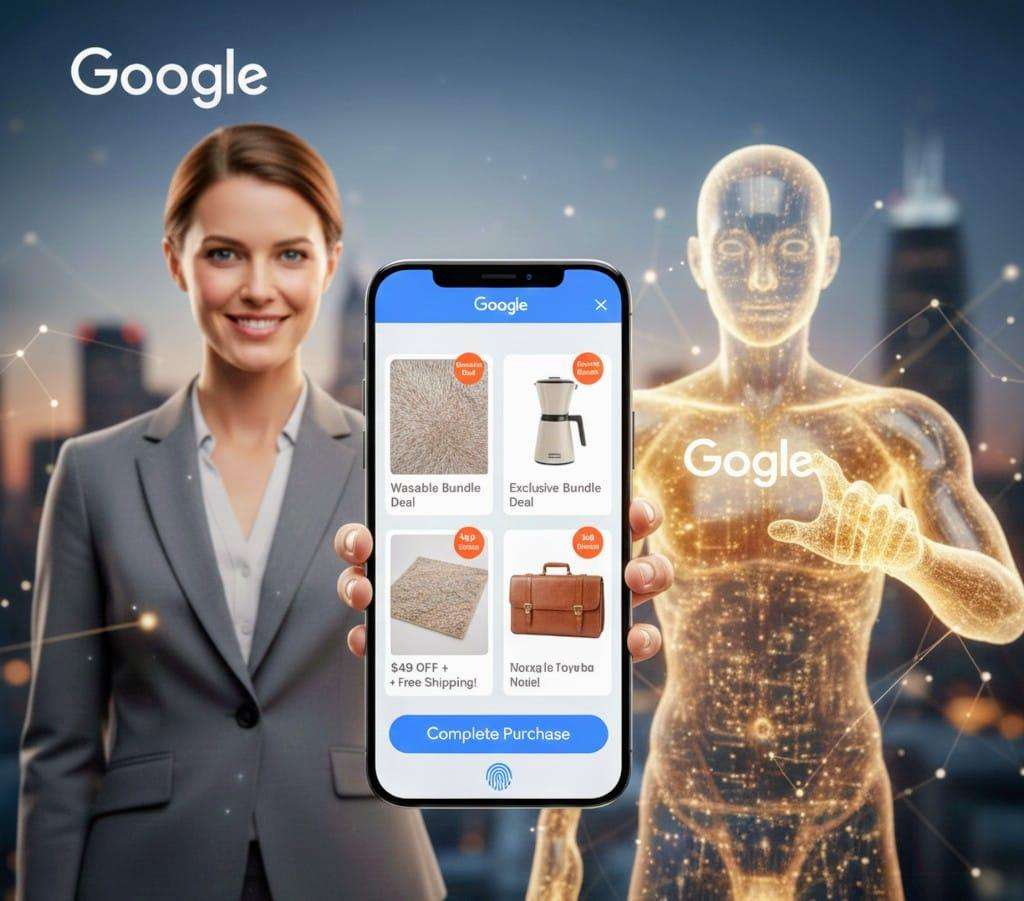
At the heart of this transformation is Gemini 3, Google’s most advanced multimodal model to date. Unlike previous iterations that focused on information retrieval, Gemini 3 is designed to "read the room." By leveraging contextual data from active conversations, Google can now trigger exclusive, real-time offers—such as custom discount codes, free shipping, or product bundles—at the exact moment a user expresses intent.
Vidhya Srinivasan, Vice President of Google Ads and Commerce, describes this as a departure from the "one-size-fits-all" ad model. In this new ecosystem, the AI acts as a sophisticated digital concierge. If a user asks for advice on gear for a winter trek, Gemini doesn't just provide a list; it consults a retailer's live inventory and presents a personalized deal that is mathematically optimized to "close the sale" instantly.
The Universal Commerce Protocol: Breaking the Platform Moats
Perhaps more significant than the ads themselves is Google’s launch of the Universal Commerce Protocol (UCP). Announced at the National Retail Federation (NRF) 2026 convention, this open-source standard aims to commoditize the very checkout buttons that once formed the "moats" of platforms like Shopify and Amazon.
UCP allows for a "platform-agnostic" checkout. For the consumer, this means buying a product directly within the Gemini interface—using saved credentials from Google Cloud or partner retailers like Walmart—without ever being redirected to a third-party website. This "Zero-Click" commerce model streamlines the path to purchase, which early data suggests can increase conversion rates by over 50% compared to traditional web-based shopping.
Dazzling Dawn Deep Analysis: The Great Role Reversal
The "Daily Dazzling Dawn" lens reveals a deeper structural shift: Google is no longer just an index of the world's information; it is becoming the world's primary transaction layer. For decades, Google’s role was to be the "middleman" that sent traffic away to other sites. Today, that role has reversed. Google is now the destination.
This shift carries profound implications for brands and marketers. In 2026, "SEO" is no longer about keywords; it is about "Feed Health." If a brand’s product data isn't clean, structured, and "agent-ready," it effectively ceases to exist in the Gemini ecosystem. Furthermore, as Google moves toward a unified, AI-first operating system—internally dubbed "Aluminium OS"—the distinction between a phone, a TV, and a shopping assistant will vanish. Your AI agent will manage your household needs across every device, negotiating with retailers on your behalf while you sleep.
The Competitive Edge: Gemini vs. GPT-5
This move is also a strategic defensive maneuver. While OpenAI’s GPT-5 has focused on raw reasoning and creative output, Google is leveraging its greatest asset: its massive commercial infrastructure. By partnering with retail giants like The Home Depot, Lowe's, and Samsung, Google is building a moat of "utility" that a standalone LLM cannot easily replicate.
While rivals are still experimenting with "checkout features," Google has integrated shopping into the very fabric of its ecosystem—from AI-enhanced Google TV experiences to "Project Astra" vision-enabled shopping. The message is clear: the future of AI isn't just about getting answers; it’s about getting things done.