


.jpg)


.svg)
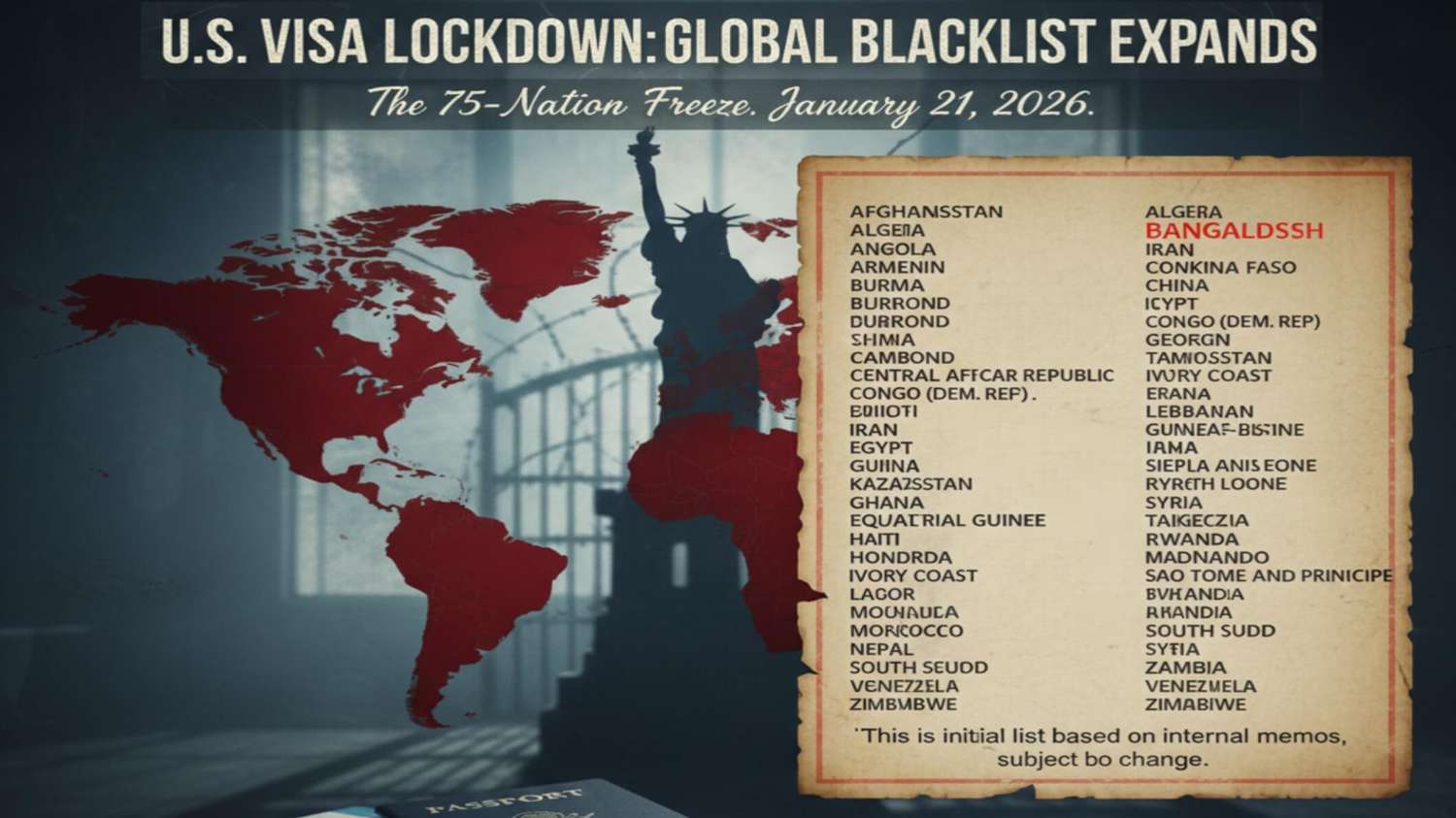
The Great Immigration Wall: Indefinite Freeze on Global Visas-The landscape of global mobility has shifted overnight as the United States prepares to enforce one of its most sweeping immigration restrictions in recent history. Starting January 21, 2026, the U.S. State Department will halt the processing of immigrant visas for citizens from 75 nations, including Bangladesh. This move, rooted in an internal Department of State directive, is not merely a temporary delay but an indefinite suspension. While the official "red list" is currently being finalized for public release, diplomatic sources and internal memos have already confirmed that the vetting process is undergoing a radical transformation that effectively shuts out millions of prospective immigrants until further notice, Daily Dazzling Dawn understands.
The Public Charge Doctrine: Why Bangladesh and Others Are Targeted-At the heart of this unprecedented freeze is the "Public Charge" provision, a long-standing but now aggressively weaponized legal standard. The Trump administration has signaled a Zero-Tolerance approach toward individuals it deems likely to rely on U.S. government assistance. Bangladesh, along with 74 other nations across South Asia, Africa, and South America, has been categorized under this heightened scrutiny due to a combination of economic indicators and perceived vetting deficiencies. The State Department argues that current screening methods are insufficient to verify whether applicants have the financial independence, health stability, or employment prospects to survive in the U.S. without taxpayer-funded programs. For Bangladesh specifically, the inclusion is driven by concerns over the reliability of financial documentation and the high volume of family-based visa petitions which the administration views as a potential strain on public resources.
Strategic Isolation: Vetting Deficiencies and National Security-Beyond the financial argument, the analysis reveals a deeper layer of "national security and immigration integrity." The U.S. government has cited "chronic vetting deficiencies" in several of the listed countries, including poor civil record-keeping and a lack of cooperation in sharing criminal data. By freezing visas for these 75 nations, the administration is effectively putting pressure on foreign governments to overhaul their own internal security and documentation systems. For the passport holders of these countries, the suffering is twofold: they are not only barred from entering the U.S. but are likely to face "contagion" restrictions from other Western allies who often follow U.S. security leads, leading to a broader "visa-trap" for citizens of the global south.
The Rippling Impact: Families Divided and Economic Fallout-The upcoming impacts of this decision are both immediate and devastating. The most profound consequence is the total cessation of family reunification; even immediate relatives of U.S. citizens—spouses, children, and parents—who do not already hold a valid visa by the January 21 deadline will be caught in this indefinite limbo. Economically, the suspension signals a halt to the "brain drain" from these nations, but it also severs the flow of professional talent and cultural exchange. Furthermore, the directive instructs consular officers to refuse visas under existing law during this "reassessment" period, meaning even those with pending interviews may find their paths blocked indefinitely. As the U.S. shifts toward a "merit-based" and "wealth-verified" system, the global divide in mobility is set to widen, leaving the 75 listed nations in a state of diplomatic and personal uncertainty.
The Bangladesh Green Card Crisis: A Roadmap to Indefinite Limbo-The January 21, 2026, directive creates a "bottleneck of uncertainty" for thousands of Bangladeshi families currently navigating the U.S. immigration system. For those with pending Green Card petitions, the impact is not just a delay—it is a total systemic freeze.
The Adjudicative Hold: Pending Cases Frozen-According to the latest USCIS and State Department policy memorandums, an "Adjudicative Hold" has been placed on all pending immigration benefit requests for citizens of the 75 listed countries. This means if your case is currently sitting on a desk at USCIS or the National Visa Center (NVC), it will not move forward until the new "public charge" and "vetting reassessment" protocols are fully established. There is currently no timeline for when these holds will be lifted.
Family Reunification Halted-The most painful blow falls on Family-Based (Preference) Immigrants. Unlike previous restrictions that offered narrow exemptions for immediate relatives (spouses and children of U.S. citizens), the 2026 directive removes these broad categorical exceptions. Bangladeshi citizens waiting for IR-1, CR-1, or IR-5 visas are now subject to the same rigorous wealth-verification and security re-review as any other applicant.
Mandatory "Wealth Bonds" and Re-Interviews-For the lucky few whose applications might eventually proceed, the landscape has changed. The U.S. Embassy in Dhaka has indicated that even "otherwise eligible" applicants may now be required to post a Public Charge Bond of up to $15,000. Additionally, the State Department has mandated a "thorough re-review process," which may include a mandatory re-interview for those who have already completed their initial consular screening but have not yet received their physical visa.
Impact on LPRs and Current Visa Holders-If you already hold a valid, issued immigrant visa or a Green Card (Lawful Permanent Resident status), your documents remain valid. However, travel is highly discouraged. Reports indicate heightened scrutiny at U.S. Ports of Entry, with travelers from "Blacklisted" nations facing intensive secondary inspections. For those currently in the U.S. seeking to Adjust Status (Form I-485), the processing of these forms is also reportedly part of the wider adjudicative pause, effectively locking applicants into their current temporary status.