






.svg)
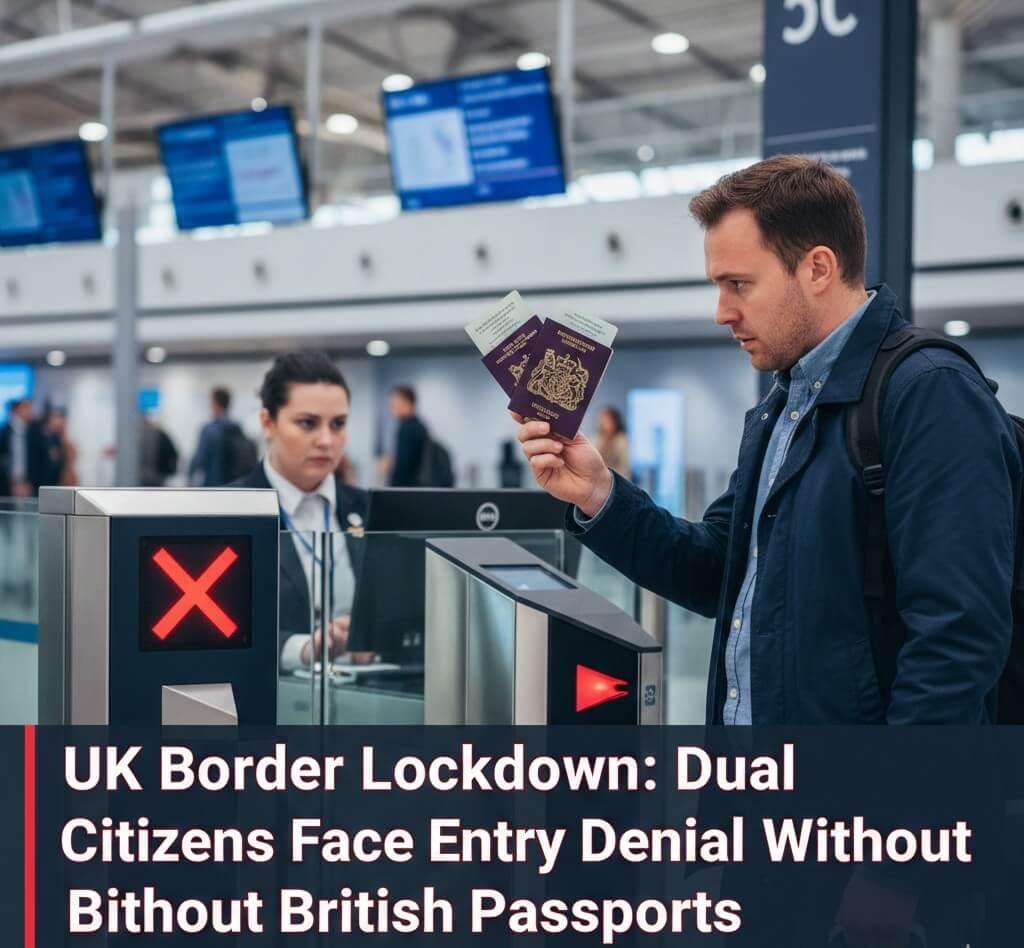
The era of flexible border crossings for British dual nationals is coming to an abrupt end as the Home Office prepares to enforce strict new entry protocols. Beginning February 25, 2026, the long-standing practice of using foreign passports to enter the United Kingdom will no longer be viable for those holding British citizenship. This shift represents a fundamental hardening of the UK’s digital border strategy, forcing hundreds of thousands of overseas citizens to secure formal UK documentation or risk being stranded at the gate, Daily Dazzling Dawn understands.
The End of Document Flexibility at the Border-For decades, dual nationals residing abroad enjoyed a degree of informality, often entering the UK on their alternative passports while carrying secondary proof of their British status, such as naturalisation certificates. However, the full integration of the Electronic Travel Authorisation (ETA) system has rendered these manual workarounds obsolete. Because the ETA system is designed to automatically screen non-visa nationals, it creates a technical "blind spot" for dual citizens. If a traveler attempts to use a foreign passport without an ETA, they will be flagged; yet, as British citizens, they are legally ineligible to apply for an ETA. This paradox leaves a valid British passport or a costly Certificate of Entitlement as the only recognized "keys" to the country.
Financial Implications and the Certificate of Entitlement-The transition carries a significant financial burden for families living abroad. While a standard adult passport application within the UK sits at £94.50, the costs escalate for those applying from overseas due to courier fees and processing surcharges. For those who choose not to hold a British passport but wish to prove their right of abode via a foreign passport, the Home Office has set the price of a Certificate of Entitlement at a steep £589. This high entry price has sparked criticism among expat communities, particularly those in the EU who have historically moved freely between jurisdictions with minimal red tape.
Enforcement Strategy and Carrier Liability-The Home Office is shifting the burden of enforcement onto airlines and transport providers. Under the new digital framework, carriers face heavy financial penalties for boarding passengers who do not possess the specific digital or physical credentials required by the UK’s updated guidance. While the government has spent the last several months issuing "soft" warnings to travelers, the February 25 deadline marks the transition to a zero-tolerance approach. Internal briefings from the House of Commons suggest that even expired British passports or official registration papers will likely be rejected by check-in staff, who are instructed to follow the Home Office’s approved document list strictly to avoid fines.
Digitisation as a Tool for National Security-The government defends these measures as a vital component of a modernised, "seamless" immigration system. By forcing all citizens into a uniform digital lane, the Home Office claims it can better identify security threats and maintain a comprehensive real-time map of migration patterns. The ETA rollout is the final piece of this puzzle, ensuring that every individual crossing the border is accounted for in a centralized database. For the dual citizen, this means the convenience of the past is being traded for a high-tech security apparatus that demands total compliance with domestic documentation standards.