






.svg)
Advances in artificial intelligence and robotics are set to reshape human employment, beginning with warehouse and factory roles, according to the UK’s science minister, as the government moves to cut regulatory barriers for robotics and defence technology firms.
Patrick Vallance said the fusion of AI and robotics is creating entirely new opportunities for machines, particularly in areas such as humanoid robotics. Speaking to the Guardian, he said this shift would boost productivity while also changing the nature of human work.
Vallance made the remarks as a government body focused on accelerating the use of emerging technologies in Britain confirmed that robotics and defence would now be priority sectors for support.
He explained that warehouses and factories, which already use robots extensively, will see even greater transformation as more advanced humanoid robots are introduced. Tasks involving movement and routine physical activity in these environments are likely to be automated, marking what he described as the “first wave” of change and altering how these jobs are performed.
At the same time, London mayor Sadiq Khan has warned that AI could lead to “a new era of mass unemployment.” In his annual Mansion House speech, Khan said large numbers of jobs in London could disappear unless the government acts to help workers transition into new roles.
Responding to Khan’s comments, Vallance said robots would mainly take over repetitive and less engaging tasks, freeing people from routine work. He pointed to robotic assistance in surgery as an example of how technology can enhance, rather than replace, skilled professions by improving precision and outcomes.
On Friday, the government announced that the Regulatory Innovation Office (RIO) will extend its scope to include defence technology and robotics, aiming to reduce bureaucracy and speed up the safe introduction of new products. The Department for Science, Innovation and Technology also unveiled £52m in funding for new hubs designed to help British companies adopt robotics, offering expert guidance and live demonstrations.
The department said the expanded RIO remit could particularly benefit autonomous drones, which currently face lengthy and costly approval processes involving aviation, data protection and safety regulators.
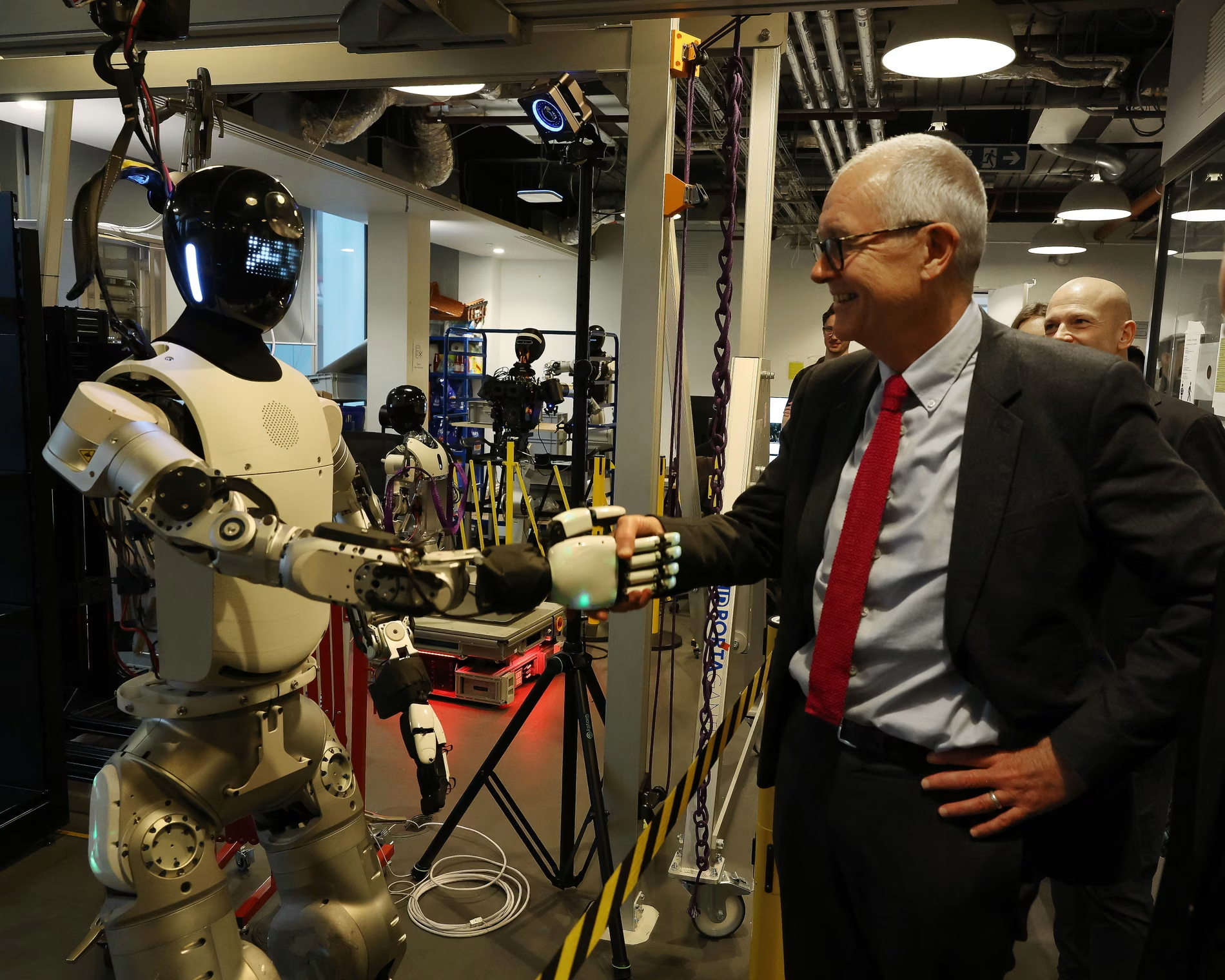
Vallance was speaking during a visit to Humanoid, a UK-based robotics firm that has already tested its robots in a Siemens-operated factory in Germany. Adam Kelsall, the company’s head of product management, said the firm welcomed efforts to enable faster real-world testing of robotic technologies.






.jpg)