




.svg)
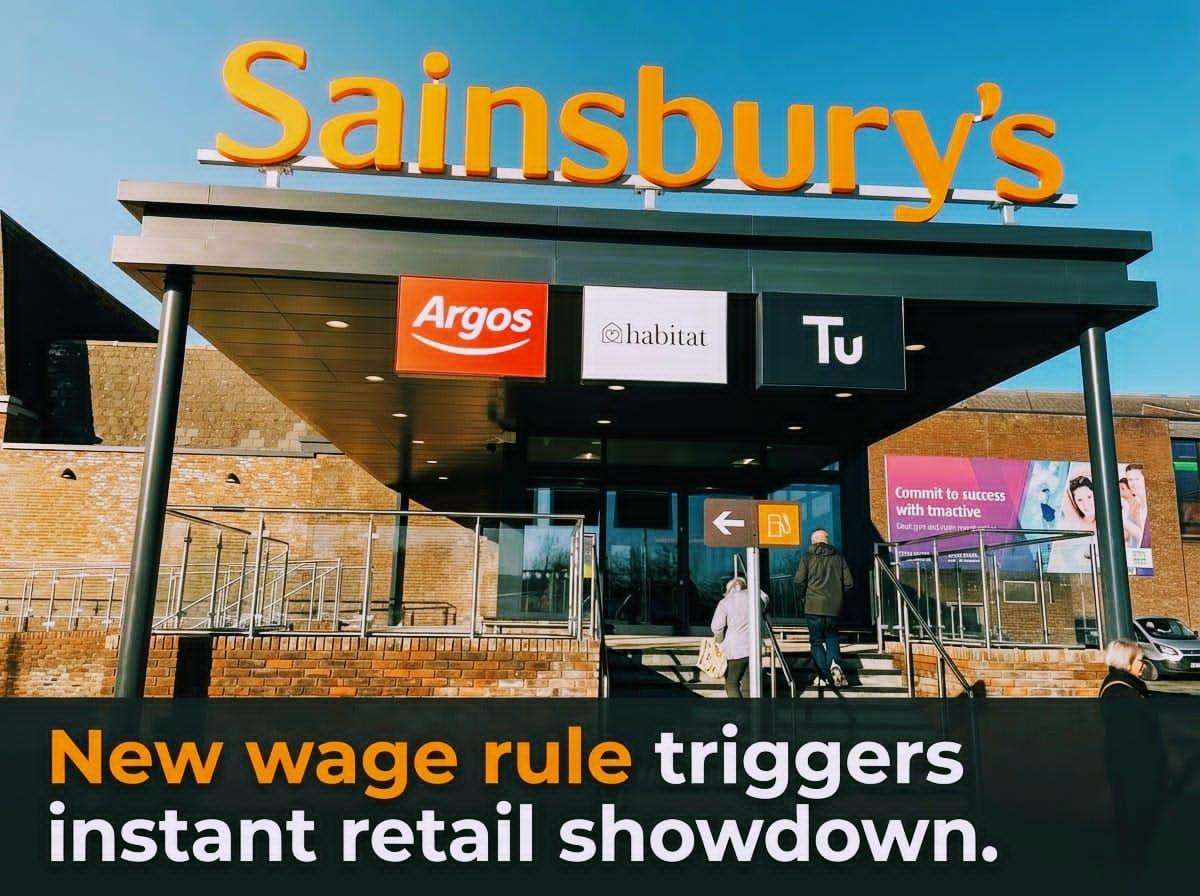
A seismic shift in the UK retail labor market has officially begun this weekend as Sainsbury's throws down the gauntlet with a market-shaking pay announcement.
The New Battleground for British Retail
Sainsbury’s has effectively fired the starting gun on the 2026 wage war, announcing a decisive financial reconfiguration that will see staff hourly rates climb to £13.23 nationally and a striking £14.54 for those working in London. While on the surface this appears to be a standard annual update, deeper analysis suggests this is a strategic fortification designed to future-proof the retailer against a volatile labor market. By committing to a 5% increase—which the retailer explicitly categorizes as "above inflation"—Sainsbury's is not merely adjusting for the cost of living but is aggressively positioning itself to poach talent from rivals.
This move, effective from March 2026, places immense pressure on the traditional "Big Four" and the German discounters. With full-time workers set to pocket an additional £1,200 annually, the baseline for what is considered an acceptable retail wage in the UK has just been raised significantly. The 42% cumulative pay increase over the last five years demonstrates a clear strategy: in an era of labor shortages, retention is the new currency.
The Domino Effect: Who Will Blink Next?
The question on every industry analyst's lips is no longer if other retailers will follow, but when and by how much. This announcement creates an immediate headache for Tesco, Asda, and Morrisons. Historically, Tesco acts swiftly in the spring to realign its compensation packages to maintain its market dominance. With Sainsbury's claiming the title of "sector-leading increase," the pressure is now squarely on Ken Murphy and the Tesco leadership team to announce a counter-offer that matches or exceeds the £13.23 threshold to prevent an employee exodus.
Furthermore, the discount sector is already in motion. Aldi, which has long prided itself on being the highest payer in the industry, initiated a pay rise earlier this month. However, the aggressive nature of the Sainsbury's hike challenges Aldi's dominance. We can expect the discounters to review their rates almost immediately. If history is any indicator, Aldi and Lidl will likely return to the negotiating table before the summer to reclaim their "best payer" status, potentially pushing the national retail hourly rate closer to the £13.50 mark later this year.
Daily Dazzling Dawn Analysis: The Total Package War
A closer inspection of the "Daily Dazzling Dawn" financial landscape reveals that the hourly rate is only half the story. The true battleground for 2026 is becoming "Total Compensation." Sainsbury's is leveraging its infrastructure to offer what discounters often cannot: a comprehensive perks ecosystem. The analysis shows that the £600 annual savings via staff discounts and free food during shifts effectively acts as a "shadow pay rise," boosting the real-world value of the wage packet well beyond the headline figure.
This creates a distinct divergence in the market. While discounters fight on raw cash numbers, legacy supermarkets like Sainsbury's and Waitrose are moving toward a "lifestyle subsidy" model. By absorbing the cost of employees' grocery shops and meals, they are insulating their workforce from food inflation in a way that a simple 50p hourly hike cannot. This is the metric that will define staff loyalty in the coming financial year.
Future Outlook: The April Crunch Point
Looking ahead, the timing of this implementation is critical. By introducing the rise in March, Sainsbury's is front-running the statutory National Living Wage increases that typically hit in April. This is a psychological play as much as a financial one, ensuring staff feel the benefit before the government-mandated baseline rises.
We are now on high alert for immediate responses from the wider service economy. The "Sainsbury's Effect" rarely stays within the supermarket aisles. High street coffee chains, logistics giants like Amazon UK, and the hospitality sector will be forced to recalibrate their spring recruitment offers. If a shelf-stacker can command £13.23 an hour with benefits, the hospitality sector will struggle to recruit at anything less than £13.50, potentially triggering a wider wage-price spiral across the UK service industry by Q3 of 2026.




.jpg)