



.svg)
A crackdown on an unregistered mosque in Athens spotlights the struggle between religious expression and state regulation, leaving a migrant community in fear, Daily Dazzling Dawn realised.
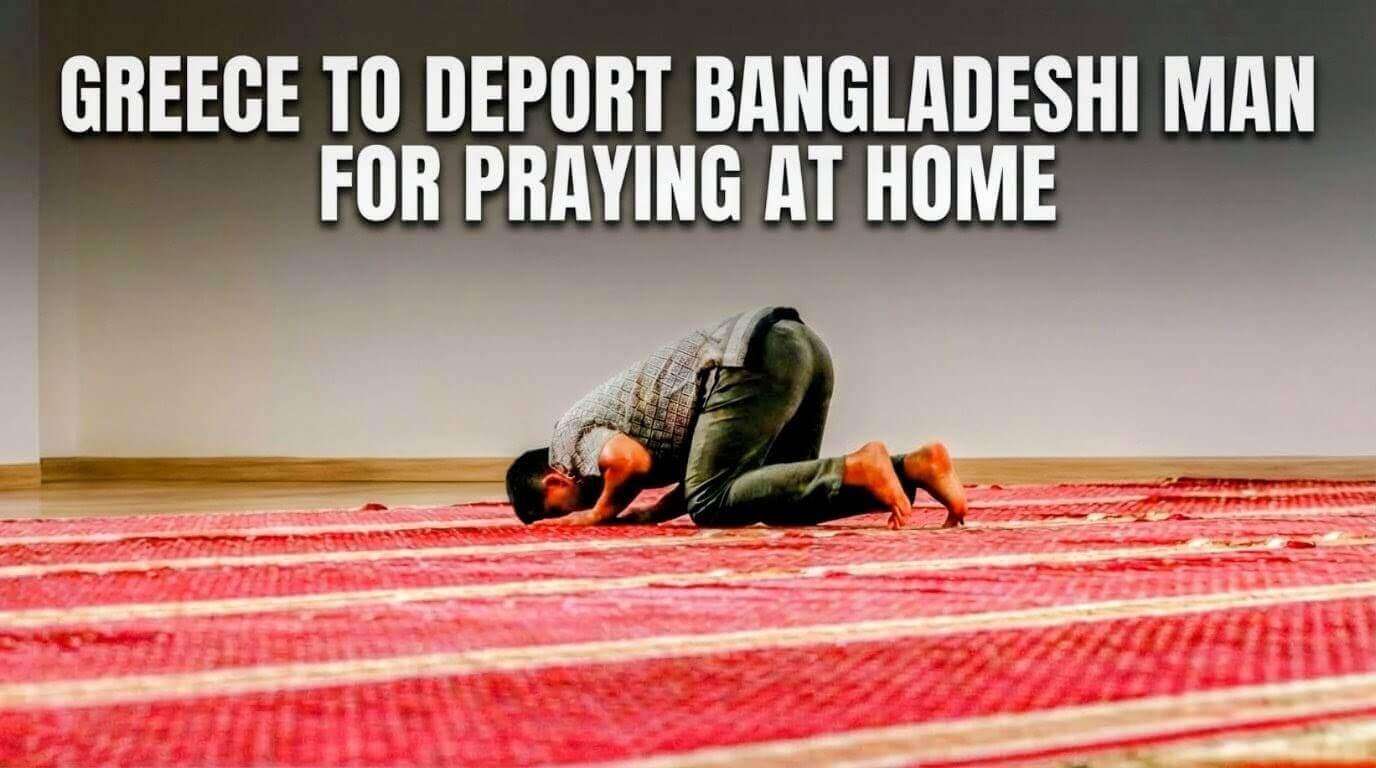
In a case that has ignited debate over religious freedom and migrant rights in Greece, a Bangladeshi national now faces imminent deportation after authorities shuttered an unapproved prayer space he operated in Athens. The Ministry of Immigration and Asylum confirmed the revocation of his residence permit under a powerful new legal provision, marking one of the first and most severe applications of a law designed to curb unlicensed places of worship. While the state frames this as a necessary enforcement of building and safety codes, critics and community advocates see a disproportionate punishment that criminalizes a fundamental human need for communal prayer and threatens to tear a man from his life over an administrative violation.
A Community's Sanctuary Sealed: The Details of the Case-The individual at the center of this storm is Mohammad Hasan (name changed to protect privacy pending family notification), a 34-year-old Bangladeshi man who had been living and working legally in Athens for several years. According to sources close to his community, Hasan was not a formal religious leader but a respected community member who offered his basement apartment in the Agios Nikolaos area as a space for fellow Bangladeshi Muslims to pray, particularly for Friday Jumu'ah gatherings. This practice is common among migrant communities worldwide who lack the resources or official approval to establish formal houses of worship.
The operation was discovered following a local complaint, leading officers from the Agios Panteleimonas Police Station to investigate. Finding the space in use, they moved to seal it. Hasan was subsequently convicted for operating a place of worship without a permit—a criminal offense in Greece. The pivotal escalation came when Immigration and Asylum Minister Thanos Plevris invoked Article 28 of the recently enacted Law 5224/2025. This article directly links the operation of an unlicensed place of worship to the revocation of residence permits. A deportation order was issued against Hasan with "no deadline for voluntary departure," a highly unusual and severe measure that denies him the chance to arrange his affairs or leave Greece on his own terms, effectively treating him as an immediate security threat.
Between Law and Compassion: The Rising Tension- The Greek government defends its actions as a matter of lawful order and public safety. Officials point to estimates that dozens of such unlicensed spaces operate across Attica, often in basements or apartments that may lack proper ventilation, exits, or sanitation facilities, posing genuine safety risks. The state's position is that the legal mosque in Votanikos, which opened after decades of controversy, now serves as the appropriate and sanctioned venue for Muslim prayer in the capital, rendering smaller, unofficial sites unnecessary and illegal.
However, human rights organizations and migrant support groups condemn the response as excessively harsh and discriminatory. They argue that the Votanikos mosque, while significant, is not accessible to all of Athens's dispersed and diverse Muslim communities, particularly for daily prayers. For low-income migrant workers like Hasan, traveling across the city is not always feasible. "This is not about cracking down on crime; it is about criminalizing poverty and faith," stated a representative from the Hellenic League for Human Rights. "The punishment of deportation for providing a space to pray is utterly disproportionate and violates the spirit of religious freedom. It sends a chilling message that migrant communities are not welcome to practice their faith informally."
Community members describe Hasan as a peaceful, hardworking individual who sought only to provide a service to his friends and compatriots. The prospect of his deportation has sown fear and confusion within the Bangladeshi community, with many now worried that any gathering for prayer could lead to similar repercussions. Legal experts are closely watching the case, as it sets a powerful precedent for how Greece will balance its regulatory authority with its obligations under international human rights law regarding freedom of religion and assembly.
What Comes Next: Legal Challenges and a Broader Debate- Hasan’s immediate future hinges on a swift legal intervention. His lawyers are expected to file an urgent appeal against the deportation order, arguing both the disproportionality of the punishment and potential procedural flaws. They will likely contend that operating an unlicensed prayer space, while a violation of administrative code, does not equate to a threat to public order or national security serious enough to warrant summary expulsion. The outcome of this appeal will be a landmark decision.
Looking beyond this single case, the incident forces a critical examination of Greece's integration policies. The government's tough stance, intended to assert control over urban spaces and religious institutions, risks alienating and marginalizing the very migrant communities that contribute to the nation's economy and social fabric. Sociologists warn that driving religious practice further underground does not enhance safety or cohesion but rather fosters resentment and isolation.
The path forward requires nuance. While reasonable safety regulations for public gatherings are justified, there must also be a recognized pathway for small, ethnically specific communities to register and legitimize their prayer spaces without insurmountable bureaucratic hurdles. The alternative—exiling a man for hosting prayers—casts a long shadow over Greece’s image as a European nation committed to balanced governance and human dignity. The world is watching as Mohammad Hasan's personal faith becomes the battleground for a much larger conflict between law and conscience.