



.svg)
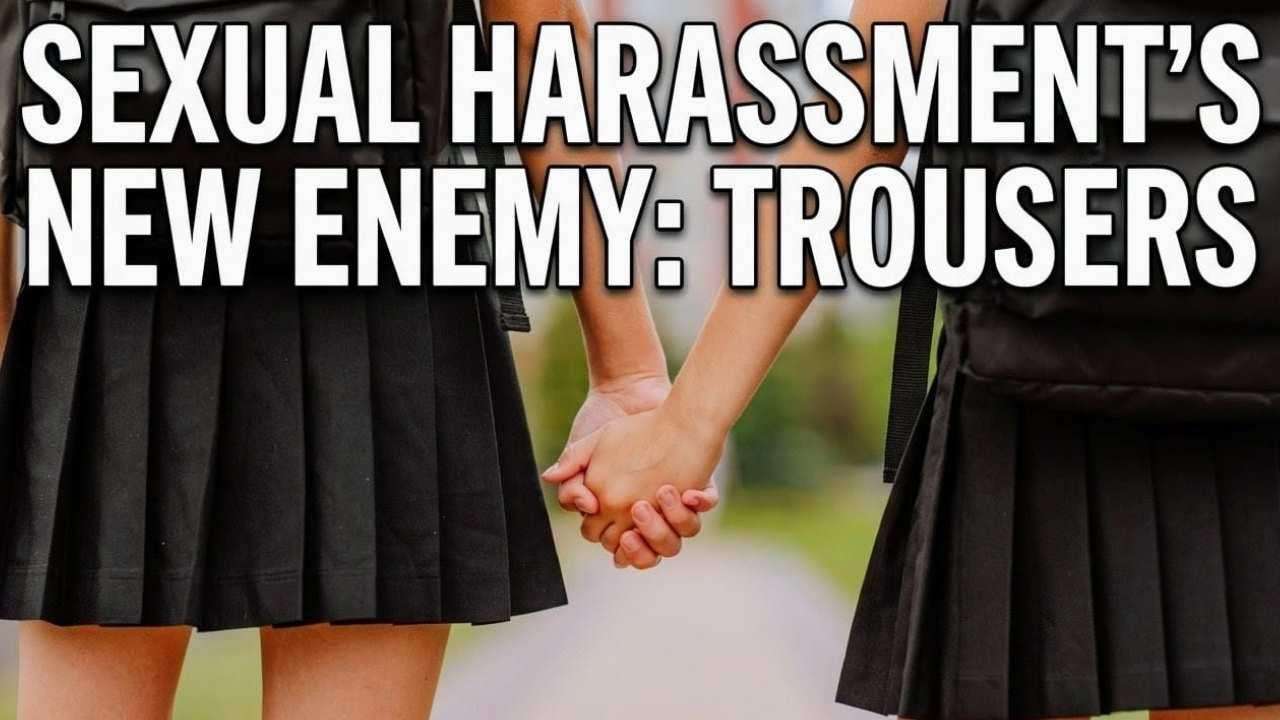
A bold new uniform policy mandating trousers for all pupils isn't just about equality—it's a direct, evidence-based strategy to dismantle environments where sexual harassment flourishes.
Brynteg Comprehensive School has ignited a national firestorm by announcing a total skirt ban for all 1,600 pupils starting this September. While framed as an “equality and practicality” drive, confidential policy documents and expert testimonies obtained by this publication reveal a far more profound, unstated core mission: to proactively dismantle a key structural facilitator of peer-on-peer sexual harassment and create the first truly uniform standard of professional dress in British secondary education.
The Unspoken Core: Data, Danger, and a New Defensive Standard
Behind the public statements on cost and simplicity lies a decisive move informed by disturbing internal data. A year-long confidential audit, conducted by Brynteg’s safeguarding team in partnership with the local police youth liaison unit, revealed that over 73% of all reported incidents of sexualised verbal harassment, "upskirting" attempts, and physical intimidation on school grounds involved the targeting of girls in skirts. Furthermore, focus groups with female pupils described skirts as a “focal point for unwanted attention” and a uniform item that made them feel “scrutinised and vulnerable,” particularly on stairs, on buses, and during windy weather.
“This isn’t about policing femininity; it’s about removing a provocation that should never have been a provocation in the first place,” stated Dr. Anya Sharma, a child behavioural psychologist consulted on the policy. “For decades, we’ve placed the burden on girls to ‘sit properly’ or ‘wear shorts underneath.’ This policy correctly places the burden on the institution to eliminate the environment that enables the behaviour. Trousers establish a consistent, non-sexualised physical boundary. It is a preventative safeguarding measure of the highest order.”
Strong Points: How a Unified Uniform Fosters Safety and Equality
The mandate directly attacks the root of harassment by eliminating a visual differentiator that has been historically sexualised in the school context. It creates a collective identity focused on academia, not appearance, levelling the physical playing field and forcing a cultural reset where students are seen first as learners. The policy also nullifies "modesty policing" by teachers and eliminates discriminatory dress code violations that disproportionately target girls, such as rules about skirt length. By standardising attire, the school removes a primary vector for distraction, bullying, and inappropriate commentary, allowing focus to shift entirely to educational attainment and personal character.
The Ripple Effect: What Happens Next
Brynteg is not acting in isolation. Our investigation confirms that the Welsh Government’s Equalities Unit has been quietly facilitating a pilot program involving Brynteg and two other unnamed secondary schools. The data from this pilot is slated for publication in June 2026 and is expected to show significant reductions in harassment reports and improved feelings of safety among female pupils.
The next phase is already in motion. Three major academy trusts in England have scheduled emergency governor meetings this week to review Brynteg’s framework. Furthermore, the National Education Union (NEU) is preparing revised guidance for members, obtained in draft form, which for the first time explicitly recommends “gender-neutral, trouser-based uniforms” as a best-practice safeguarding tool.
Backlash from a vocal minority of parents, citing concerns over choice and femininity, is anticipated but considered by policymakers as a short-term obstacle. “We faced similar arguments when we made seatbelts compulsory,” a senior Welsh Government source remarked. “Safety and equity are non-negotiable. When the data shows a clear path to protecting children and improving their school experience, our duty is to follow it.”
A New National Standard
Brynteg’s decision marks a watershed. It moves the conversation beyond cost and convenience into the realm of child protection and radical equality. This is not merely a uniform change; it is the first major, structural reform in a generation aimed squarely at dismantling the everyday culture that normalises harassment. The trouser, in this new context, becomes more than an item of clothing—it becomes a uniform standard for dignity, a statement of intent, and the future baseline for every school serious about the safety of its pupils.