





.svg)
A political debate over defining "Islamophobia" is unfolding in Westminster, starkly disconnected from a summer of unprecedented violence and fear experienced by British Muslims on their streets and at their places of worship.
The Stark Reality Beyond the Political Debate
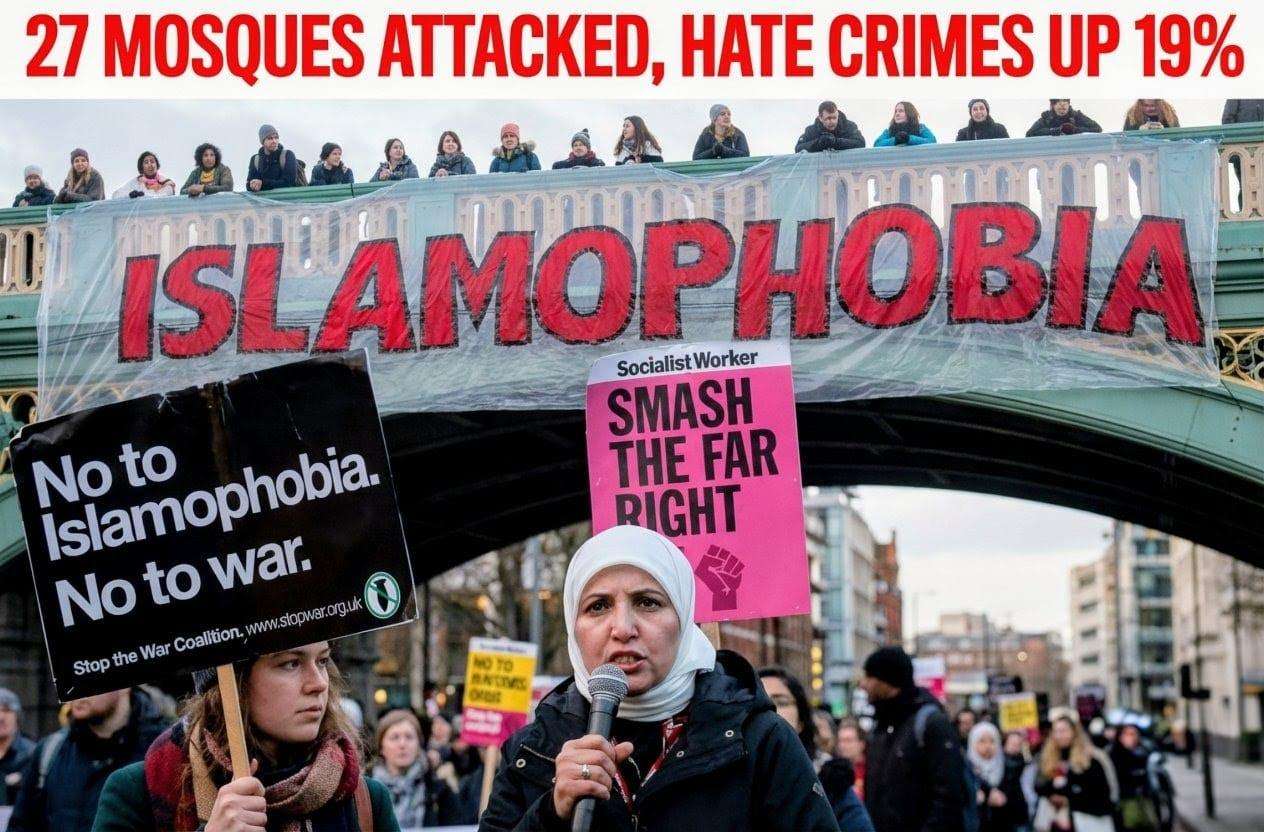
While the government's working group, chaired by former Attorney General Dominic Grieve KC, finalizes a non-statutory definition of "anti-Muslim hostility," the community it seeks to protect is reporting a crisis. Official Home Office statistics for the year ending March 2025 recorded a 19% increase in religious hate crimes targeted at Muslims, a spike notably exacerbated by events last summer. This number, however, only prefaces a more alarming trend.
A landmark report by the government-appointed British Muslim Trust, titled "The Summer of Division," documents a sustained and intensifying wave of attacks. Between July and October alone, 27 verified attacks were launched against mosques across 23 towns and cities. These were not merely incidents of graffiti; they escalated to an arson attack intended to endanger life, projectile attacks, smashed windows, and assaults. In a deeply sinister trend, 41% of these incidents involved the use of crosses, Union Jacks, or Christian slogans like "Christ is King" as tools of intimidation, often coinciding with nationalist "Raise the Colours" campaigns.
Community leaders describe a palpable shift in the threat. "Something has changed for the worse," said Akeela Ahmed MBE, Chief Executive of the British Muslim Trust. The report notes a move from "isolated symbolic acts to a combination of physical aggression and sustained public intimidation," with perpetrators acting "with growing confidence and a visible sense of impunity". For many Muslims, especially women and the elderly, this has translated into a daily reality of fear and isolation.
Community Perspective: A Definition Distraction?
Within this context, the heated Westminster debate over the proposed definition's language feels abstract to many community advocates. The draft definition seeks to address "anti-Muslim hostility," including "prejudicial stereotyping and racialisation of Muslims". While working group members like Baroness Shaista Gohir argue it achieves "the right balance" by "safeguarding individuals while avoiding overreach," the intense focus on terminology has sparked frustration.
The core criticism from within and outside the Muslim community is that the definition, while non-statutory, risks becoming a performative gesture that fails to address systemic issues. Critics, including other faith leaders, argue its vague terms like "prejudicial stereotyping" could be misapplied to chill legitimate debate on topics like religious practices. More fundamentally, they contend that existing criminal law and the Equality Act 2010 already prohibit violence, harassment, and discrimination, making the new definition legally redundant.
The greater concern for Muslim community advocates is that this semantic political battle is consuming oxygen while actionable measures lag. The "Summer of Division" report calls not for new definitions, but for concrete, urgent actions: robust and rapid support for victims, protective security funding for mosques (especially smaller ones), and joined-up government responses for early intervention. Wajid Akhter of the Muslim Council of Britain directly links the violence to political rhetoric, stating, "These incidents do not occur in a vacuum. This comes as media and political figures escalate collective blame and deliberate misrepresentation of Muslim communities".
The Path Forward: Protection Over Semantics
The government insists that any definition will fiercely protect the right to criticize religion and is not final. However, with a leaked draft in circulation and consultation ongoing, the disconnect is clear. For the British Muslim community, the priority is shifting from how hostility is defined in Whitehall documents to how it is prevented on their streets.
The data presents an incontrovertible call to action. The conversation needed now is less about the precise wording of a policy and more about the implementation of the British Muslim Trust's recommendations: funding, security, inter-agency coordination, and community cohesion programs. As the trust's report concludes, the current crisis is "intolerable" and demands "concerted sustained action". The question facing the government is whether it will invest political capital in a definitive semantic victory or in the definitive protection of its citizens from documented, rising hate.

_3.jpg)