






.svg)
The high-tech battle against "smishing" enters a critical phase as the Inner London Crown Court weighs evidence against a sophisticated organized crime group.
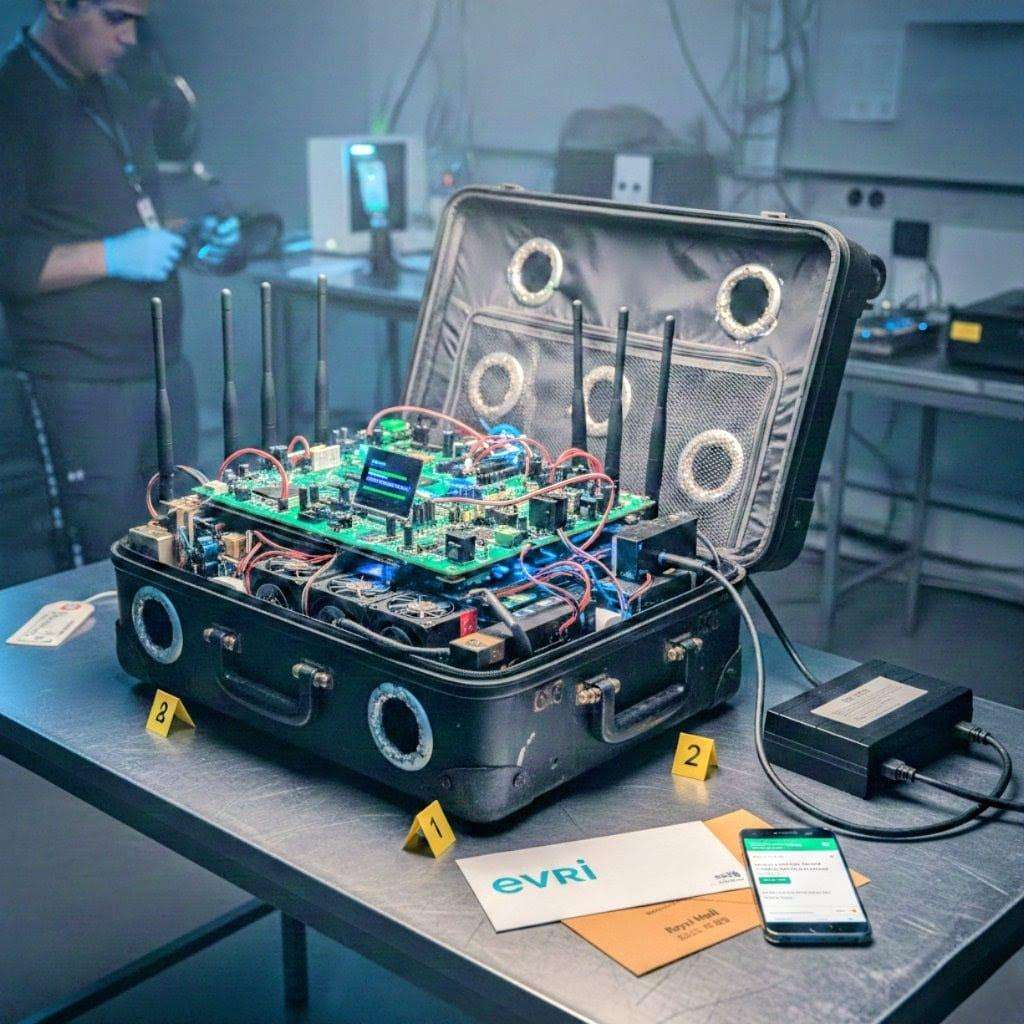
The trial of two Chinese nationals, 48-year-old Zhijia Fan and 20-year-old Daoyan Shang, has shifted the focus toward the international scale of mobile hijacking operations following their arrests for allegedly targeting thousands of London commuters. While the initial discovery of "leaking" suitcases filled with hardware shocked the public, new evidence presented in court suggests this cell was merely the London wing of a broader enterprise with sights set on the Paris Metro. Prosecutors have identified Fan as the "top boss" of the operation, coordinating a team of operatives to deploy "SMS blasters"—crude but effective illegal base stations that force nearby mobile phones to disconnect from legitimate networks like O2 or Vodafone and tether to a fraudulent signal.
Expanding Criminal Networks and International Ambitions
The prosecution has now linked the duo to a wider network of conspirators, revealing that the group was not limited to the two men currently in the dock. Details have emerged regarding Wan Hafiz and Gatis Lauks, both of whom have already entered guilty pleas for their roles in the fraud. Furthermore, the court is tracking the movements of Jinhua Zhang, another Chinese national who successfully fled the jurisdiction after being granted bail. The most striking update for investigators is the recovery of communications between Fan and Lauks discussing the "feasibility" of expanding these suitcase-based attacks to the Paris Metro, indicating a strategic intent to export this mobile interference technology across European transit hubs.
The Mechanics of the Suitcase Sting
Unlike traditional digital phishing, which relies on mass emails, this operation used localized hardware to "capture" phones in areas of high footfall but poor underground reception. The devices were housed in heavy, reinforced suitcases featuring ventilation holes to prevent the bulky electronics from overheating during peak travel hours. Once a passenger’s device was tricked into connecting to the blaster, the system automatically pushed out deceptive texts disguised as urgent delivery alerts from Evri or Royal Mail. These messages contained "smishing" links designed to harvest banking credentials in real-time. British Transport Police have increased their vigilance for similar suspicious luggage, noting that the "crude" nature of the homemade devices often makes them physically conspicuous to trained observers.
Future Legal Proceedings and Public Safety
As the trial continues, the jury is tasked with determining the specific level of involvement for Fan and Shang, who both maintain their innocence despite being found with antennae and specialized mobile equipment. Legal experts suggest this case will set a precedent for how the UK handles "signal hijacking" crimes, which fall under both the Fraud Act and telecommunications regulations. Moving forward, the British Transport Police are expected to collaborate more closely with mobile network providers to develop "handshake" protocols that can detect and alert users when a device attempts to connect to an unauthorized or illegitimate cell tower, potentially neutralizing the threat of SMS blasters before they can broadcast a single message.