




.svg)
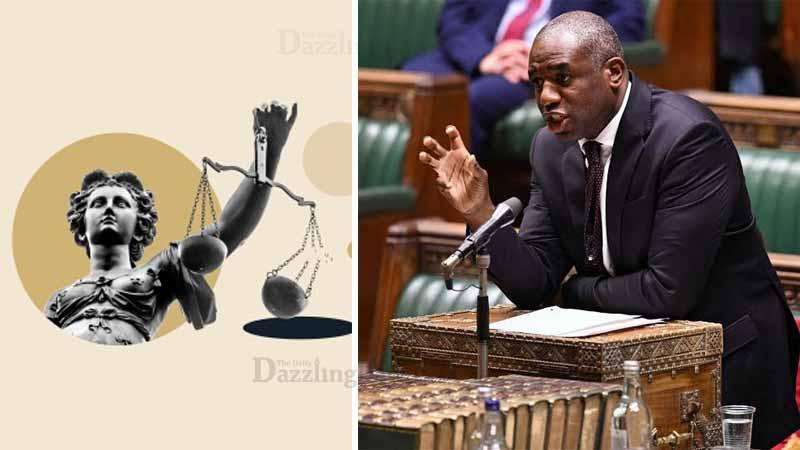
David Lammy has cleared the first major legislative hurdle in a high-stakes gamble to rescue the UK’s stalling justice system from a record-breaking backlog of 80,000 cases.
The Great Jury Debate
The Courts and Tribunals Bill 2026 has successfully passed its second reading in the House of Commons, marking the most significant shift in British legal rights in generations. The core of the controversy lies in the removal of a defendant's right to "elect" a jury trial for "either-way" offenses—crimes that could be heard in either a Magistrates’ or Crown Court. Under these new rules, any case expected to result in a sentence of three years or less will be diverted away from a jury. Instead, these trials will be presided over by a single judge in a newly formed "Crown Court Bench Division" or handled within the Magistrates' system. While the government insists this will save 27,000 sitting days and speed up justice by 20%, criminal lawyers have launched a fierce counter-offensive. Over 3,000 legal professionals, including senior KCs and retired judges, signed an open letter warning that juries are being used as a "Trojan horse" to mask decades of underfunding. They argue that juries are the ultimate safeguard against state overreach and that moving toward a judge-led "continental" style system risks detached standards of justice.
Societal Impact and Systemic Shift
The reforms signal a profound change in the social contract between the British citizen and the state. For the public, the immediate advantage is a potential reduction in the agonizing wait for justice; some victims are currently being offered trial dates as far off as 2029. By streamlining mid-level cases, the government aims to ensure that survivors of the most serious crimes, such as rape and murder, see their day in court sooner. However, the disadvantages are equally stark. Critics warn of an "erosion of liberty," noting that magistrates—who are often volunteers—will see their sentencing powers doubled to 18 months, with a future cap of 24 months. There are also deep-seated concerns regarding racial bias; data suggests that minority defendants often trust juries more than a singular judge or magistrate panel. Furthermore, the removal of the automatic right to appeal from Magistrates to Crown Court—a process where 40% of appeals currently succeed—could lead to a rise in unchallenged miscarriages of justice.
The Political Rebellion and What Follows
While the Bill passed 304 to 203, the numbers hide a simmering internal crisis for the Labour Party. At least 65 Labour MPs are reportedly uneasy with the plans, and while many opted to abstain at this stage, a group of high-profile "usual suspects" including John McDonnell and Nadia Whittome voted against the government. Even Deputy Prime Minister Angela Rayner is reportedly "seeking reassurances" before the Bill moves into the more granular committee and report stages.
The next few weeks will be critical as the Justice Committee continues its scrutiny, with a deadline for evidence submissions set for March 11, 2026. Opponents are already preparing amendments to "strip the worst parts" of the Bill, specifically aiming to reinstate the right to a jury for offenses carrying a three-year tariff. If the Bill survives the Commons intact, it faces a hostile reception in the House of Lords, where peers have already noted that these reforms were not in the 2024 manifesto, potentially exempting the Bill from the usual conventions that ease its passage.


.jpeg)

