




.svg)
The British immigration landscape has undergone its most significant transformation in decades as the government pivots toward a "contribution-based" model that links residency directly to economic output, Daily Dazzling Dawn understand.
Read more- Will the Courts Stop Mahmood? 10-Year Residency Reform Is Total Freeze Next?
The New Architecture of Control- Home Secretary Shabana Mahmood has formalised a "core protection" model that fundamentally alters the nature of sanctuary in the UK. Under these rules, effective as of March 26, 2026, adult refugees no longer receive the traditional five-year stable residency. Instead, they are issued 30-month temporary permits subject to rigorous reassessment. If their home country is deemed "safe" at the point of review, the expectation is immediate return.
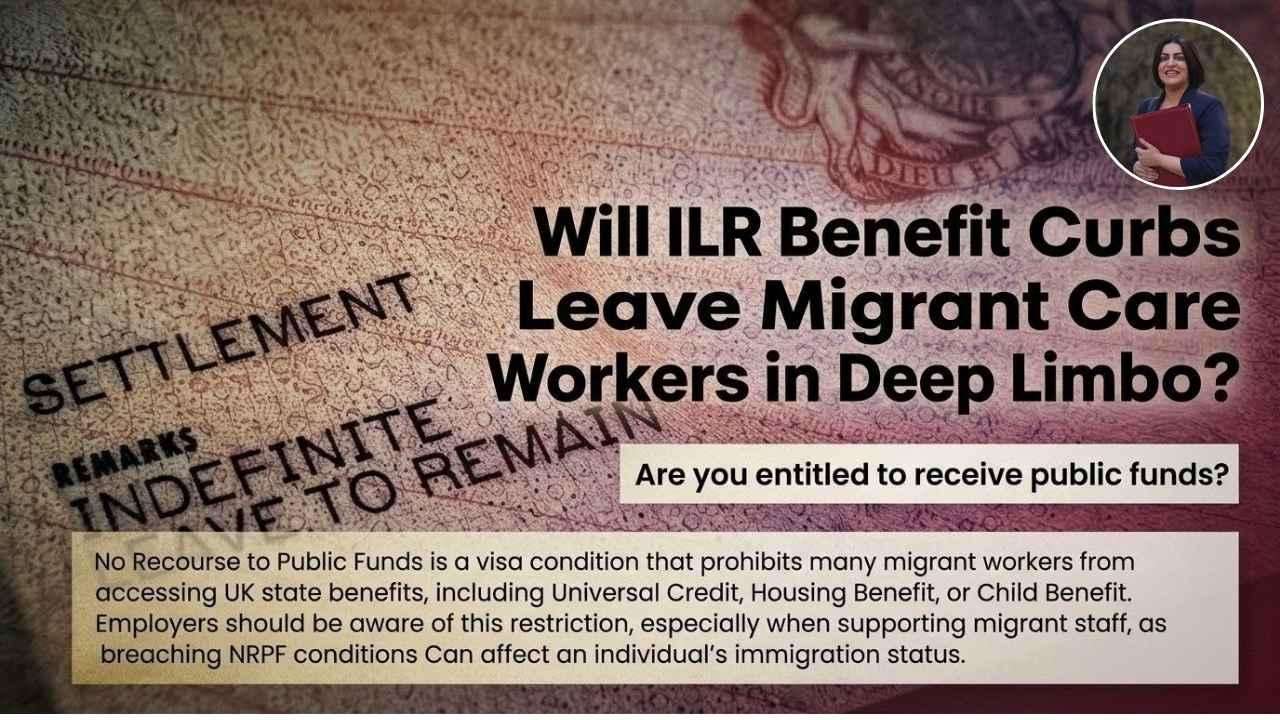
Parallel to this, the "Earned Settlement" framework has replaced the standard five-year path to Indefinite Leave to Remain (ILR). For most migrants, the baseline wait for permanent status has doubled to ten years. For those who enter via "unauthorised" routes or rely on public funds, this path can now extend to 20 years. Neutral policy analysts note this is designed to create a "visa brake," specifically targeting a 470% rise in asylum claims from individuals previously on student visas from nations like Afghanistan and Sudan.
The Economic Fallout and the NHS Vacuum- Neutral economists have raised alarms over the "fiscal black hole" created by these curbs. Current projections suggest that a sustained drop in net migration could increase the national deficit by up to £20 billion by 2027. The most pressing concern remains: who will staff the low-paid but essential roles in the NHS and social care?
With care workers now banned from bringing dependents and the salary threshold for skilled workers rising to £41,700, the "Health and Care" visa route is under unprecedented strain. While healthcare roles remain on an "Immigration Salary List" with lower thresholds (around £23,200 for some bands), the removal of family rights has seen overseas nursing applications plumet by 50% compared to last year. Experts warn that without these "human subsidies," the cost of domestic recruitment will force a drastic rise in council taxes to fund social care.
The "Third Way" Alternatives- Stakeholders are pointing to realistic middle-ground options successfully used by peer economies like Australia and Canada to balance control with dignity.
The "Social Contribution" Model suggests that instead of a blanket ban on benefits, some propose a "probationary benefit period" where migrants access healthcare but not cash transfers for the first three to five years, incentivizing immediate employment without the threat of total destitution.
The Regional Talent Visa proposes that similar to the Australian model, the UK could offer "fast-track" settlement (returning to the 5-year rule) specifically for those who agree to live and work in understaffed regions or sectors like the NHS for a fixed term.
Productivity-Linked Settlement offers an alternative to a flat 10-year wait, where economists suggest a "points-based acceleration" where high-tax contributions or community volunteering credits can reduce the wait time back to five years, rewarding integration rather than just duration of stay.
Political Survival and the May Election-The timing of these reforms is no coincidence. Following a stinging by-election loss in Gorton and Denton, the Labour leadership is under immense pressure to blunt the rise of right-wing populism. Internal sources suggest the May local government elections will serve as a referendum on Mahmood’s "Firm but Fair" doctrine.
Rumors of a Cabinet reshuffle are circulating, with questions over whether Shabana Mahmood will remain as Home Secretary if Labour suffers heavy losses in its traditional heartlands. While some on the party’s left, including former Deputy PM Angela Rayner, have called for a "people-first" agenda, Mahmood’s allies argue that "without bold action, the Labour Party’s values are in jeopardy." The next few months will determine if this hardline pivot saves the government or triggers a deeper internal fracture.