






.svg)
The successful recovery of the Orion capsule in the Pacific marks the official transition from experimental lunar flight to the active construction phase of a permanent human presence in deep space.
The safe return of the Artemis II crew provides the definitive flight data required to greenlight the assembly of a $20bn lunar base within the next decade.
While the world celebrated the visual spectacle of the Orion spacecraft touching down at 5.07pm off the San Diego coast, the scientific focus has already shifted to the immediate processing of biological and structural data. This 694,481-mile journey was less a commemorative flight and more a rigorous stress test of the life-support systems that will sustain humans on the lunar surface in 2028. Engineers are now prioritising the analysis of the revamped heat shield, which successfully endured temperatures of 2,760°C. This data is the final hurdle before NASA authorises the construction of the Artemis III landing craft, which will see the first woman and person of colour actually step onto the lunar regolith.
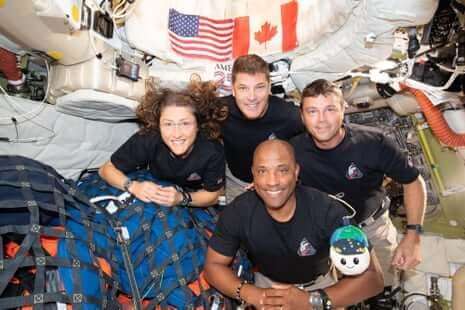
The most significant untold story of this mission lies in the silent testing of "business-end" technologies. Beyond the public-facing images, the crew conducted exhaustive evaluations of next-generation radiation shielding and high-speed communication arrays. These systems are the literal blueprints for the upcoming lunar base. Unlike the short stays of the Apollo era, the information gathered by Wiseman, Glover, Koch, and Hansen is being used to design habitats capable of supporting long-duration stays. “Everything we need, the Earth provides, and that, in and of itself, is somewhat of a miracle,” Christina Koch told journalists, highlighting the stark contrast between Earth’s life-sustaining atmosphere and the hostile vacuum the team has just mastered.
The mission’s success was cemented by the crew's ability to perform complex mechanical repairs in transit. The malfunction of the Orion’s waste management system required mission specialist Christina Koch to perform improvised plumbing in a highly confined environment—a critical demonstration of crew autonomy for future Mars-bound voyages. Furthermore, the record-breaking distance of 252,756 miles from Earth provided a unique laboratory for measuring deep-space radiation effects on the human body. These biological samples, now en route to the Johnson Space Center in Houston, will dictate the pharmaceutical and shielding requirements for the 2028 crewed landing.
The emotional weight of the mission reached its zenith with the proposal to name a lunar crater after Carroll Taylor Wiseman, the late wife of the mission commander. This gesture symbolises a new era of lunar exploration that is as much about human connection as it is about geopolitical achievement. As the crew reunites with their families, the global scientific community begins the monumental task of translating ten days of lunar telemetry into a permanent home on the Moon. The Artemis program has moved past the "proof of concept" phase; the path to the lunar south pole is now officially open.

.jpg)