





.svg)
The digital cartography underpinning London’s autonomous future is facing a physical reckoning in the narrow, gated arteries of the East End. While tech giants promise a seamless transition to driverless transit, the reality on Elder Street suggests a significant "intelligence gap" that is currently being filled by the frustrations of sleep-deprived residents and the pointed critiques of the capital’s professional driving fleet.
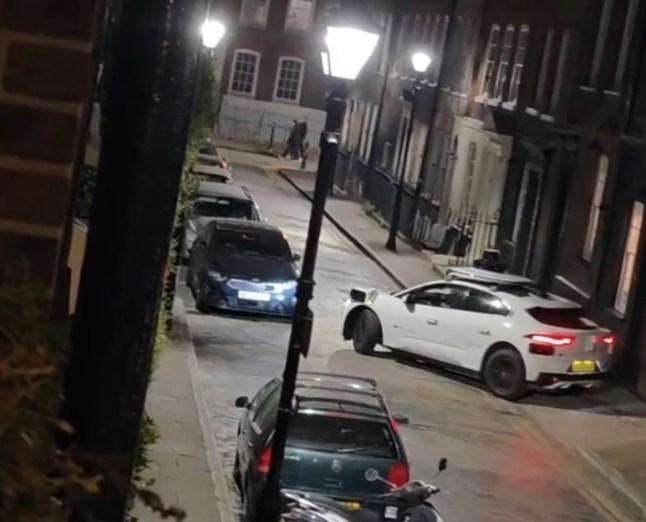
As reported by Daily Dazzling Dawn, the recent series of navigational failures in Shoreditch—where Waymo SUVs have repeatedly entered a gated dead-end at 4:00 am—highlights a critical vulnerability in the software’s ability to interpret London’s unique spatial constraints. Beyond the immediate nuisance of whirring sensors and high-decibel safety pings during botched three-point turns, the incidents have galvanised the Licensed Taxi Drivers' Association (LTDA) and independent cabbies.
London’s taxi drivers, who undergo years of rigorous training to master "The Knowledge," argue that these errors are not mere "growing pains" but evidence of a fundamental inability of AI to replicate human spatial awareness and social etiquette. Concerns among the trade have shifted from pure economic competition to a more urgent discourse on public safety. "A computer doesn't understand that a gated road at 4 am requires silence and a quick exit; it only understands the map data it was fed, which is clearly insufficient for a city as complex as London," one veteran driver told a journalist during a briefing on the Shoreditch incidents.
The technical breakdown on Elder Street has forced Waymo to implement "geo-fencing" restrictions, effectively blacklisting the street from its navigation data. However, industry insiders suggest this is a reactive "sticking plaster" solution. The next phase of the rollout, scheduled for wider commercial testing in September, will likely face intense scrutiny regarding "edge cases"—scenarios where human intuition is required to navigate around roadworks, temporary gates, or unpredictable pedestrian behaviour.
The stakes extend beyond local noise complaints. In the United States, autonomous vehicles have faced regulatory headwinds following incidents involving emergency services and domestic pets. The shadow of a fatal collision involving a cat in San Francisco looms large over the London trials. Critics point out that while Waymo claims a 92% reduction in serious injury crashes compared to humans, the density of London’s streets presents a vastly different risk profile than the wide grids of Phoenix or San Francisco.
What happens next will be a defining moment for Transport for London (TfL). Pressure is mounting for stricter "digital curfews" and more transparent reporting of "disengagements"—instances where the human safety driver must override the AI. For the residents of Shoreditch and the cabbies watching from the sidelines, the "future of transport" currently looks less like a sleek sci-fi utopia and more like a high-tech stalemate in a quiet cul-de-sac.


.jpg)