



.svg)
The unfolding ideological battle within the Labour Party has thrust a fundamental question back into the Westminster spotlight: Is a British return to the European Union a tangible political reality, or merely a rhetorical weapon for internal party maneuvering?
The legal and diplomatic framework governing EU membership suggests that any attempt to reverse Brexit would be an exceptionally arduous, multi-year undertaking. There is no fast-track mechanism or automatic reversal clause for former member states. If a future British government chose to seek membership, it would be required to apply under Article 49 of the Treaty on European Union—the standard accession pathway dictated for any applicant nation.
This process requires the unanimous approval of all 27 existing EU member states. The UK would be required to negotiate accession terms chapter by chapter across dozens of policy areas, with the final agreement subject to ratification by every individual national parliament across the bloc. Furthermore, Brussels insiders maintain that the unique opt-outs previously enjoyed by the UK—including the budget rebate and exemptions from the Schengen Area and the Euro—would no longer be on the table. A rejoining Britain would, in all likelihood, be expected to commit to the single currency and standard accession criteria, making the domestic political sale a formidable challenge.
Leadership Rivalries Ignite Inside Labour Over Europe
A profound ideological divide has emerged at the highest levels of the Labour Party, as senior figures openly clash over the nation's relationship with Europe. The confrontation signals the formal opening of battle lines ahead of an expected leadership contest later this summer.
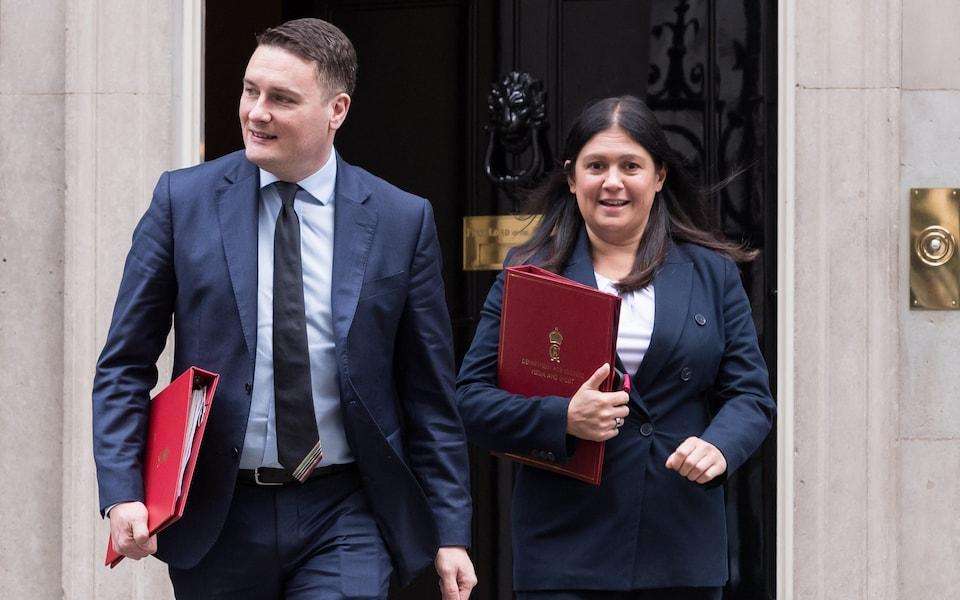
The friction intensified following a public declaration by former Health Secretary Wes Streeting, who recently resigned from the Cabinet with an explicit critique of the current administration's trajectory. Over the weekend, he confirmed his intention to contest any upcoming leadership race on a platform centered on re-entering the European Union, characterizing the decision to leave the trading bloc as a profound historical error and advocating for a radically redefined relationship with Brussels.
This position drew an immediate and sharp rebuke from Culture Secretary Lisa Nandy, who categorized the proposal to revive the European debate as disconnected from the immediate economic anxieties of voters. Speaking to journalists, she described the strategy as an unusual step that failed to reflect the lessons of recent local electoral setbacks, where the party suffered significant losses. She argued that the administration had been pursuing a meticulous, pragmatic approach to repair trading relationships and improve living standards, rather than revisiting constitutional debates that divided the electorate a decade ago.
The Battleground in the North West
The dispute has a critical geographical focus in the North West of England, where Greater Manchester Mayor Andy Burnham is currently preparing a bid to return to Westminster via the upcoming Makerfield by-election on June 18. The vacancy was created after the previous representative stepped aside, establishing a high-stakes electoral test for the party.
The constituency represents a complex challenge; the wider local authority area voted heavily in favor of leaving the European Union during the 2016 referendum, and recent local election data indicates significant structural growth for Reform UK in the region. Allies of the Greater Manchester Mayor have indicated that he maintains his long-held view regarding an eventual return to the European fold, a stance that political opponents are already seeking to utilize as a core campaign vulnerability.
Conservative Leader Kemi Badenoch joined the critique, stating to journalists that the revival of the European debate indicated a lack of a cohesive national strategy within the governing party. She argued that the focus should remain on utilizing post-Brexit regulatory freedoms rather than entering into prolonged, multi-year international negotiations.
Constitutional Dynamics and the Premiership
The escalating debate occurs against a backdrop of intense pressure on the premiership of Sir Keir Starmer, who has consistently resisted internal calls to step down following the party's recent electoral contractions. The institutional framework of the party dictates that should a formal challenge be triggered, the sitting leader retains an automatic right to appear on the ballot paper.
Speculation remains high regarding the potential field of challengers, which, alongside the former Health Secretary, could eventually include Deputy Leader Angela Rayner, who recently resolved a long-standing personal tax matter, clearing a potential path for a future bid. The internal dynamics are further complicated by discussions among some parliamentarians regarding the necessity of a contested race, with certain factions advocating for an orderly transition of authority to avoid a prolonged period of internal instability, while others insist a thorough policy debate is vital for the party's future.
A comprehensive analysis by The Daily Dazzling Dawn indicates that the outcome of the Makerfield contest will heavily influence the mechanics of any subsequent leadership challenge. A decisive performance by the regional mayor would significantly bolster the case for a transition of power, whereas a narrow margin would alter the calculus for competing factions seeking to define the post-crisis direction of the administration.




.jpeg)