. Statistics show that nearly 30 percent of the participating nations are Muslim-majority states. This large-scale participation signals the growing prowess of Muslim nations on the global football map. Continent-Wise Participating Nations:
Muslim-majority countries from three major continents of the world have qualified for this World Cup. The continent-wise list is given below:
- Asia (6 Countries): Saudi Arabia, Qatar, Jordan, Iran, Iraq, and Uzbekistan.
- Africa (5 Countries): Algeria, Morocco, Tunisia, Egypt, and Senegal.
- Europe (2 Countries): Turkey and Bosnia & Herzegovina.
Notable Comebacks & Special Milestones
This edition of the World Cup features some deeply emotional and historic moments for several nations:
Iraq's Return After 4 Decades: Iraq is returning to the World Cup stage after a long gap of 40 years (4 decades). Their return has sparked new enthusiasm in Middle Eastern football.
Turkey Returns After 24 Years: Ending a 24-year long wait, European powerhouse Turkey has once again secured its place in the World Cup.
Special Focus on Morocco: Morocco, who created history by reaching the semifinals in the last Qatar World Cup, remains a major attraction for football fans. Naturally, the eyes of the world will be on them once again.
According to analysts, FIFA's initiative to globalize football and the decision to increase the number of teams have created massive opportunities for Asian and African nations. These teams secured their spots on the grand stage by proving their mettle through consistently brilliant performances in the qualifiers. The participation of a record number of countries is expected to play a major role not only on the pitch but also in presenting a positive image of Muslim culture to the world.
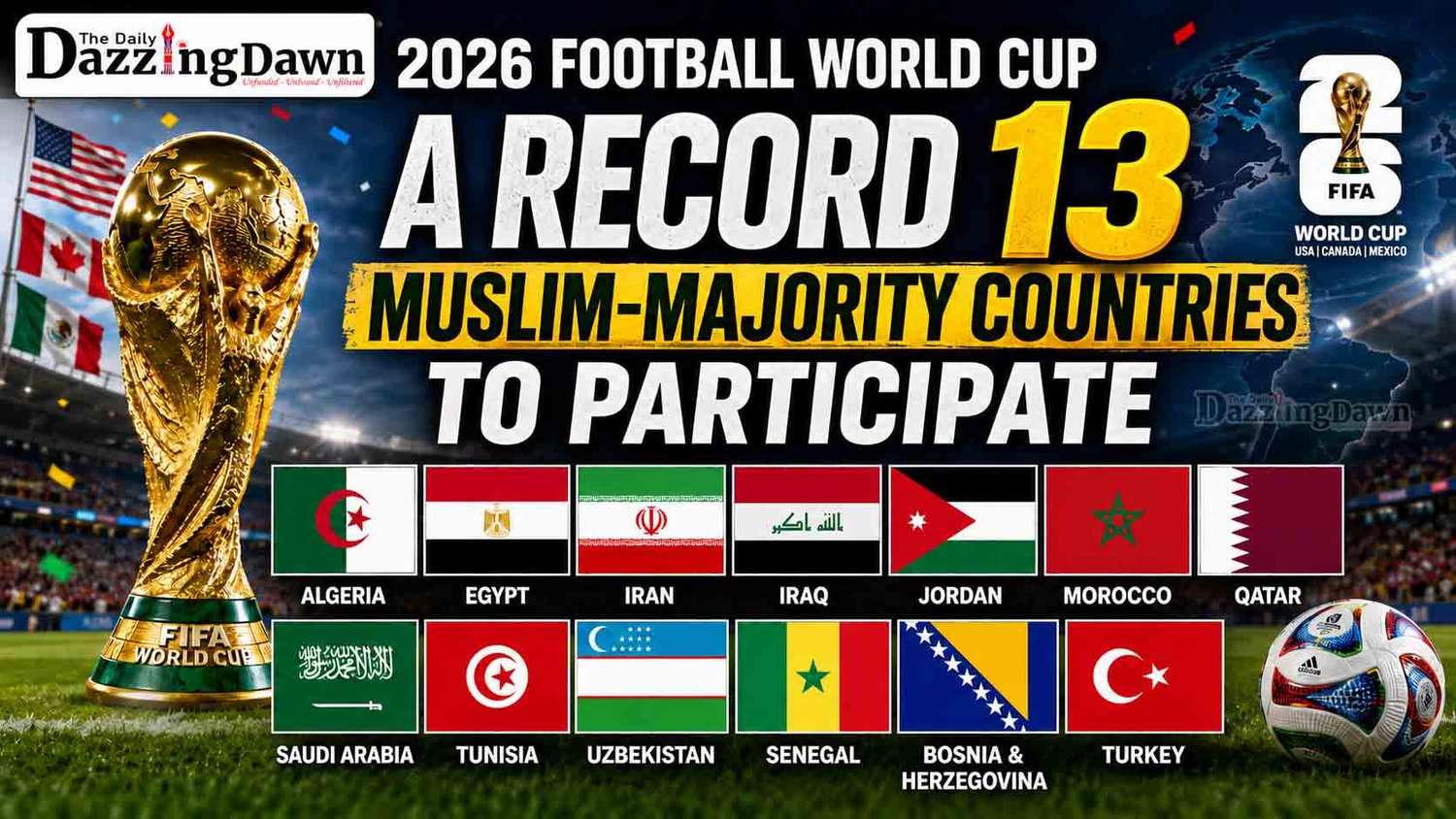
A new history is set to be written in the upcoming 2026 Football World Cup. A record-breaking 13 Muslim-majority nations are going to participate in this edition, marking an unprecedented milestone in the sports arena of the Muslim world. In comparison, only 6 Muslim nations participated in the previous 2022 Qatar World Cup, meaning the number has more than doubled for the upcoming tournament.
According to FIFA's new format, a total of 48 teams will compete in the 2026 World Cup. Statistics show that nearly 30 percent of the participating nations are Muslim-majority states. This large-scale participation signals the growing prowess of Muslim nations on the global football map.
Continent-Wise Participating Nations:
Muslim-majority countries from three major continents of the world have qualified for this World Cup. The continent-wise list is given below:
- Asia (6 Countries): Saudi Arabia, Qatar, Jordan, Iran, Iraq, and Uzbekistan.
- Africa (5 Countries): Algeria, Morocco, Tunisia, Egypt, and Senegal.
- Europe (2 Countries): Turkey and Bosnia & Herzegovina.
Notable Comebacks & Special Milestones
This edition of the World Cup features some deeply emotional and historic moments for several nations:
Iraq's Return After 4 Decades: Iraq is returning to the World Cup stage after a long gap of 40 years (4 decades). Their return has sparked new enthusiasm in Middle Eastern football.
Turkey Returns After 24 Years: Ending a 24-year long wait, European powerhouse Turkey has once again secured its place in the World Cup.
Special Focus on Morocco: Morocco, who created history by reaching the semifinals in the last Qatar World Cup, remains a major attraction for football fans. Naturally, the eyes of the world will be on them once again.
According to analysts, FIFA's initiative to globalize football and the decision to increase the number of teams have created massive opportunities for Asian and African nations. These teams secured their spots on the grand stage by proving their mettle through consistently brilliant performances in the qualifiers. The participation of a record number of countries is expected to play a major role not only on the pitch but also in presenting a positive image of Muslim culture to the world.






.svg)