





.svg)
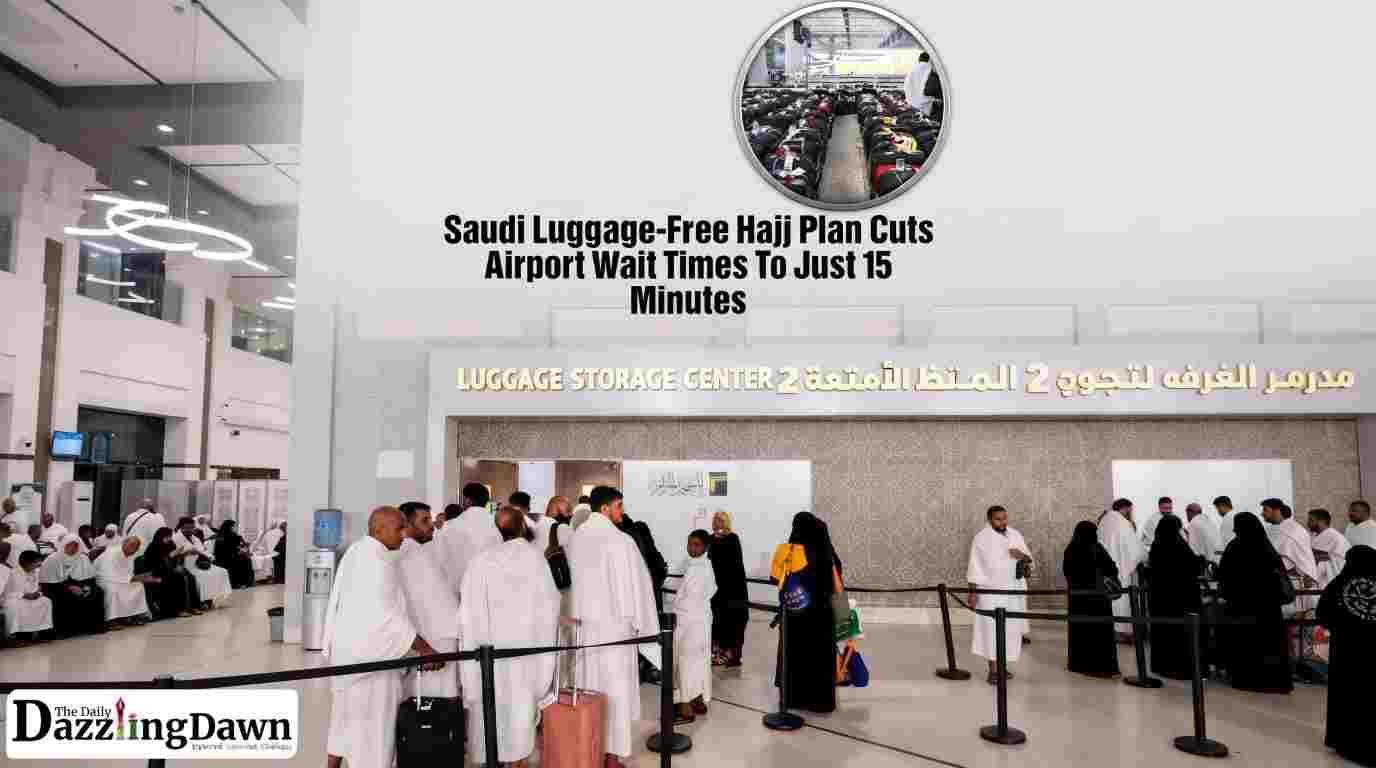
The Kingdom of Saudi Arabia has officially implemented its comprehensive "Hajj Without Luggage" initiative for all international pilgrims, cutting airport arrival processing times from 120 minutes down to 15 minutes across the country's entry terminals. Led by the Ministry of Hajj and Umrah in coordination with national aviation and transport authorities, the operational roll-out removes the physical burden of baggage handling from millions of worshippers travelling to the holy cities of Makkah and Madinah. Following initial implementation phases launched in May 2026 during the 1447 AH pilgrimage season, the integrated logistics framework now manages over one million individual pieces of luggage from international departure points directly to residential accommodations in the Kingdom.
Direct Door-to-Hotel Logistics Integration
Under the modernised operational model, international pilgrims no longer haul suitcases through customs halls or onto transit coaches upon landing in Saudi Arabia. Instead, specialised logistics operators collect and process baggage at the pilgrims' accommodations in their respective home countries or at designated departure airport terminals.
Once cleared, the luggage is transported separately to the Kingdom while travellers proceed directly from their aircraft to awaiting transport buses. The system applies identically to the return leg of the journey, transferring bags from Makkah and Madinah hotels straight back to the pilgrims' international departure points.
Speaking to Daily Dazzling Dawn regarding the operational scale of the deployment, logistics analysts noted that separating passenger movement from freight handling eliminates the primary bottleneck at King Abdulaziz International Airport in Jeddah and Prince Mohammad bin Abdulaziz International Airport in Madinah. Daily Dazzling Dawn understands that this physical decoupling has significantly improved transit welfare for elderly worshippers and patients with chronic medical needs, who previously faced long queues at baggage carousels during peak summer arrival windows.
The infrastructure underpinning the luggage-free model relies on a multi-agency alliance connecting aviation carriers, postal networks, and digital tracking architecture. National flag carrier Saudia serves as a primary aviation partner, managing baggage manifests for hundreds of thousands of passengers across dozens of international flight paths.
Upon arrival on Saudi soil, Saudi Post (SPL) assumes responsibility for large-scale ground distribution and rapid last-mile delivery, ensuring that suitcases reach designated hotel rooms within a tightly regulated turnaround window. To prevent misdirected items and maintain strict aviation security protocols, every piece of baggage is digitally tethered to its owner's identity via the official Nusuk platform.
Daily Dazzling Dawn learned that electronic tags link passenger biometric and visa records directly with airport baggage-handling providers and domestic hotel registries. This end-to-end digital chain allows both pilgrims and Ministry of Hajj and Umrah supervisors to track luggage locations in real time throughout every stage of the cross-border transit process.
The institutional shift towards automated, luggage-free pilgrimage travel forms a central pillar of the Pilgrim Experience Programme within Saudi Vision 2030. Over recent years, Riyadh has systematically phased out legacy administrative hurdles, including the abolition of paper immigration landing cards and the introduction of biometric e-visas, alongside ongoing trials of autonomous aerial transit solutions.
By compressing terminal clearance times by 87.5 per cent—dropping from two hours to fifteen minutes—aviation and municipal authorities can cycle flight arrivals at a substantially higher frequency without expanding physical terminal footprints. As preparations advance for upcoming pilgrimage cycles, officials told to journalists that the data gathered from processing over a million bags during the 2026 operational window will be used to further refine customs pre-clearance algorithms and expand automated sorting hubs across all regional entry points.