




.svg)
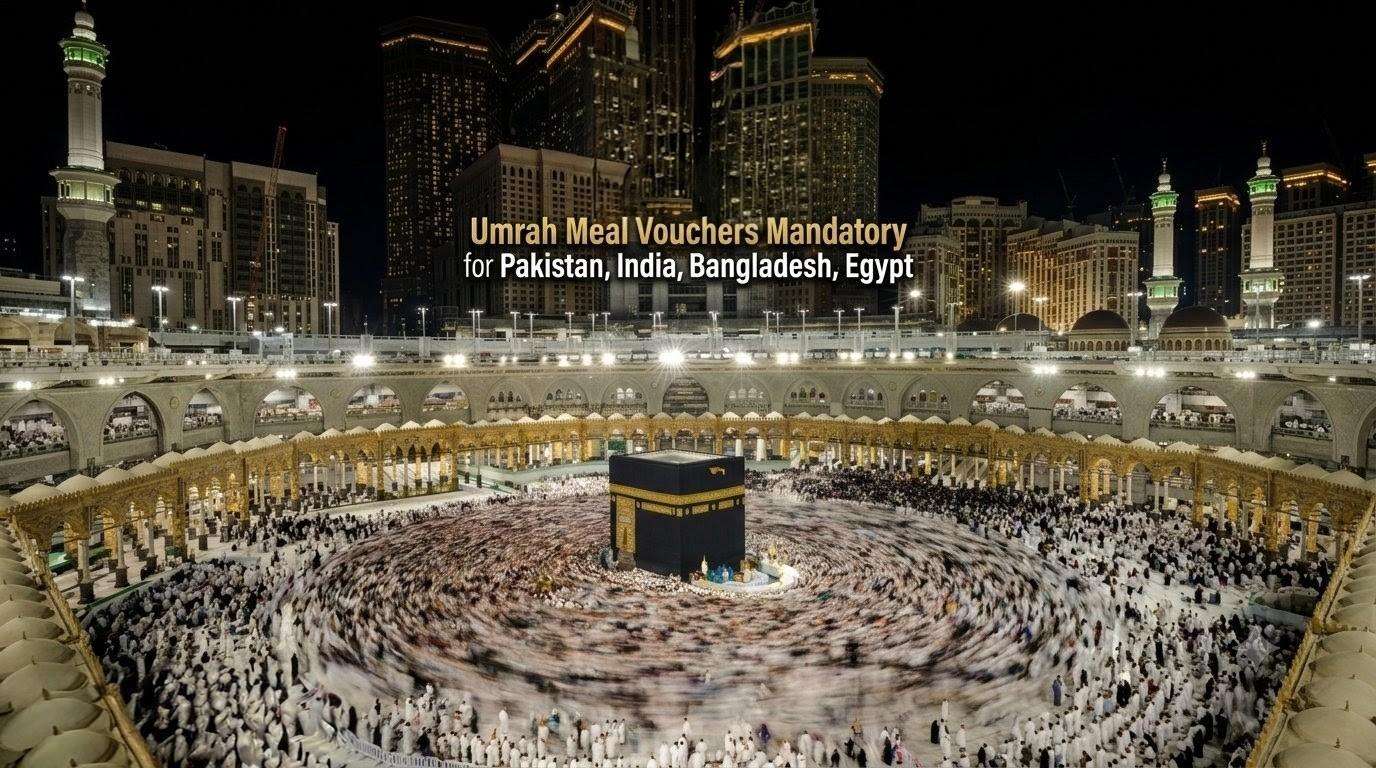
In a structural shift toward the comprehensive digital management of religious tourism, the Saudi Ministry of Hajj and Umrah is set to enforce mandatory digital catering vouchers embedded directly into visa processing for pilgrims originating from Pakistan, India, Bangladesh, and Egypt. Effective from the first day of Rabi-ul-Awwal, the initial phase requires every arriving pilgrim from these four designated source markets to hold a verified Booking Reference Number meal code integrated within the Nusuk platform before visa issuance can occur.
The strategic decision to apply this policy exclusively to Pakistan, India, Bangladesh, and Egypt stems directly from pilgrimage demographics and logistical management necessities. Official industry metrics reveal that these four nations collectively generate the overwhelming majority of international Umrah visitors each year. By piloting the regulation across these massive travel corridors, Saudi authorities aim to resolve persistent operational vulnerabilities—most notably the proliferation of unaccredited street vendors, food safety compliance gaps, and severe sanitation bottlenecks during peak visitation cycles. Dissembling unregistered catering networks and protecting vulnerable travelers from unauthorized meal providers in Makkah and Madinah remain the principal objectives behind this localized initial mandate.
Under the revised structure, a daily charge of approximately twenty Saudi Riyals will be incorporated directly into the base visa fee rather than collected on an ad-hoc basis upon arrival. This mechanism functions similarly to the mandatory transport services previously digitalized through the Nusuk portal. Over ten thousand certified food establishments across Makkah and Madinah have already completed technical integration into the Nusuk network, allowing pilgrims to redeem daily meals seamlessly using verified digital passcodes.
Speaking on condition of anonymity, a senior aviation and travel logistics analyst told to journalist that the consolidation of dining protocols represents the final major piece in Saudi Arabia's overarching Vision 2030 digital framework for holy sites. The analyst noted that while the regulation introduces an unavoidable baseline cost for budget travelers, it effectively safeguards vulnerable pilgrims from predatory pricing and unsanitary catering practices that historically burdened large-scale travel itineraries.
For international travel agencies, the technical transition leaves zero margin for error. As investigated by Daily Dazzling Dawn, the automated Nusuk system now stalls visa generation if an agency's submitted package fails to reflect accredited catering partnerships or miscalculates the required daily voucher balance based on duration of stay. Consequently, tour operators across South Asia and North Africa are actively recalibrating their package pricing models ahead of the Rabi-ul-Awwal deadline.
Looking ahead, Saudi authorities are preparing to extend the mandatory Nusuk catering integration to all global Umrah visa applicants following the conclusion of this initial four-nation pilot. Subsequent updates to the platform will feature real-time dietary customization, automated nutritional tracking for elderly pilgrims, and seamless group dining reservations. Officials anticipate that this unified digital ecosystem will drastically reduce health emergencies and establish unprecedented service standardization for millions of visitors to the holy sanctuaries.