






.svg)
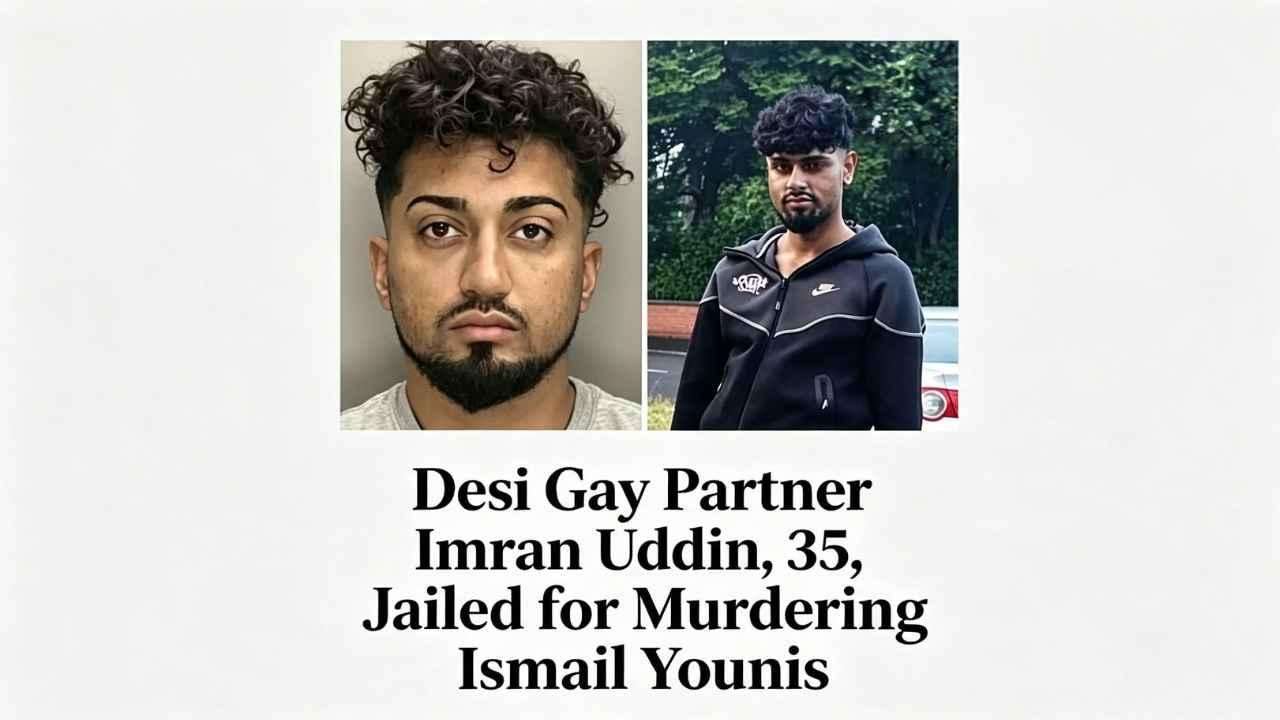
Thirty-five-year-old Imran Uddin, understood within local community accounts to be of British Bangladeshi heritage though this has not been confirmed by officials, has been sentenced to life imprisonment with a minimum term of twenty-one years at Birmingham Crown Court after being convicted of the murder of his twenty-four-year-old partner, Ismail Younis. The fatal assault occurred on 17 August 2025 at Uddin’s flat on Richmond Road in Hockley, Birmingham, following Mr Younis’s decision to terminate the relationship. Court proceedings revealed that Uddin subjected Mr Younis—a vulnerable young man diagnosed with autism, anxiety, and obsessive-compulsive disorder—to prolonged domestic abuse, coercive control, and physical assaults before carrying out the killing.
The court heard that the couple entered into a relationship in 2024, a dynamic described during proceedings as fraught due to cultural pressures and the fact that same-sex intimacy is deemed prohibited within their Islamic faith. During the trial, William Boyce KC, prosecuting, detailed how Uddin systematically diminished Mr Younis’s autonomy. Uddin routinely seized Mr Younis’s mobile phone, withheld his shoes to prevent him from attending work, confiscated a favourite cap to cause psychological distress, and deliberately prepared lamb meals knowing his partner despised the dish.
Daily Dazzling Dawn learned that Uddin recorded both telephone calls and living room interactions using an internal surveillance camera inside his flat. Rather than vindicating Uddin, the footage served as damning evidence for the prosecution, capturing incidents where he shoved Mr Younis to the floor and struck him. Additional closed-circuit television recordings outside the Bullring shopping centre in Birmingham documented Uddin aggressively rummaging through Mr Younis’s pockets. The trial established that Uddin lived a dual life marked by deception, falsely claiming to his family that he worked for the NHS 111 service while remaining unemployed, and advertising sexual services on the dating application Grindr.
The fatal confrontation occurred when Mr Younis attempted to end the abusive relationship. The court heard that Uddin, consumed by an inability to accept rejection, attacked Mr Younis in the flat. Uddin initially stabbed Mr Younis in the chest before strangling him for over two minutes. Following the fatal asphyxiation, Uddin inflicted twelve further stab wounds across the victim's body.
Uddin subsequently wiped the weapon clean, placed it back inside a kitchen drawer, wrapped Mr Younis's body in bedding, and abandoned it on the bedroom floor. To conceal the crime, he shut all windows, locked the property, disposed of bloodstained garments in a neighbour’s dustbin, and departed from Birmingham New Street station to his family home in Milton Keynes. Upon arriving in Milton Keynes, Uddin replaced his handset, destroyed documents tying him to the crime scene, and misled both police officers and Mr Younis’s grandmother as family members searched for the missing victim. Closed-circuit television footage presented to the jury captured Uddin visiting a barber for a haircut and eyebrow threading before ordering food at a chicken shop, displaying complete composure hours after committing the homicide.
Mr Younis’s body remained inside the locked property for three days before discovery on 20 August 2025, by which time decomposition prevented pathologists from ascertaining a singular medical cause of death. Sentencing Uddin at Birmingham Crown Court, Judge Richard Bond described the killing as a needless tragedy and a senseless taking of human life motivated by anger.
Judge Bond observed that Uddin exercised mental torture and characterized the post-mortem mutilation as an ultimate act of physical domination. The court rejected mitigating arguments from defence counsel Martin Rutherford KC regarding family estrangement, with Judge Bond noting the absence of any remorse demonstrated by the defendant’s calm demeanour following the attack. Uddin will serve a minimum term of twenty-one years before becoming eligible to apply for parole.