





.jpg)
.svg)
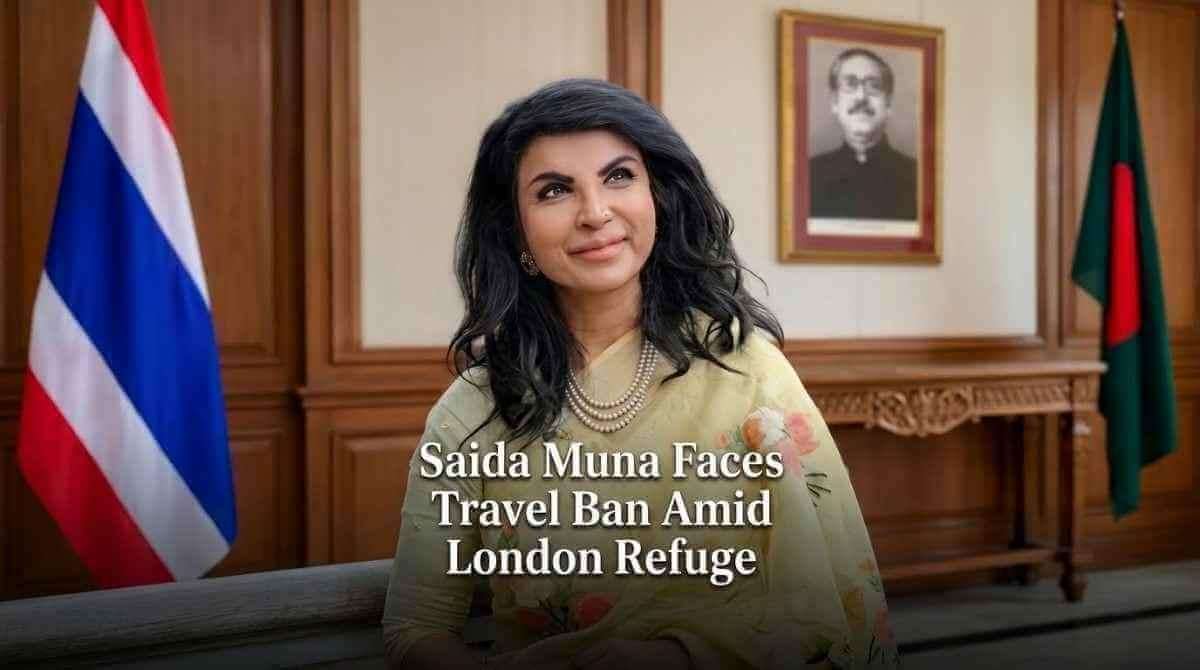
Former Northern Ireland Lord Chief Justice, Sir Declan Morgan, has delivered a scathing critique of the UK's practice of revoking citizenship, specifically stating that under the recommendations of his commission, British Bangladeshi Sylheti woman Shamima Begum should not have been stripped of her nationality.
Begum, a native Londoner who grew up in the Tower Hamlets area—home to the UK's largest Bangladeshi community—left the country aged 15 in 2015 to travel to Islamic State-controlled territory. She remains in a detention camp in northeast Syria. Her case has become the most prominent example of the UK government’s power to revoke citizenship, a power critics argue unfairly targets ethnic minorities.
Speaking on Tuesday at the launch of a new report by the Independent Commission on UK Counter-Terrorism Law, Policy and Practice, Sir Declan Morgan—who chairs the commission and is a supplementary panel member of the UK Supreme Court—was unequivocal. When asked about the Tower Hamlets resident's situation, Morgan asserted that the government "should do what we [the commission] recommend... [their current approach is] unsustainable and inconsistent with our human rights obligations."
Disproportionate Impact on British Ethnic Minorities
The commission's three-year review makes extensive criticisms of current counter-terrorism legislation, highlighting that the use of citizenship deprivation powers disproportionately affects British ethnic minorities.
The report stresses that over the past two decades, the threshold for deprivation has "been steadily lowered, and procedural protections have weakened." Crucially, it notes that evidence "indicates that race, belonging, and identity shape the application of deprivation powers."
Begum, who was stripped of her British citizenship by the previous Conservative government in 2019, had her legal team argue the decision was unlawful, claiming authorities failed to prevent her trafficking. The Supreme Court last year refused to hear her appeal. The government maintains she is eligible for Bangladeshi citizenship through her parents, a claim firmly rejected by Bangladeshi authorities.
The Commission's report aims to end this "unequal protection among British citizens," as only those with an actual or potential claim to another nationality are vulnerable—a group overwhelmingly comprising minority ethnic communities.
Call for Repatriation and Policy Overhaul
The report explicitly recommends that citizenship should not be revoked from anyone born with British citizenship, or from children registered as British, a measure that would immediately protect Begum.
Morgan urged the "repatriation of British nationals including of dual citizenship." This stance aligns the UK with allies like the US, Canada, and Australia, who have successfully repatriated many of their citizens from conflict zones, making the UK an "outlier" in its refusal. Former attorney general and commission member, Conservative politician Dominic Grieve, noted that the UK "really stands out as the one country refusing to do this."
Furthermore, the commission criticises the open-ended criterion that allows the Home Secretary to strip citizenship if deemed "conducive to the public good," arguing this leaves the UK "open to accusations that deprivation criteria are arbitrary."
For individuals like Begum, who was 15 when she departed, the report also focuses on the role of trafficking, noting: "Several women were also children when they departed the UK with their families, and therefore could be considered victims of human trafficking."
In its totality, the report is a powerful call for an overhaul of the UK's counter-terrorism laws, aiming to tighten the definition of terrorism and ensure that "counterterrorism powers risk being applied too broadly—capturing behaviour that is harmful but not terrorist."

.jpg)