



.jpg)


.svg)
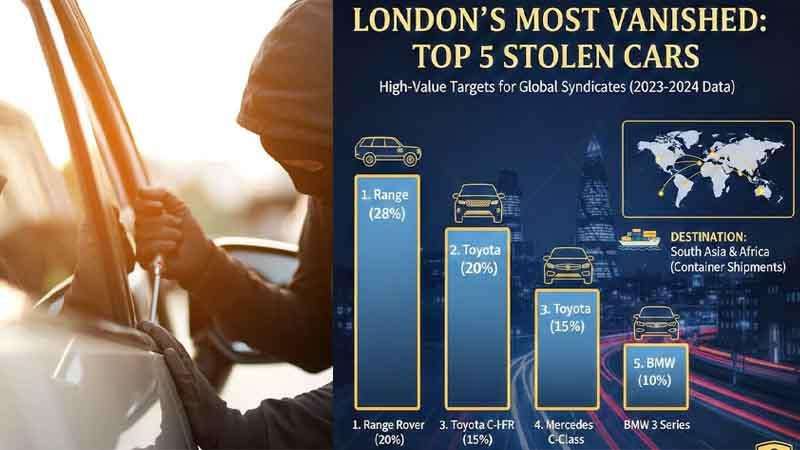
The quiet streets of London have become the primary showroom for a multi-billion pound global criminal enterprise where the odds of a thief being caught are now mathematically negligible. While the Metropolitan Police celebrate a marginal 15 percent dip in reported incidents over the last eight months, a deeper dive into the data reveals a systemic collapse in judicial accountability. Approximately 88.5 percent of vehicle thefts in the capital are closed without a suspect ever being identified, a figure that surges to a staggering 98 percent in high-value zones like Westminster’s West End. This "theft epidemic" is no longer a localized nuisance; it is a sophisticated export business where British SUVs and luxury sedans vanish from driveways at midnight and surface in shipping containers halfway across the globe by dawn.
The Anatomy of Policing Paralysis
The crisis of unsolved car thefts in London stems from a combination of chronic underfunding and a shift in investigative priorities. For over a decade, the "Golden Hour" of investigation—the critical window immediately following a crime—has been lost to bureaucratic lag and a depletion of frontline officers. Critics argue that the Metropolitan Police have effectively "decriminalized" car theft by treating it as an insurance matter rather than a priority criminal offense. Unlike violent crime, vehicle theft often requires expensive, cross-border digital forensics to track sophisticated "relay" attacks where thieves bypass keyless entry systems in seconds. Without a dedicated "crack team" at the National Crime Agency to bridge the gap between local patrols and international border intelligence, the Met remains reactive, arriving at the scene long after the digital trail has gone cold.
The Export Pipeline to South Asia and Beyond
The pervasive question of where these thousands of vehicles vanish has a complex, geopolitical answer. While many budget vehicles are "chopped" for parts in local UK workshops to service the domestic black market, high-end Range Rovers, Toyotas, and Lexuses are destined for the international stage. Intelligence reports indicate a surge in illicit exports to Pakistan, Bangladesh, and various East African nations. These jurisdictions are favored due to high demand for right-hand drive vehicles and porous customs checks at the receiving end. In these markets, a stolen London vehicle can fetch double its UK market value, rebranded with fraudulent paperwork that masks its illicit origins.
Logistics of the Vanishing Act
The transition from a London curb to an overseas port is a masterclass in illicit logistics. The vast majority of stolen vehicles are moved via sea freight rather than by road. Criminal syndicates utilize the sheer volume of the UK’s major shipping hubs, such as Tilbury or Southampton, to hide stolen assets. Vehicles are often packed into containers mislabelled as "household goods" or "machinery parts." In some instances, thieves use "blocking" techniques, surrounding the stolen car with scrap metal or electronics to interfere with GPS tracking signals and X-ray scanners. This maritime "shell game" makes detection nearly impossible without specific intelligence, which the current fragmented police structure often fails to provide.
The Syndicates Pulling the Strings
The narrative that car theft is the work of opportunistic local youths is largely outdated. Today’s vehicle crime is dominated by highly organized, transnational gangs with specific regional footprints. Investigations have frequently linked Eastern European syndicates, particularly those from Albania and Romania, to the technical "theft" phase, utilizing advanced hacking tools. However, the "disposal" phase often involves established organized crime groups with deep ties to South Asian and Middle Eastern trade routes. These gangs operate as professional logistics firms, managing a supply chain that includes "drivers" who move the cars to "cool-down" locations, "brokers" who handle the fraudulent export manifests, and "distributors" in the destination countries.
A Legislative Race Against Technology
As the government prepares to ban the sale of electronic devices used in "relay" thefts, the question remains whether policy can outpace criminal innovation. The Liberal Democrats' call for a centralized task force highlights the fundamental flaw in the current strategy: local police are fighting a global war with municipal tools. Until the Metropolitan Police and the National Crime Agency treat a stolen car not as an isolated loss, but as the initial capital for an international crime syndicate, the 90 percent unsolved rate is likely to persist. For now, London remains the world’s most lucrative "pick-and-pull" yard for global organized crime.
Daily Dazzling Dawn Fact Check:
- Statistic: Is it true that 9 out of 10 thefts go unsolved? Yes. Official House of Commons data confirms an 88.5% "no suspect identified" rate for the Met.
- Geography: Are cars going to Pakistan and Bangladesh? Yes. Border Force seizures and NCA reports consistently identify these as top-tier destinations for right-hand drive luxury exports.
- Method: Are they sent by ship? Yes. Sea freight is the primary method for international smuggling due to the ability to hide vehicles in bulk containers.




.jpg)
.jpg)