





.svg)
The landscape of British residency is undergoing its most radical transformation in decades as the "Earned Settlement" model moves from white paper proposal to administrative reality. For thousands of families across the UK, the traditional five-year path to Indefinite Leave to Remain is dissolving, replaced by a sophisticated, variable-length journey that prioritizes fiscal contribution and specific professional niches over mere physical presence. This shift represents a fundamental pivot in how the state values its migrant population, moving away from a time-served metric toward a merit-and-means-tested integration strategy.
The New Architecture of Residency
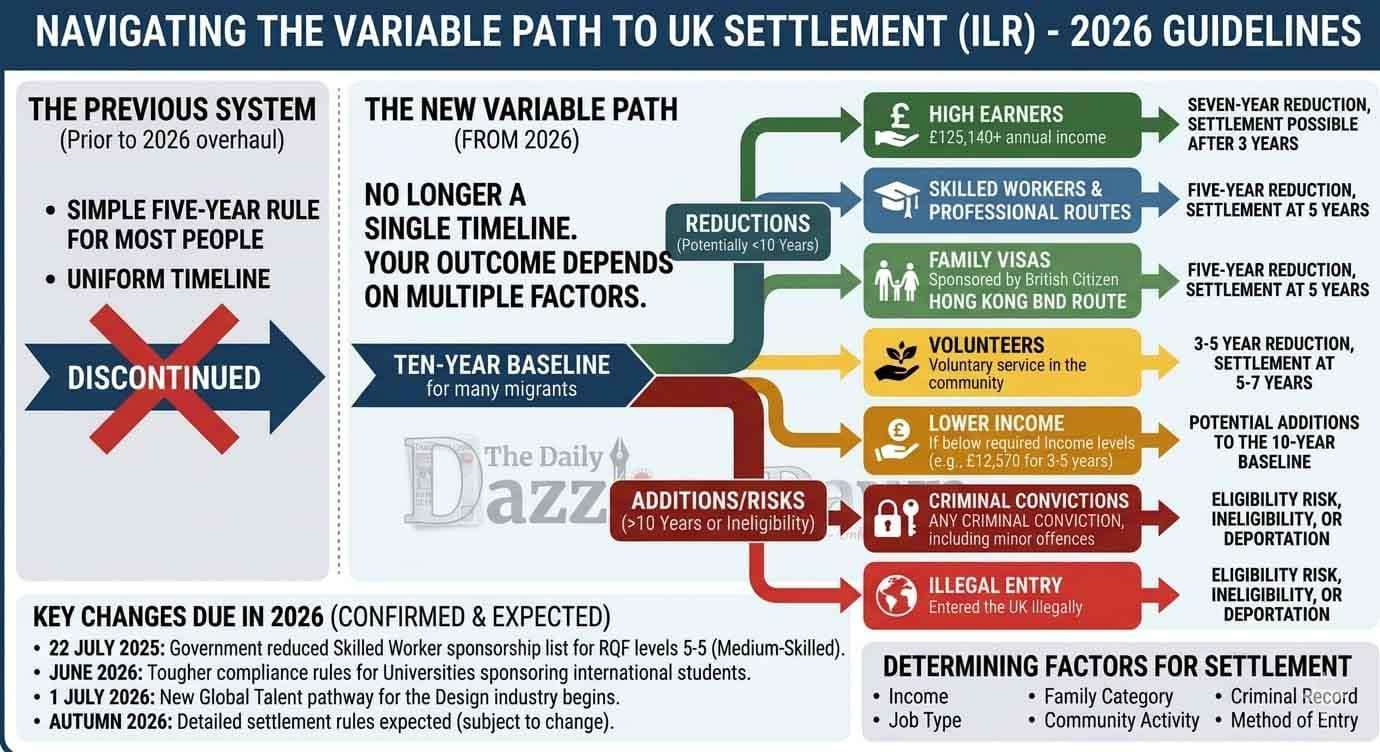
Central to this overhaul is the introduction of a ten-year baseline for settlement, a move that effectively doubles the waiting period for the majority of applicants. This baseline is not a fixed ceiling but a starting point that fluctuates based on a complex matrix of income, job type, and community engagement. High earners are the primary beneficiaries of this new flexibility; those commanding salaries above £125,140 can see their path to settlement slashed by seven years, potentially securing ILR in just thirty-six months. Conversely, those in medium-skilled roles or lower-income brackets face a decade-long climb, complicated by a newly proposed requirement to maintain a minimum annual income of at least £12,570 for several years.
Institutional Scrutiny and Professional Shifts
The ripple effects of these changes extend deep into the UK’s educational and creative sectors. Starting in June 2026, universities will face a regime of "tougher compliance," with the government tightening the requirements for maintaining student sponsor licenses. This increased scrutiny aims to elevate the standard of international education providers but leaves many institutions fearing for their long-term viability. Simultaneously, the Global Talent route is expanding, with a dedicated pathway for the design industry set to launch in July 2026. This targeted opening suggests a government strategy of "surgical migration"—tightening the borders for general labor while rolling out the red carpet for specific, high-value creative sectors.
The Compliance Trap and Settlement Uncertainty
Beyond the timelines, the criteria for "good character" are becoming significantly more stringent. Proposals suggest a shift toward a "zero-conviction" policy, moving away from the previous threshold which largely ignored offenses not resulting in a twelve-month custodial sentence. This literal interpretation of criminal records could see minor infractions become absolute barriers to settlement. Furthermore, the "settlement plan" remains the most volatile element of the 2026 agenda. While initial reports suggested an April rollout, the Home Office has indicated that the full suite of rules may not be laid before Parliament until the autumn, leaving families in a state of "constant uncertainty" as they navigate a system where the finish line continues to move.
The Road Ahead: Automation and Biometric Integration
Looking toward the end of 2026 and into 2027, the focus is expected to shift toward the total digitization of the border. Experts predict the next phase will involve the mandatory integration of "Digital Status" for all visa holders, eliminating physical BRP cards entirely and linking settlement eligibility to real-time HMRC tax data. This would allow the government to automatically flag individuals who fall below the new income thresholds, potentially triggering administrative reviews before an applicant even realizes they have breached the new "earned settlement" criteria. The era of the discretionary visa is ending, replaced by an algorithmic approach to British citizenship.