





.svg)
The era of gold as a passive safe haven is undergoing a radical transformation as market participants weigh geopolitical volatility against the harsh reality of sustained high interest rates.
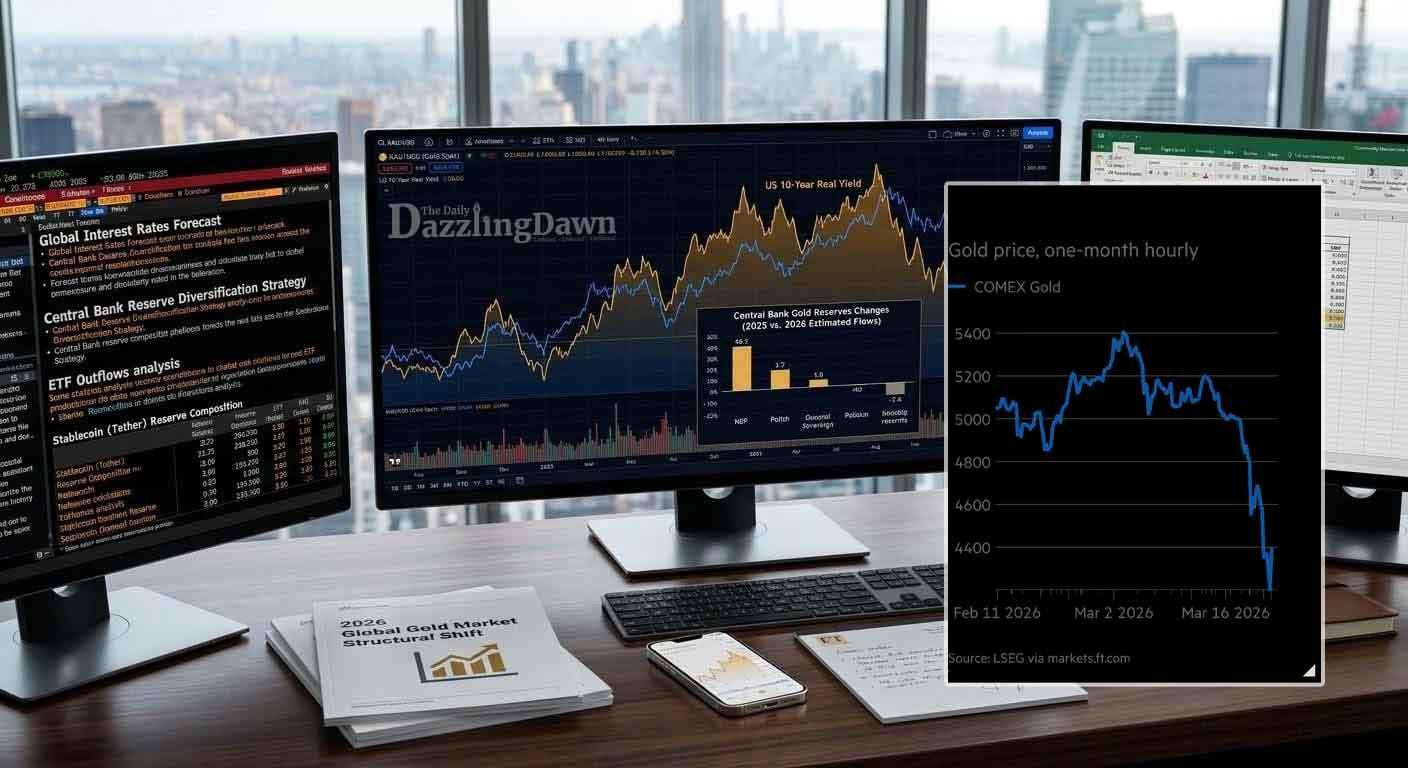
While traditional narratives often suggest that gold thrives during conflict, the current landscape reveals a much more nuanced mechanical struggle within the global financial system. Investors are witnessing a rare decoupling where geopolitical tension no longer guarantees a price floor, primarily because the opportunity cost of holding non-yielding assets has reached its highest level in over a decade. The Federal Reserve’s shift from anticipated rate cuts to a "higher for longer" stance has fundamentally altered the math for institutional holders, specifically Exchange Traded Funds (ETFs), which are now seeing significant liquidation pressures as capital migrates toward high-yield debt instruments.
The New Central Bank Paradox
A major driver of gold’s recent valuation was the aggressive diversification of reserves by sovereign nations seeking to insulate themselves from US dollar-denominated sanctions. However, this trend is facing an unexpected cooling period. Poland, a massive buyer throughout 2025, has introduced a new variable into the market: the "monetization of gains." When central banks begin discussing the sale of gold to fund national defense or infrastructure, the market loses its most reliable floor. This potential for "two-way risk" means that central banks are no longer just bottomless buyers but are becoming active managers who may sell into strength to realize profits, creating a ceiling that previously did not exist.
Private Liquidity and the Crypto Connection
Beyond sovereign states, the role of "shadow buyers" like Tether has become a critical, yet volatile, component of the gold ecosystem. In 2025, the stablecoin issuer emerged as the second-largest global purchaser of the metal, effectively linking the crypto-liquidity cycle to the bullion market. As the market capitalization of major stablecoins fluctuates in early 2026, the corresponding demand for gold reserves from these digital entities has softened. This withdrawal of "new era" liquidity, combined with the shrinking balance sheets of major ETFs, suggests that the market is moving away from speculative fervor and back toward a valuation model based on real interest rates and dollar strength.
Future Outlook and Profitability
For the individual investor, the question of profitability now hinges on the timing of the "re-coupling" between gold and real yields. If the historical relationship between low rates and high gold prices fully restores, the current price levels may face further downward adjustments before finding a sustainable base. The next phase of the gold market will likely be defined by transparency in official flow data and the resilience of private sector demand in the face of a strengthening US dollar.
Gold remains a vital diversification tool, but the "buy and hold" strategy is being replaced by a "tactical entry" approach as the market digests these structural shifts in global reserve management and digital asset backing.