






.svg)
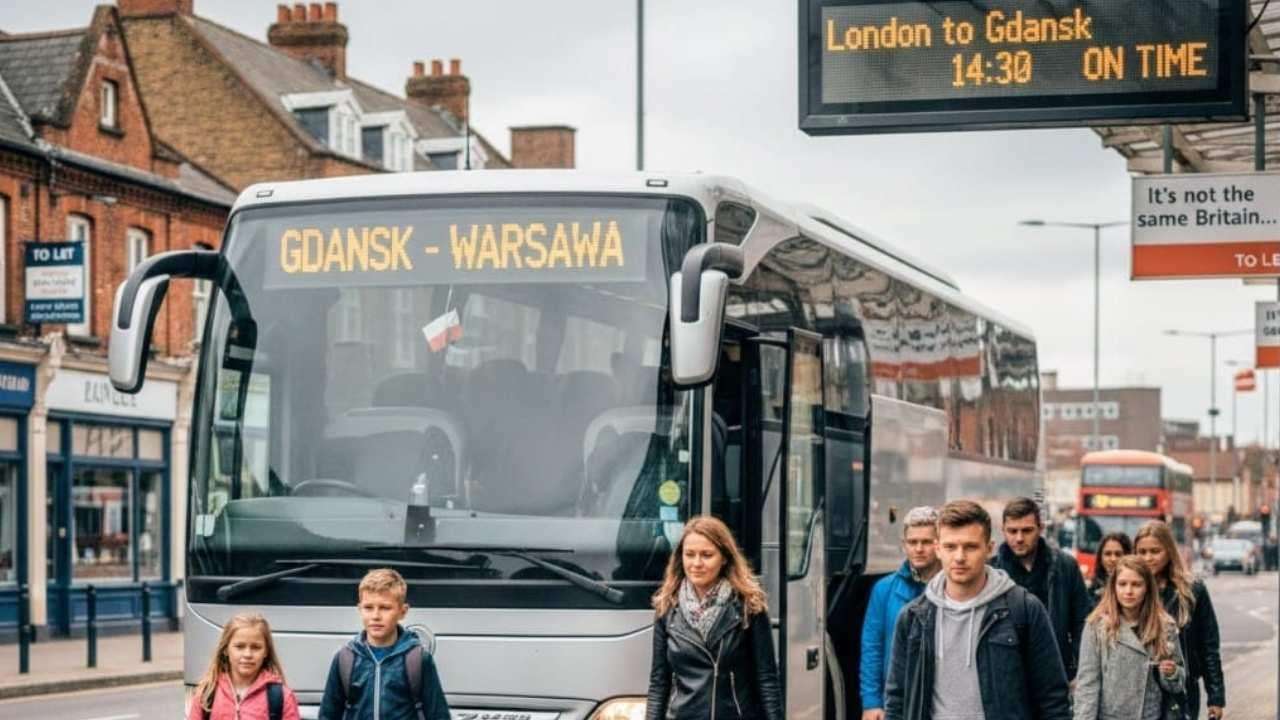
The United Kingdom is experiencing a profound demographic and economic shift as a significant number of its European Union migrant workers, led by Polish nationals, elect to return to their revitalised homelands. This "Great Reversal" is not merely an anecdote of cultural dissatisfaction but a robust statistical trend indicating a crisis of national competitiveness, with the UK's appeal waning dramatically against the backdrop of rapid economic resurgence across Central and Eastern Europe.
The Statistical Reality: A Net Loss of EU Citizens
Official figures confirm this accelerating departure, revealing that net migration of EU citizens has turned negative since the end of the post-Brexit transition period. The most recent provisional data for the year ending June 2025 estimated net EU+ national migration at a negative 70,000, meaning significantly more EU citizens left the UK than arrived. This statistic is an emphatic reversal from the positive influx that defined the early 2000s.
While Polish migrants, historically the largest EU group in the UK, have been the primary focus, they are far from alone. Data for the year ending June 2025 indicates that EU+ nationals accounted for a substantial 22% of all long-term emigration from the UK. The provisional bulletin from November 2025 specifically shows that Romanian citizens, not Poles, were the most common EU nationality to emigrate from the UK in the year to mid-2025. Other prominent nationalities such as Italian, French, and German citizens have also been part of this broader downward trend in net EU migration. The exodus is pan-European, reflecting a wider re-evaluation of the UK's economic and social landscape among all EU citizens.
For the Polish community specifically, the net loss remains acute. In the year to June 2024, the UK saw a net loss of 18,000 Poles, with a staggering 25,000 departing compared to just 7,000 arrivals. Consequently, the estimated Polish population in the UK has dropped to approximately 750,000 and continues its steep decline from its peak.
The Waning Allure of Britain
For many, the Britain that welcomed them has fundamentally changed. Slawek Frankowski, a 35-year-old welder who recently returned to his home near Gdansk with his wife, Sylwia, captured this sentiment, lamenting, "It wasn't the same Britain we came to for a better life 15 years ago." Their decision to sell their Hampshire maisonette for £200,000 and embark on the drive home in late 2023 was catalysed by spiralling safety concerns—citing frequent police activity and stabbings near their family home in Fareham—and the loss of his wife's warehouse job.
This narrative is compounded by the "push factors" of the UK's current economic climate. Migrant workers cite spiralling high costs of living, confusing and time-consuming bureaucracy, and what they perceive as punitive taxation as key deterrents. A Polish plumber based in Sunderland voiced a common grievance, noting that heavy taxes and stifling regulations have rendered running a small business far more challenging than a decade ago.
Poland’s Economic Miracle: The Great Magnet
The most powerful factor driving the return, however, is the compelling success story of the Polish economy. Following years of significant domestic and EU investment, Poland’s economic power is rapidly closing the gap with the UK. Recent reports have highlighted that Poland’s real GDP per capita has surged by nearly 18% since 2019, while the UK’s has increased by less than 1% over the same period.
Poland’s future outlook is robust, with European Commission forecasts projecting real GDP to increase by 3.5% in 2026. The nation's modern economic hubs, such as the regional centre of Gdansk, now rival those in Western Europe, featuring modern international airports, high-speed rail links, and advanced business districts that attract major global firms. Unemployment in Gdansk is now below 3%, a testament to the region’s vitality. This is contrasted with the UK, where the national unemployment rate is significantly higher, standing at 4.36% in 2024.
The promise of a better life at home is palpable. Mr. Frankowski is now overseeing the construction of a four-bedroom house on family land and is confident of securing well-paid employment quickly in the burgeoning local industry, supported by lower taxation for businesses and a more affordable cost of living. The Polish government, under Prime Minister Donald Tusk, has publicly noted that repatriates can often earn more at home, particularly in new, high-growth sectors like renewable energy and future nuclear projects. This not only offers economic stability but also a return to a society that, for many, offers greater social cohesion and a school system that, as Mr. Frankowski noted, emphasises traditional discipline.
Public Reaction and the Policy Vacuum
The departure of these hardworking, reliable workers is a significant and painful loss for the UK economy, exacerbating ongoing labour shortages across crucial sectors from construction and plumbing to hospitality and healthcare. The public discourse reflects deep concern over the country's direction, with many praising the contribution of the departing workers.
Michalski, a public commentator, articulated this sentiment, stating: "Believe me, the Poles are not daft. My late father was Polish and without prejudice I have learned over the years that they are a very polite and hard working people. It is not surprising, in my view, that many are choosing to return to Poland for the reasons mentioned in the article. It is a clear sign that the UK is in serious decline."
"Most of the polish people come here to actually work and usually do a very good job, and not many cause problems or look towards the state for handouts," added another citizen, 'Tj'.
Conversely, some comments, like one noting, "Instead we get others who don’t exactly share our values and commit horrible crimes against those giving them asylum based on false claims," highlight the sensitive and complex debates surrounding broader immigration policy that have been ignited by these shifts.
The reversal of this major demographic movement underlines the growing difficulty the UK faces in attracting and retaining vital skilled labour from the EU. With a negative net flow of EU citizens, and non-EU migration now driving the overall national figures, the government faces a stark challenge: stem the outflow of valued workers by addressing the core issues of economic stagnation, safety, and burdensome bureaucracy, or accept the costly loss of the reliable, skilled labour force that was once deemed indispensable.

.jpeg)

.jpg)





_2.jpg)