

.jpg)

.svg)
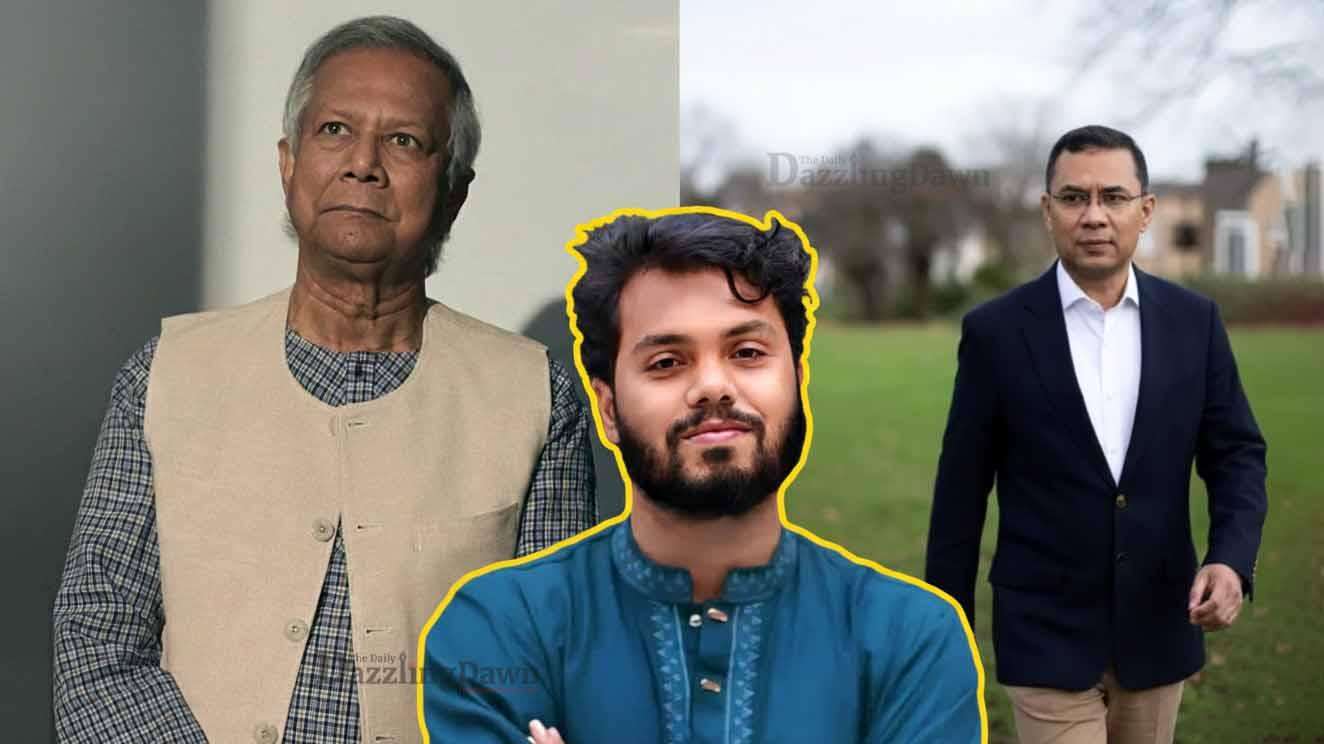
In a dramatic escalation of political tensions just weeks ahead of the scheduled February 12 general elections, the interim government of Bangladesh, led by Chief Adviser Muhammad Yunus, ordered a nationwide security clampdown on Saturday. The move follows the critical shooting of an aspiring electoral candidate and youth leader, injecting fresh turmoil and fear into an already volatile political landscape.
Sharif Osmann Hadi, a prominent leader of the right-wing cultural organisation Inquilab Mancha and an independent candidate for the upcoming polls, was shot at close range on Friday while launching his election campaign in the Bijoynagar area of central Dhaka. Medics have described his condition as critical, and he remains on life support at a specialized hospital. Hadi was a frontline figure in the powerful student-led "July Uprising" that ultimately toppled the Awami League government in August 2024.
Home Affairs Adviser Lt Gen (Retd) Jahangir Alam Chowdhury announced the initiation of the second phase of "Operation Devil Hunt," a massive security crackdown aimed at ensuring public safety and combating the rising threat posed by illegal firearms. The initial phase of the operation, launched earlier this year, had focused on alleged supporters and "henchmen" of the now-disbanded Awami League. The government has offered a Taka 50 lakh reward for information leading to the arrest of one of the suspects, identified by police as Faisal Karim Masud, one of three motorcycle-borne assailants.
Tarique Rahman's Homecoming and the Question of Fairness
The political temperature rose further with the Bangladesh Nationalist Party (BNP) announcing the long-awaited return of its acting chairman, Tarique Rahman, son of critically ill former Prime Minister Khaleda Zia. Rahman, who has steered the party from self-exile in London for 17 years, is slated to return to Dhaka on December 25. His return positions the 60-year-old—who was instrumental in coordinating the party's strategy from abroad—at the heart of the electoral battle, potentially as the BNP's Prime Minister candidate should the party secure a victory. The announcement comes just a day after the Election Commission declared the poll schedule, a timing that signals the party's full-throttle commitment to the election under the banner of the new political era.
Meanwhile, a deep sense of cynicism regarding the fairness of the electoral process, or "level playing field," persists among political observers and some opposition figures. The core issue remains a deeply held distrust of state mechanisms and the fear of political violence. Adding to the controversy, the Jamaat-e-Islami has taken into its fold a candidate reportedly expelled from the BNP five times, fueling accusations of opportunistic alliances and internal party instability ahead of the polls. The question, frequently posed in the vernacular media and among the political class—বিএনপি থেকে পাচবার বহিস্কৃত প্রার্থীকে দলে নিয়েছে জামায়াত শেষ পর্যন্ত কি নির্বাচনের রোডম্যাপে থাকবে, লেভেল প্লেয়িং কি হয়েছে—translates compellingly to: “Jamaat has taken a candidate into its fold who was expelled from the BNP five times; ultimately, will this be part of the election roadmap, and has a level playing field been achieved?”
The Precarious Path to Democracy
Bangladesh currently stands at a perilous inflection point, balancing on a razor's edge between a historic democratic transition and a descent into sustained political turbulence. The interim government of Muhammad Yunus, born from the revolutionary fervor of the July Uprising, faces an almost insurmountable task: simultaneously stabilizing the nation, enacting fundamental structural reforms, and delivering a truly credible election.
The attack on Sharif Osman Hadi is not an isolated criminal act; it is a profound symptom of the deep-seated political antagonism and culture of violence that continues to plague the country. As the chief adviser ordered a manhunt and met with Hadi’s family, assuring them of all support, the incident highlights the chilling reality that political participation remains a high-risk endeavor, especially for those who emerged from the recent mass movement. Hadi's comrade, National Citizen Party (NCP) chief organiser Hasnat Abdullah, vowed, "We take an oath in Osman Hadi’s blood – they will not be given even an inch of space in this country," a statement that underscores the revolutionary generation's refusal to tolerate a return to a "fascist" political culture.
The sudden return of Tarique Rahman, long a symbol of the BNP's past, is a high-stakes gamble. While it offers the party a visible and charismatic leader on the ground, it also introduces a figure burdened by a controversial past into a sensitive transitional period. His presence is expected to energize the BNP base but could also become a flashpoint for rivalries and legal challenges, potentially distracting from the core objective of a free and fair election.
Finally, the question of the level playing field is existential. With the Awami League banned and its top leaders on the run or in jail, the electoral arena appears dramatically altered. Yet, the consolidation of power by other parties, as seen in the controversial Jamaat-BNP candidate alignment, raises legitimate concerns about political opportunism superseding ideological commitment to genuine democratic reform. For the February 12 polls to be accepted as legitimate, both domestically and internationally, the Yunus administration must demonstrate that its clampdown is a neutral enforcement of law and order, not a partisan tool, and that the electoral process can withstand the pressures of returning exiles and the specter of pre-poll violence. The very foundation of Bangladesh's nascent democratic future hinges on its ability to transcend this toxic cycle of retribution and distrust.