




.svg)
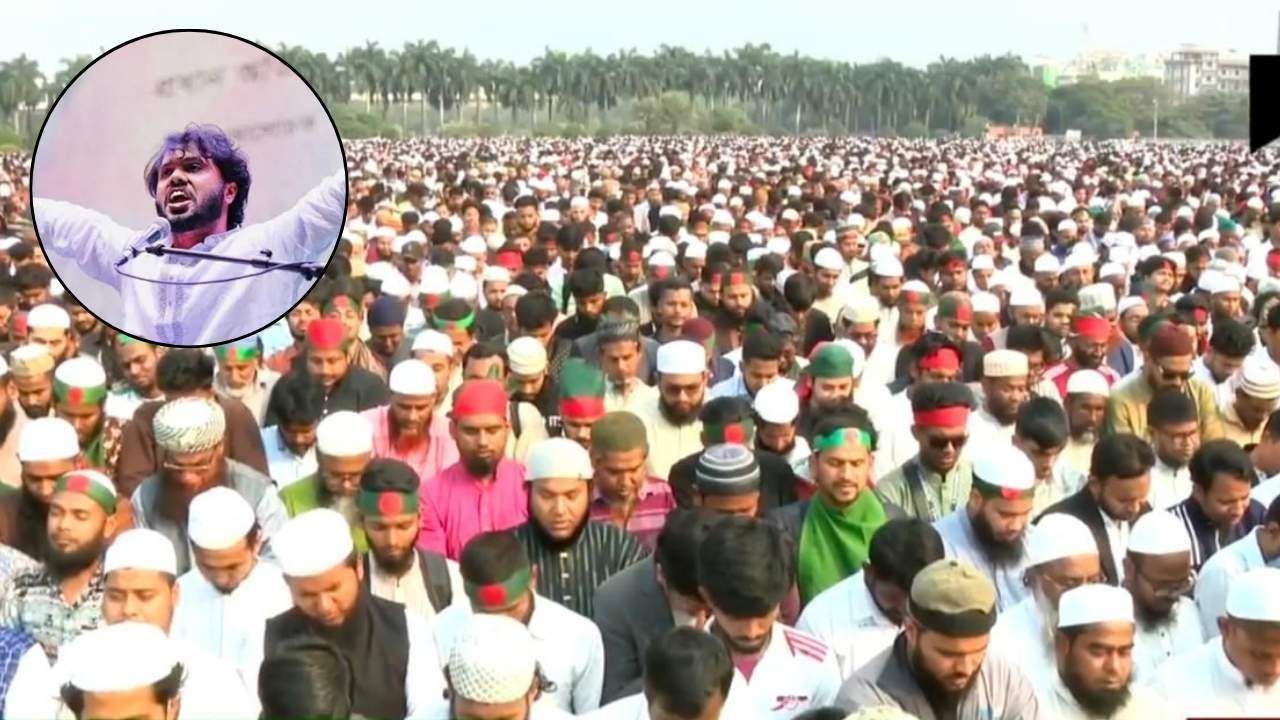
The streets of Dhaka fell under a heavy, somber silence Saturday morning as Bangladesh observed a national day of mourning for Sharif Osman Hadi, the student icon whose assassination has pushed the nation’s fragile democratic transition to the brink of collapse. While the black-bordered flags flew at half-mast across the capital, the atmosphere remained electric with a volatile mix of grief and geopolitical fury. The funeral at the South Plaza of the Jatiya Sangsad Bhaban was not merely a farewell to a 32-year-old activist; it served as a grim referendum on the interim government’s ability to maintain order and its promise to return the country to the ballot box.Any failure to hold elections on schedule risks plunging Bangladesh into an economic tailspin and a total collapse of law and order. Financial experts warn that a delayed transition would trigger a massive flight of foreign capital and paralyze the vital garment export sector, potentially leading to hyperinflation and a depleted national reserve. Furthermore, a prolonged political vacuum would likely embolden extremist factions and deepen the current security crisis, leaving the state unable to curb mob violence or maintain administrative control, effectively pushing the nation toward the brink of becoming a failed state.
Hadi, the charismatic spokesperson for Inqilab Moncho, succumbed to brain stem injuries at Singapore General Hospital on Thursday, over a week after masked gunmen on a motorcycle targeted him in the heart of Dhaka. His death has acted as a catalyst for a new wave of radicalization among the youth who originally ousted Sheikh Hasina in August 2024. However, the current unrest has taken on a distinctly darker, more isolationist tone. Protesters have shifted their focus toward India, accusing the neighboring giant of harboring "killers" and protecting the deposed Hasina, who remains in exile despite a death sentence hanging over her head for crimes against humanity.
The security situation has deteriorated rapidly over the last 48 hours, with the interim government struggling to contain a multi-front crisis. In Chattogram, the residence of veteran politician Anisul Islam Mahmud was reduced to a charred shell by an angry mob late Friday. Simultaneously, the nation’s cultural heartbeat, the Bangladesh Shilpakala Academy, has been forced to shutter its doors indefinitely following a series of arson attacks. Perhaps most concerning for the future of democratic discourse is the coordinated siege on the offices of the country's leading independent newspapers, Prothom Alo and The Daily Star. These institutions, long seen as the pillars of Bangladeshi civil society, are now being branded as "pro-foreign agents" by extremist elements, leaving journalists trapped in burning buildings and the free press under unprecedented threat.
Related News: Election Sabotage? Dhaka Arson Attacks Loom Over Tarique Rahman’s Return
This escalating chaos has cast a long, dark shadow over the proposed February 2026 general elections. While Nobel Laureate Muhammad Yunus has repeatedly pledged a transition to civilian rule, the reality on the ground suggests a widening gap between administrative intent and public safety. Sources within the interim administration, speaking on the condition of anonymity, admit that the "road map to democracy" is being redrawn by the hour. With the police force largely demoralized and body cameras now mandatory just to manage funeral processions, the feasibility of holding a free and fair election in fourteen months is increasingly viewed with skepticism by international observers and local analysts alike.
The "Inqilab Moncho" platform, which Hadi was set to represent in the Dhaka-8 constituency, has now become the epicenter of a movement that demands nothing less than the immediate extradition of Sheikh Hasina and a total restructuring of Bangladesh’s foreign policy. The lynching of a Hindu man in Mymensingh and the attacks on the Indian Assistant High Commission in Chattogram have further complicated matters, threatening to isolate Bangladesh from its primary regional partner. As the interim government "strongly condemns" the violence, the populist tide in Shahbagh Square suggests that the state’s authority is being tested by the very revolutionary energy that brought it to power.
As the body of Sharif Osman Hadi is laid to rest, the question haunting the halls of the Parliament House is no longer just about who killed the student leader, but whether the state he fought to "liberate" can survive its own internal fractures. With the 2026 election timeline now buried under the weight of national mourning and structural instability, Bangladesh enters a period of profound uncertainty, where the path to the polls is blocked by the ashes of its own recent history.