.jpg)





.svg)
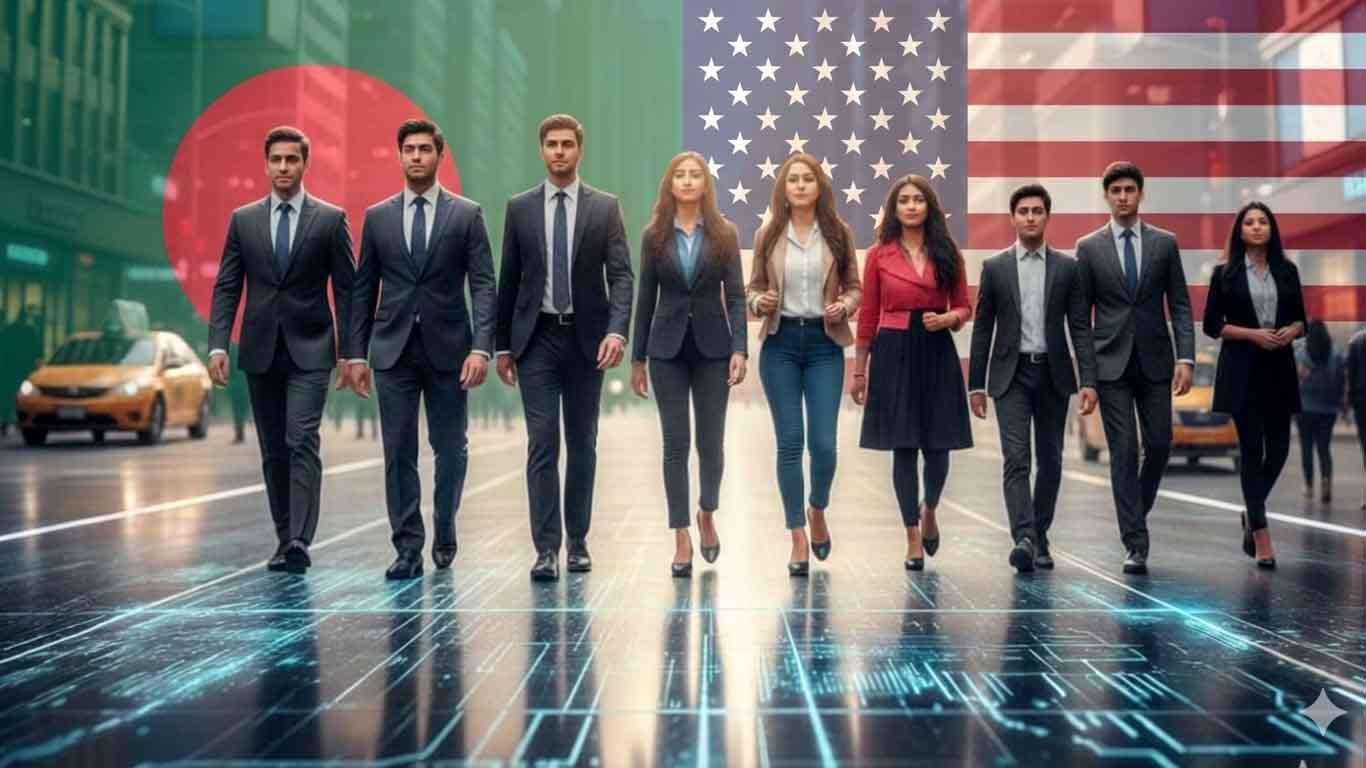
The Bangladeshi-American story is no longer just a footnote in the history of South Asian migration; it has become a defining chapter of the modern American experience. While early pioneers arrived at the turn of the 20th century—primarily as sailors from the Bengal region who settled in East Coast ports like Harlem and Detroit—the community has undergone a seismic shift. Today, what began as a few thousand individuals in the 1980s has blossomed into a vibrant population of over 300,000, marked by a fierce entrepreneurial spirit and a rapid transition from first-generation struggle to second-generation leadership.
A Demographic Powerhouse: Legal and Generational Reach
Recent data reveals a community that is deeply rooted yet expanding at a record pace. Approximately 270,000 residents identify as Bangladeshi alone, while the total community exceeds 300,000 when including multi-ethnic backgrounds. The generational divide is becoming a hallmark of the community's evolution: roughly 71% are foreign-born immigrants, while the U.S.-born second and third generations now make up 29% of the population.
While the vast majority reside in the U.S. legally—with 60% of immigrants having already attained naturalized citizenship—non-partisan estimates suggest approximately 34,000 individuals may be part of the undocumented population. This group, though small in percentage, represents the continued pull of the American dream for those seeking to escape economic or environmental instability back home.
The Sylheti Legacy and the Modern Workforce
Cultural identity within the diaspora remains distinct. A significant majority of Bangladeshi Americans trace their roots to the Sylhet division. While official census data does not categorize by sub-region, community leaders and linguistic researchers estimate that Sylhetis make up nearly 70% to 80% of the population in major hubs like New York and Michigan. This regional bond has created a robust "ethnic economy," where newer arrivals find support in well-established networks.
The community’s professional landscape is a study in grit. Traditionally, the "main" profession for many Bangladeshi immigrants has been in the service and transportation sectors, particularly in New York City, where they are a dominant force in the taxi and rideshare industries. However, a massive shift toward entrepreneurship is underway. Thousands now own convenience stores, gas stations, and restaurants, while a growing professional class has established a significant presence in IT, engineering, and the healthcare sector—where over 20% of Asian Americans overall now serve as physicians.
Strength in Stability: Marriage and Social Fabric
Socially, the Bangladeshi community stands out for its remarkable family stability. According to the Institute for Family Studies, Bangladeshi Americans boast one of the highest marriage rates and lowest divorce rates in the country. Approximately 71% of Bangladeshi adults are married, significantly higher than the 58% average for the broader U.S. Asian population. In terms of stability, 87% of Bangladeshi immigrant families with children remain in their first marriage, closely trailing Indian Americans (94%) but outperforming many other regional and native-born groups. This strong family structure is often cited as a buffer against the economic hardships faced by newer immigrants.
Safety and Success: The Crime Rate Myth
Despite living in dense urban environments that are often unfairly scrutinized, the Bangladeshi community maintains a notably low crime rate. National crime statistics frequently categorize Bangladeshi Americans within the "Asian" demographic, which consistently records the lowest arrest and incarceration rates of any racial group in the U.S. Community leaders point to high levels of religious engagement and strong social cohesion as the primary reasons for this "peaceful footprint" in American cities.
The New Vanguard: Second-Generation Achievement
The true story of the Bangladeshi community today is the "breakout" success of its youth. The second and third generations are shattering the glass ceilings their parents encountered. With a 59% college graduation rate among U.S.-born Bangladeshis—outpacing the national average—this new generation has entered the highest tiers of American life. From tech innovators in Silicon Valley to high-ranking political figures like U.S. Representative Rashida Tlaib's diverse district staff and NYC council members, the "Bangladeshi-American" identity is now synonymous with civic leadership and professional excellence.