




.svg)
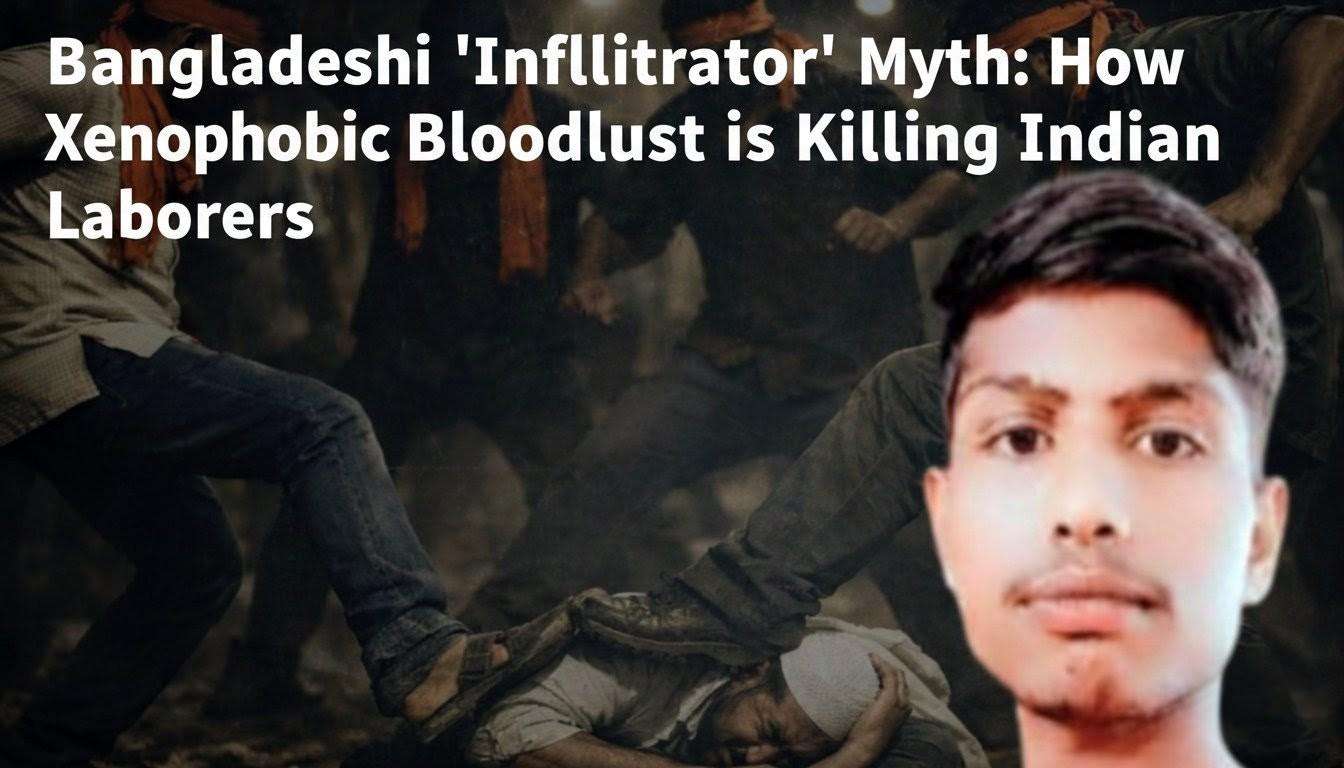
Deadly Identity Crisis: How 'Bangladeshi' Suspicion Led to the Brutal Lynching of an Indian Laborer-The fragile safety of India’s internal migrant workforce has been shattered following the horrific public lynching of a Muslim and Jewel Sheikh, a 30-year-old stone mason who was beaten to death in Odisha’s Sambalpur district. Sheikh, a resident of West Bengal’s Chakbahadurpur village, became the latest victim of a virulent brand of xenophobia that targets Bengali-speaking workers under the unfounded suspicion of being illegal Bangladeshi immigrants. The incident, which occurred on Christmas Eve, has ignited a fierce debate over the systemic "othering" of laborers and the failure of local authorities to acknowledge the communal and racial motivations behind such vigilante violence, Daily Dazzling Dawn understands.
Witness testimony from the scene directly contradicts the official police narrative, which attempted to categorize the murder as a petty dispute over a cigarette. According to Paltu Sheikh, a co-worker who survived the assault, the violence was preceded by an aggressive interrogation regarding their citizenship. A gang of men approached the workers at a tea stall, demanding to see their Aadhaar cards and questioning their origins. Despite the laborers producing their legal Indian identification, the mob—armed with bamboo sticks—launched a relentless attack. Jewel Sheikh sustained catastrophic head injuries and was pronounced dead on arrival at the hospital, while his colleagues were left with severe physical and psychological trauma.
This tragedy is part of a broader, more disturbing trend of documented hate crimes across India. Data from "Hate Watch" monitors and human rights organizations reveals that Bengali-speaking Muslims are increasingly subjected to arbitrary "citizenship tests" by civilian mobs. Recent statistics indicate a sharp rise in hate-motivated violence, with hundreds of incidents recorded where the mere sound of a specific dialect or the appearance of a worker triggers a violent response. Critics argue that the political rhetoric surrounding illegal immigration has effectively radicalized local populations, leading to a climate where thousands of Indian citizens from West Bengal and Assam are harassed, detained, or, in the case of Jewel Sheikh, murdered due to "migrant paranoia."
The human cost of this atmosphere is exacerbated by a lack of legal protection for internal migrants. While the National Crime Records Bureau (NCRB) has noted a rise in communal tensions, independent observers point to a systemic failure in reporting these as xenophobic hate crimes. Thousands of people have been labeled as "foreigners" without due process, leading to a humanitarian crisis where poverty-stricken laborers are forced to carry proof of identity just to buy a cup of tea. For Jewel’s family, who survived on his meager daily wage of 600 rupees, the loss is an indictment of a society that prioritizes suspicion over humanity. His uncle, Riaqul Haque, expressed the family's disbelief that an Indian citizen could be killed in his own country simply for being "mistaken" for a neighbor.
As Odisha police confirm the arrest of six individuals, the focus remains on whether the justice system will address the root cause of the attack. By dismissing the role of xenophobia, authorities risk emboldening future mobs. The death of Jewel Sheikh is not just a local crime; it is a symptom of a national crisis where identity has become a life-or-death gamble for the country’s most vulnerable workers. Without a radical shift in how the state handles hate speech and migrant protection, the borders of safety for India’s labor force will continue to shrink.


_3.jpg)