




.svg)
The green Bangladeshi passport, once a symbol of mobility and hope for millions, is now facing its most significant credibility crisis in decades. As we move into early 2026, international borders have become increasingly hostile for Bangladeshi nationals, with valid visa holders being turned away at airports and rejection rates reaching historic highs. From the departure gates in Dhaka to the immigration counters of Kuala Lumpur and London, a pattern of systemic exclusion is emerging, driven by a volatile mix of domestic instability, documentation fraud, and a global recalibration of migration risks.
The Statistics of Exclusion: Breaking Down the Refusal Surge
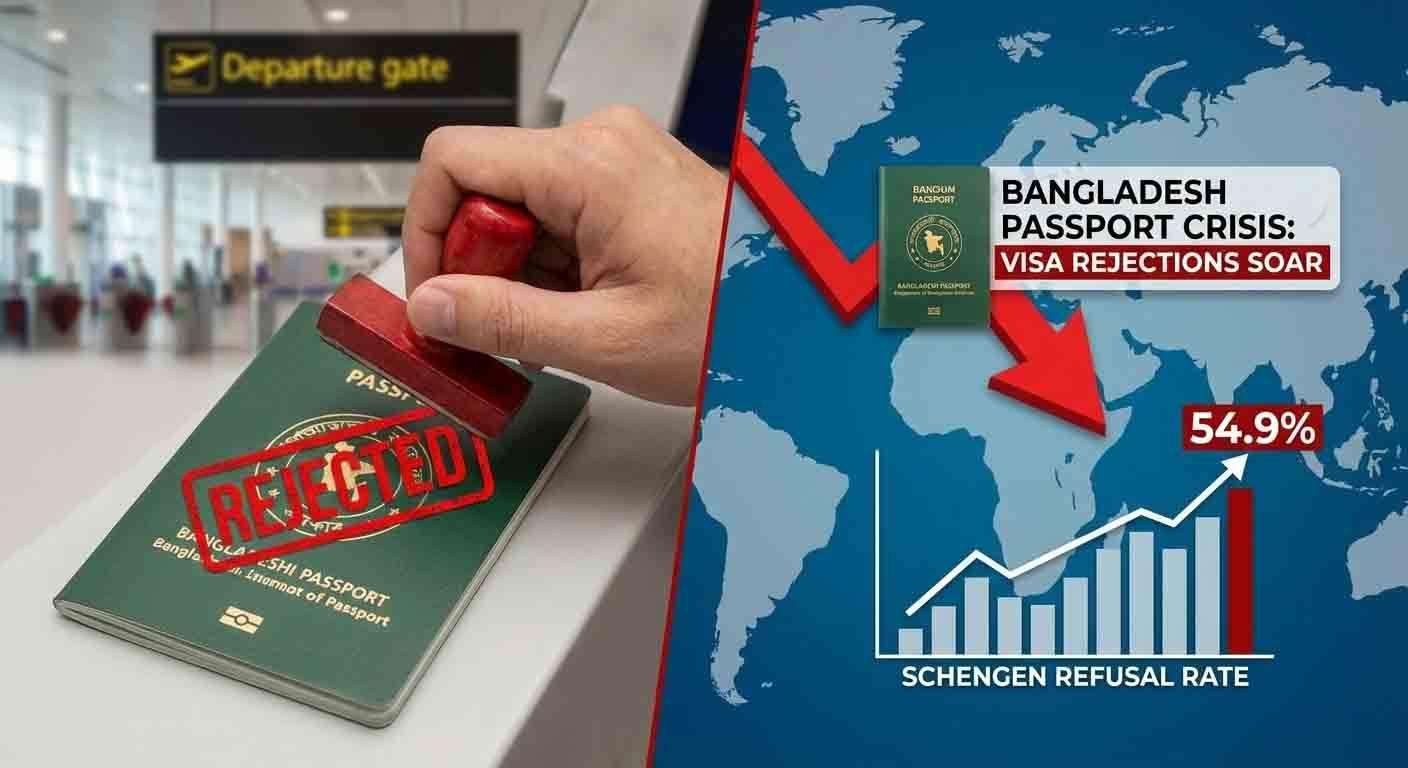
The data for 2024 and 2025 reveals a grim reality for those seeking to travel abroad. In the Schengen area, the rejection rate for Bangladeshi applicants spiked to a staggering 54.9% in 2024, a sharp rise from 43.3% the previous year. This means more than one in every two applications is denied. The United States follows a similar trend, with the adjusted refusal rate for B-visas (tourist/business) for Bangladeshis hitting approximately 46.1% in the 2024 fiscal year. Even the United Kingdom, traditionally a top destination for students and professionals, has tightened its grip; average refusal rates for Bangladeshi applicants reached 22% in the year ending September 2025. This surge led nine major UK universities to pause recruitment from Bangladesh entirely after exceeding the Home Office’s 10% compliance threshold.
Airport Turnbacks and the Human Cost of Suspicion
The crisis is not limited to the visa application stage; it follows travelers to the arrival gate. In the first four months of 2025 alone, over 3,500 Bangladeshi nationals were denied entry at foreign airports and deported despite holding valid visas. The most high-profile incidents occurred at Kuala Lumpur International Airport, where hundreds were sent back in waves between July and August 2025. Immigration authorities increasingly use "profiling" to flag Bangladeshi travelers, often citing a lack of sufficient funds or vague travel itineraries as grounds for immediate deportation. This atmosphere of suspicion has left genuine tourists, such as NGO professionals and business travelers, facing humiliating interrogations and arbitrary detentions.
Labor Markets Slammed Shut Amidst Policy Shifts
The misuse of visitor visas as a "backdoor" for unauthorized work has caused a domino effect across the Middle East and Southeast Asia. The UAE, which saw recruitment numbers drop from 101,000 in 2022 to just 47,000 in late 2024, has maintained a restrictive stance on new employment visas. Similarly, Malaysia halted recruitment in May 2024 following reports of unethical practices, and Oman closed its doors citing widespread document forgery. These closures are often silent and unannounced, leaving thousands of migrant workers in a state of legal limbo and financial ruin after paying exorbitant fees to recruitment agencies.
Decline in Global Standing: The Henley Index Warning
The erosion of international trust is reflected in the Henley Passport Index 2025, where the Bangladeshi passport fell to the 100th position, sharing its rank with North Korea. With a mobility score of only 48, Bangladeshi citizens now have visa-free or visa-on-arrival access to less than a quarter of the world. This decline is not just a matter of prestige; it is a direct consequence of perceived institutional weaknesses in Bangladesh's documentation systems and the high volume of asylum seekers originating from the country following the political upheavals of July 2024.
The Root Causes: A Deeper Analysis of Institutional Failure
Experts point to three primary drivers behind this "invisible wall." First is the documentation integrity gap, where the prevalence of forged bank statements and academic certificates has made foreign consulates hyper-cautious. Second is the political instability factor; since the 2024 uprising, foreign governments increasingly view all travelers as potential overstayers or asylum seekers. Finally, there is diplomatic inertia. While other nations negotiate mobility frameworks, Bangladesh’s diplomatic missions have been criticized for a passive approach, failing to provide the systemic recruitment oversight or the assertive engagement needed to restore global confidence in the green passport.