





.svg)
The sanctity of the mosque as a house of Allah is a fundamental pillar of the British Muslim experience, yet increasingly, these holy spaces find themselves at the center of national firestorms not because of the faith practiced within their walls, but due to the administrative maneuvers of their management committees. The recent scrutiny surrounding Green Lane Mosque in Birmingham serves as a stark case study in how the actions of a few committee members can victimize a sacred institution, exposing it to external criticism and political leverage. As investigators look into the West Midlands Police’s decision to ban Israeli football fans, a clear distinction must be made between the spiritual essence of the mosque and the controversial political engagements of its leadership.
The Management Factor in the West Midlands Police Appointment
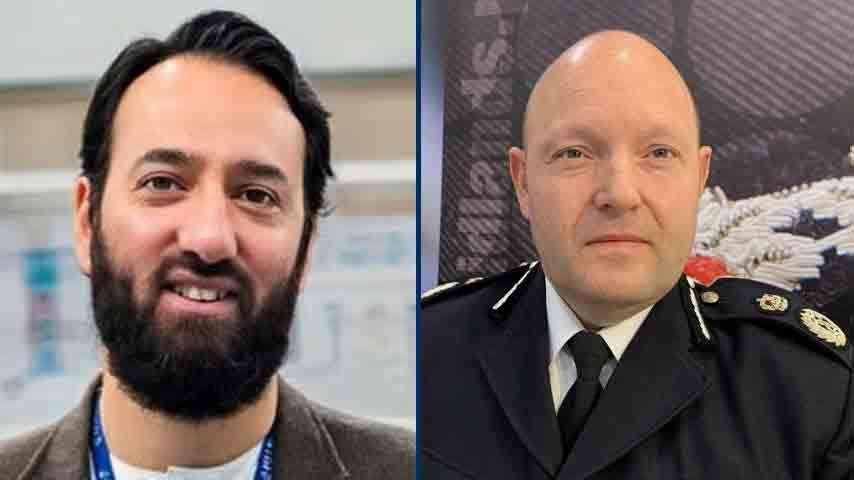
At the heart of the current investigation is the revelation that Kamran Hussain, then-Chief Executive of the Green Lane Mosque management committee, sat on the interview panel that selected Craig Guildford as the Chief Constable of West Midlands Police. While critics have attempted to frame this as "mosque involvement," a factual analysis confirms that this was an administrative role occupied by a single individual representing a committee, rather than an action by the mosque as a religious body. Mr. Hussain was one of 53 individuals involved in a multi-layered selection process. However, the decision by the management committee to place their staff in high-profile political appointments has inadvertently tethered the reputation of the holy site to the subsequent actions of the police force, including the widely condemned ban on Maccabi Tel Aviv supporters.
Fact Checking the Mosque’s Direct Involvement in the Fan Ban
The question of whether the mosque itself—as a place of worship—was involved in the policing decision requires a nuanced understanding of UK community engagement. Investigative findings show that the West Midlands Police "consulted" with several mosque representatives prior to recommending the ban on Jewish fans, citing fears of hooliganism. Crucially, the mosque as a spiritual entity does not dictate police policy; rather, the management committee acted as a liaison. By involving themselves in sensitive policing matters, the committee provided a vacuum for anti-Muslim sentiment to fill, leading figures like Kemi Badenoch to call for the Chief Constable’s dismissal and sparking accusations of "two-tier policing." The mosque, in this context, is a victim of administrative overreach that has invited unnecessary political scrutiny into a place of prayer.
Financial Fallout and the Victimization of the Sacred
The management committee’s handling of internal speakers has further strained the mosque’s standing in the public eye. In 2023, the government suspended a £2 million youth center grant following the circulation of controversial clips involving speakers associated with the committee. While the management insisted these clips were taken out of context and emphasized their rejection of extremism, the damage to the mosque’s ability to serve its community was already done. When a management committee fails to vet its public output or political associations effectively, the "house of Allah" suffers the loss of resources and the stain of controversy. This pattern of victimization is seen across various UK mosques, where the spiritual sanctity of the Masjid is overshadowed by the headline-grabbing decisions of its governing boards.
Awaiting the Home Secretary’s Verdict on Policing and Politics
The situation has now reached the highest levels of government, with Home Secretary Shabana Mahmood awaiting a formal report from Sir Andy Cooke, His Majesty’s Chief Inspector of Constabulary. This report is expected to dissect whether the management committees of Birmingham mosques exerted undue influence on the police or if the police force used these committees as a political shield for their own failures. Prime Minister Sir Keir Starmer has already signaled his disapproval of the fan ban, labeling it as a failure of protection. As the investigation concludes, the focus remains on whether mosque management committees will learn to protect the holy sites they oversee by separating sacred service from the volatile arena of partisan politics.