


.jpg)


.svg)
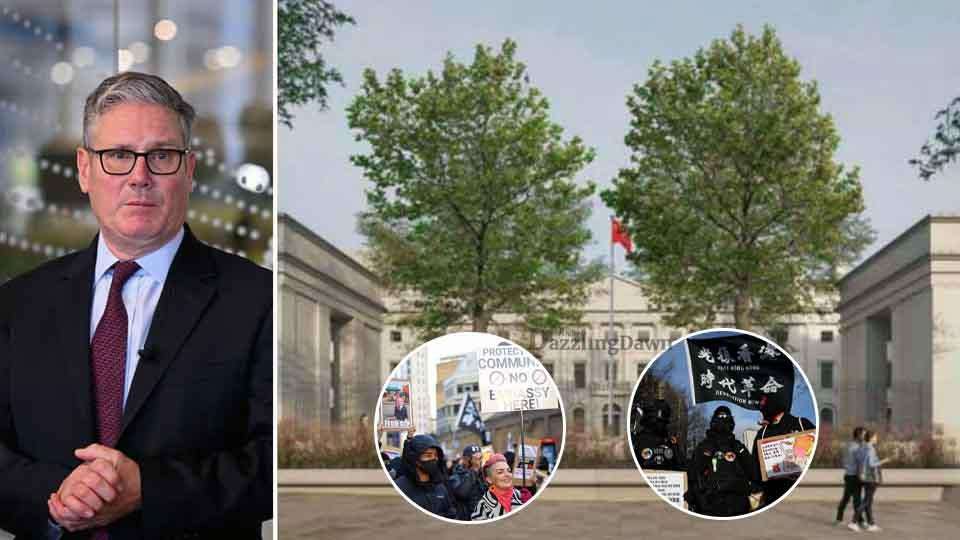
A massive wave of public fury hit the gates of Royal Mint Court yesterday afternoon as over 1,000 protesters gathered to oppose the construction of China’s controversial "super embassy" in the heart of London. The demonstration, a sea of banners and defiant chants, marks a critical tipping point for the British government. With a final planning decision expected by Tuesday, January 20, the Prime Minister faces a grueling choice: prioritize a diplomatic "gift" ahead of his upcoming Beijing visit or heed the escalating warnings from his own MPs about a "launchpad for economic warfare."
The core of the controversy lies in the staggering scale of the proposed 20,000-square-metre complex. While supporters argue that consolidating China’s diplomatic presence into one site allows for easier monitoring by MI5, critics view the move as a permanent fortification of Chinese influence on British soil. Is the Tower Hamlets Chinese ‘mega embassy’ issue becoming just a political flavoured issue as British politicians just talking after few days about it and the local residents are become very stressed about it? For the families living in the adjacent 100 shared-ownership homes, the anxiety is no longer theoretical; they face the daily reality of living in the shadow of a global superpower’s fortified outpost.
The Hidden Chambers and the Threat to the City
Recent revelations regarding the site’s architectural blueprints have sent shockwaves through Westminster. Unredacted plans obtained by the media have unmasked 208 previously "blacked-out" rooms, including a mysterious "hidden chamber" located in the basement. Of paramount concern to British interests is the proximity of this chamber to high-speed fiber-optic cables that serve as the digital backbone for the City of London and Canary Wharf. Shadow ministers have warned that this provides an unprecedented opportunity for physical signal tapping, potentially exposing the UK’s financial nerve center to state-sponsored economic espionage.
National Security Versus Diplomatic Expediency
The debate has split the British security establishment. While some intelligence veterans suggest that modern espionage is now conducted via remote hacking rather than physical outposts, many MPs remain unconvinced. The "Salt Typhoon" hacks and recent interference in the Westminster parliament suggest that Beijing’s reach is already deep. Is the Tower Hamlets Chinese ‘mega embassy’ a real threat for British security and a worry for British spies? The fear is that a mega-facility, staffed entirely by Chinese nationals from the ambassador to the kitchen porters, would create a sovereign "no-go zone" where dissidents could be intimidated or detained without British police intervention.
The Human Cost and Resident Stress
The local community in Tower Hamlets feels increasingly abandoned by the political process. Residents have launched an urgent crowdfunding campaign for a judicial review, arguing the planning process is legally flawed and ignores their right to privacy and safety. They describe the situation as a "David vs. Goliath" battle, where their quiet neighborhood is being transformed into a geopolitical flashpoint. The stress of potential eviction and the constant presence of high-intensity protests have left the local population in a state of perpetual uncertainty, feeling like collateral damage in a high-stakes game of international relations.
Daily Dazzling Dawn Analysis Key Points
The latest analysis from Daily Dazzling Dawn emphasizes that the government's push for approval is heavily influenced by the desire to smooth over relations before the Prime Minister’s end-of-month trip to China. Their report highlights that the Department for Communities and Local Government has repeatedly delayed the decision to avoid political fallout, yet the "national importance" tag allows them to bypass local council rejections. Furthermore, the analysis points out that the Met Police's sudden shift to "not opposing" the site contradicts earlier counter-terrorism warnings regarding the impossibility of policing such a sensitive, high-protest area.