




.svg)
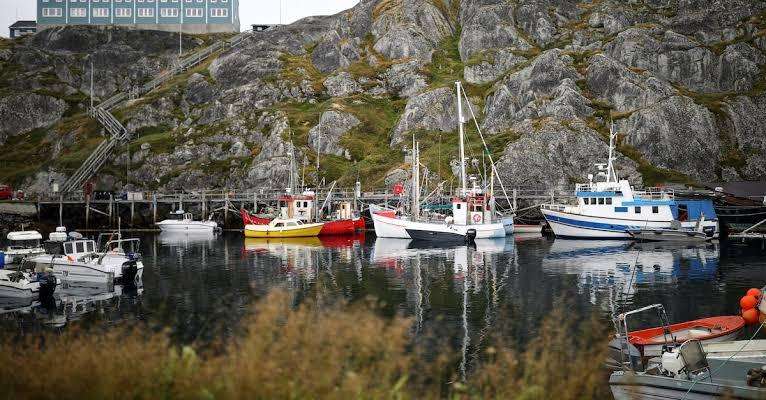
As the morning sun reflects off the towering icebergs of Disko Bay, the sound of progress in Greenland is no longer just the cracking of ice, but the bustling activity of a rapidly diversifying workforce. In 2026, a quiet demographic revolution has reached its peak. For decades, Greenland relied almost exclusively on Danish expertise and local labor; today, the world’s largest island is increasingly dependent on a dedicated wave of Asian migrant workers to keep its economy afloat.
From the high-tech fish processing plants in Ilulissat to the massive airport expansion projects in Nuuk, workers from Bangladesh, the Philippines, India, and Pakistan have become indispensable. Faced with a shrinking local workforce and an aging population, Greenland has turned to the East to fill critical gaps, effectively making Asian migrants the new "propping force" of the Arctic economy.
The Rise of the Bangladeshi and South Asian Community
While Filipino and Chinese workers were the early pioneers in Greenland’s service and fishing sectors, the most striking trend in 2026 is the surge of South Asian talent. Bangladeshi, Indian, and Pakistani nationals are no longer a rare sight in the capital. Current statistics from Statistics Greenland and recent labor reports indicate that the foreign-born population has grown by nearly 20% over the last decade, with Asian nationalities representing the fastest-growing demographic outside of the Nordic circle.
Bangladeshi workers, in particular, have found a unique niche. Driven by climate-related challenges at home, many have sought the stability of the North. While the total number of South Asians remains in the hundreds—a significant figure in a nation of only 57,000—their concentration in essential sectors like construction, hospitality, and specialized cleaning services has given them an outsized impact on the national GDP.
Employment Landscapes and the Hunt for Talent
The primary engine of the Greenlandic economy remains the fishing industry. Companies like Royal Greenland have established robust recruitment pipelines from Asia to staff their coastal factories. However, the "New Greenland" economy of 2026 is broader. Immigrants are now the primary labor force in several key areas:
The Construction Boom: With the completion of new international airports, the demand for skilled tradespeople has skyrocketed. Indian and Pakistani engineers and laborers are increasingly visible on these sites, bringing technical expertise to one of the world's harshest building environments.
Service and Hospitality: As Greenland positions itself as a luxury "frontier" tourism destination, the service sector has leaned heavily on the Asian diaspora. From managing hotel logistics to culinary roles, the community is defining the modern Greenlandic hospitality experience.
Public Infrastructure: In smaller settlements, migrant workers are often the only reason local grocery stores and basic services remain operational, filling roles that younger Greenlanders, who often move to Denmark for education, have left behind.
Settlement vs. Seasonality: The Integration Question
A critical question for Greenland’s policy makers is whether these workers are temporary "economic tourists" or future citizens. Current trends show a shift; while many Asian migrants initially arrived on seasonal contracts, an increasing number are seeking residency extensions.
The Greenlandic government has responded by streamlining work permits for "sectors of high importance." For a new immigrant, the opportunities are vast—provided they can navigate the extreme climate and the high cost of living. Unlike many European nations, Greenland faces a labor shortage rather than a surplus, meaning a skilled worker from Bangladesh or India often finds a warmer welcome in the job market than they might in the crowded capitals of the South.
Life at the Edge of the World: Culture and Heritage
Living in Greenland as an Asian migrant is a study in contrasts. The community has brought vibrant new flavors to Nuuk—spices from Dhaka and Lahore now sit on shelves next to dried seal meat and reindeer. However, the "Greenlandic way of life" is deeply rooted in Inuit heritage, hunting, and a profound respect for nature.
The immigrant community has largely integrated through "quiet contribution." There is a mutual respect born from shared resilience; both the indigenous Greenlanders and the Asian migrants understand what it means to survive and thrive in challenging environments. While the language barrier (Greenlandic and Danish) remains a hurdle, English is increasingly the bridge that connects the Filipino fish processor, the Bangladeshi carpenter, and the local hunter.
An Evergreen Opportunity for the Global North
As we look toward the remainder of 2026, the trajectory is clear: Greenland cannot achieve its dream of greater economic independence from Denmark without its international workforce. The Bangladeshi and South Asian communities are not just "propping up" the economy; they are helping to build a new, modern Arctic state.
For those willing to trade the heat of the tropics for the midnight sun of the North, Greenland offers a professional frontier unlike any other—a place where your work is not just a job, but a vital component of a nation’s survival.


.jpg)