




.svg)
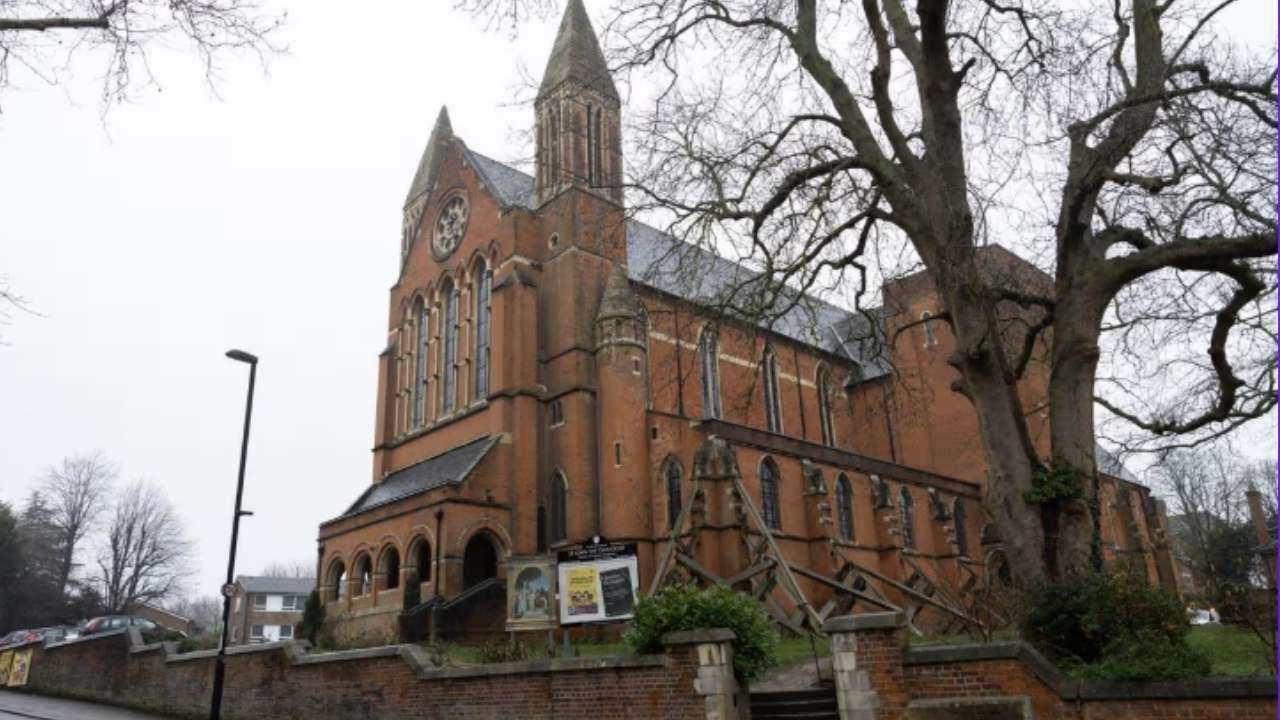
A 19th-century church in Croydon has been slowly sinking and spreading for decades as a result of climate change and unstable ground conditions. St John the Evangelist in Upper Norwood is built on elevated land, but this very position has contributed to its long-term structural problems.
Over the past 30 years, the church has experienced serious deterioration, particularly on its southern side. Since the 1990s, repeated structural issues have required major repair work to stabilise the building. Despite these efforts, ongoing environmental changes mean further repairs are continually needed.
Experts warn that by 2030, more than 40 per cent of homes across London could be affected by subsidence due to increasingly extreme weather. A London Climate Resilience Review, commissioned by Mayor Sadiq Khan, has identified subsidence as a major climate-related threat across the capital.
By 2014, St John’s was moving by up to 25mm in several directions. Large cracks had appeared both inside and outside the church, and parts of the floor had visibly sunk and broken apart. That year, Historic England added the church on Sylvan Road to its At Risk Register, highlighting the urgent need to prevent irreversible damage.
In 2017, a major £750,000 restoration project was carried out to slow the subsidence and strengthen the structure. The work involved installing deep internal and external piling up to 20 metres underground, adding reinforced concrete beams to support the building, and carefully removing and replacing the historic tiled and woodblock flooring.
However, the damage has continued to resurface over time. Father John Pritchard told MyLondon that while buildings naturally shift slightly, the movement at St John’s has been extreme, causing the structure to widen. He said he has witnessed parts of the building break apart over the years and warned that the cost of ongoing subsidence damage runs into the millions.
He added that from the top of the tower, cracks are so large you can see straight through them. Father John expressed frustration that wealthy donors often overlook the church because of its South London location, despite its importance to the community. He stressed that the church supports local schools, children and residents, and deserves recognition and investment.
According to Father John, the building represents hope and dignity for the local area. He said that while Croydon is often portrayed negatively, the church sends a powerful message to the community that they deserve beauty, value and something extraordinary.
The problem is made worse by London’s soft clay soil, particularly in this part of Croydon, which struggles to cope with changing environmental conditions and puts additional pressure on the church’s foundations.
Church warden Jermaine Weekes, who has been part of the congregation for nine years, said the building has suffered severely from weather-related damage. He explained that cracks have appeared throughout the structure, including along the perimeter wall, which helps support the mound the church sits on.
He recalled seeing windows come loose and fall out, and said the church remains a vital community hub despite the damage. The building welcomes people of all backgrounds and generations, provides food support, and is open every day. However, constant repairs place a heavy financial burden on the church, which largely relies on its own fundraising.
Mr Weekes said the congregation regularly fills and paints over cracks, only for them to reappear months later. He hopes the church will be properly recognised for its cultural and social value to South London.
Father John concluded that while subsidence has been painful, it has also strengthened the church’s sense of purpose. He said it forced the community to reflect on the importance of preserving such spaces and reaffirmed their commitment to serving local residents.
During a visit to the church, Minister for Climate at the Department for Energy Security and Net Zero, Katie White, said seeing the damage first-hand made the reality of climate change impossible to ignore. She described the impact on the church and its community as shocking and said witnessing it in person was far more powerful than reading statistics alone.