



.svg)
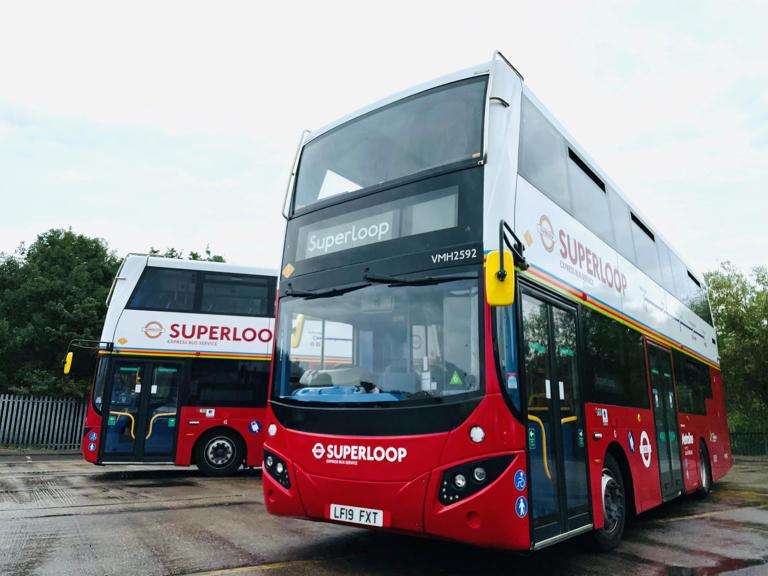
Transport for London is currently undergoing its most significant operational pivot in a decade, moving resources away from the historic core to bolster the "Superloop" orbital network. While much of the public focus has remained on the immediate reduction of services like the 484 and 13, the internal strategy at City Hall is now firmly fixed on "orbital connectivity." This means that for the first time, TfL is betting that growth in the suburbs will offset the permanent 4% decline in central London bus journeys. The Mayor’s office is navigating a delicate financial tightenable, managing a massive £1.2bn annual subsidy while trying to prevent a "transport desert" in areas like Lewisham and Camberwell where Underground access is non-existent.
The Impact on Critical Infrastructure
The most pressing concern for local representatives is no longer just the convenience of the commute, but the accessibility of essential healthcare. The reduction of the 484 frequency to 15-minute intervals has created a specific friction point for staff and patients at King’s College Hospital. Unlike previous cuts that were often blamed on temporary staff shortages, these changes are being framed by TfL as a permanent "efficiency calibration." This indicates that the "new normal" for London transport involves longer wait times in exchange for higher reliability, as schedules are padded to account for the city's worsening gridlock.
Financial Realities and the 2026 Outlook
As the 2025/26 financial year progresses, TfL is projecting a razor-thin operating surplus of just £5m. This fiscal pressure is the true driver behind the "temporary" timetables currently affecting nearly 20 routes near the Marylebone flyover and beyond. While passenger income is currently £112m below initial forecasts, the data suggests a silver lining: the rate of decline slowed to 2% this past January. This marginal recovery is being driven almost entirely by "unique" passengers in outer London, providing the political and economic justification for Sadiq Khan to continue prioritising the SL8 and its sister routes over traditional inner-city corridors.
Navigating the Coming Months
Commuters should prepare for a period of high-frequency "restorations" on specific lines like the 111 and 188, which are being used as test cases for high-capacity suburban travel. However, the trade-off remains stark. In areas like Hackney, daytime services on Graham Road are set to be halved. The next phase of this rollout will focus on integrating the Superloop with existing local lines to solve the "overcrowding gap," a phenomenon recently seen in Woolwich where the removal of the 472 left the 177 route overwhelmed. TfL’s strategy is now a race to balance the books before the next budget cycle without losing the support of the Labour MPs who are increasingly vocal about the social cost of a leaner network.