




.svg)
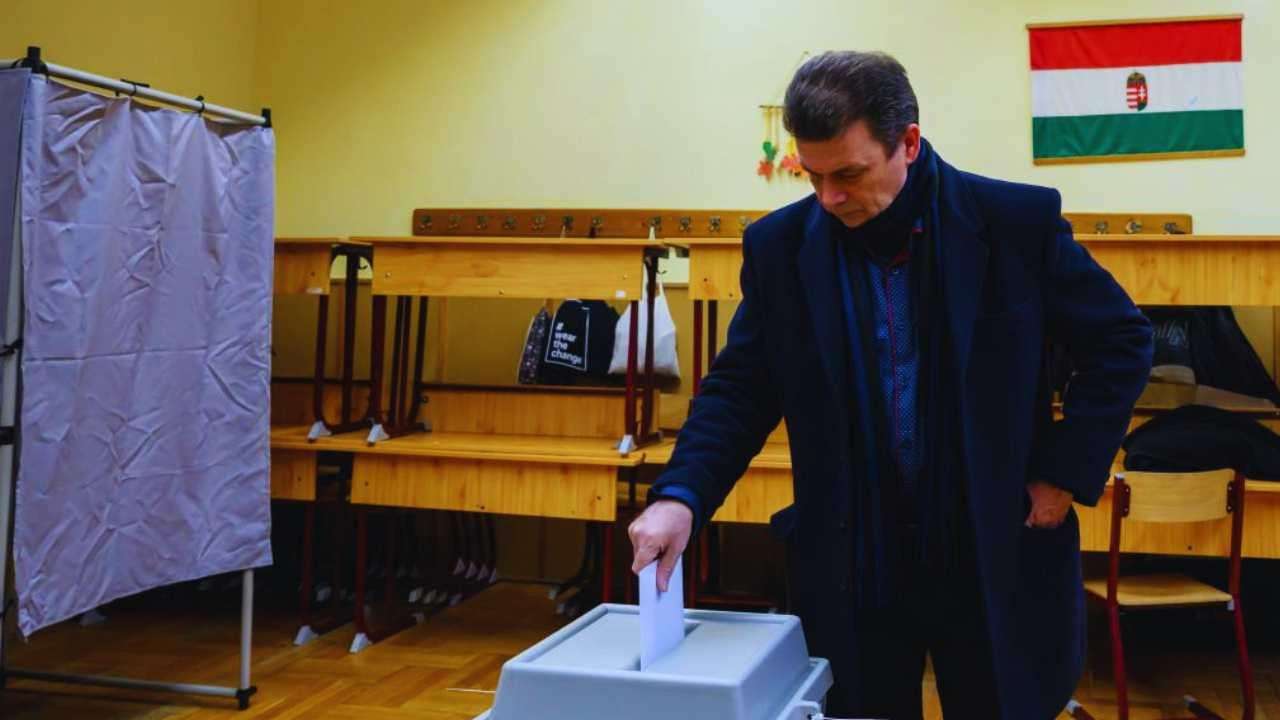
Hungarians headed to the polls on Sunday in a pivotal national election that could bring an end to Prime Minister Viktor Orbán’s 16-year dominance, potentially reshaping the country’s political direction and sending ripple effects across Europe and beyond.
 A woman votes at a polling station in the capital Budapest (REUTERS)
UK Retail Sales Bounce Back Unexpectedly
Orbán, a nationalist leader known for promoting an “illiberal democracy,” has long been a controversial figure within the European Union. His governance style has drawn both admiration and criticism, including support from allies such as former U.S. President Donald Trump and alignment with Russian President Vladimir Putin. However, growing dissatisfaction at home—driven by economic stagnation, rising living costs, and allegations of corruption—has weakened his standing among voters.
Recent opinion polls suggest that Orbán’s ruling Fidesz party is trailing behind the emerging opposition force led by Peter Magyar. Magyar’s centre-right Tisza party has gained momentum, polling between 38% and 41%, putting it ahead by as much as nine percentage points.
Read more: “I Am Here to Win,” Says Viktor Orbán — Who Is Hungary’s Longtime Leader?
Scottish Sikh Activist Jagtar Singh Johal Granted Bail After Almost Nine Years in Indian Custody
Voting for the 199-seat parliament began early Sunday morning and is expected to see a potentially record turnout. Many citizens have expressed a desire for change, citing political tensions and economic struggles. Younger voters, in particular, appear increasingly supportive of Magyar’s message, which focuses on tackling corruption and restoring closer ties with Western allies.
The election is being closely monitored by leaders across the European Union, where Orbán has frequently clashed with Brussels over concerns about democratic backsliding, media freedom, and minority rights. A defeat for Orbán could also have broader geopolitical implications, including unlocking critical EU funding for Ukraine and weakening Russia’s influence within the bloc.
Orbán has framed the election as a decisive choice between “war and peace,” warning that an opposition victory could draw Hungary deeper into the ongoing conflict in Ukraine—claims that Magyar has firmly rejected. Meanwhile, Orbán’s campaign has also emphasized national identity, Christian values, and security concerns.
Despite last-minute policy efforts aimed at younger voters—including tax breaks and housing support—Orbán continues to struggle with low approval ratings among those under 30. Many young Hungarians say their future depends on the outcome, with some even considering leaving the country if the current government remains in power.
As the nation awaits results, analysts caution that the race remains unpredictable due to a high number of undecided voters and electoral factors that could still favor the ruling party. The outcome could range from a narrow victory to a decisive shift in power, marking a potentially historic turning point for Hungary’s political landscape.

_1.jpg)