.jpg)





.svg)
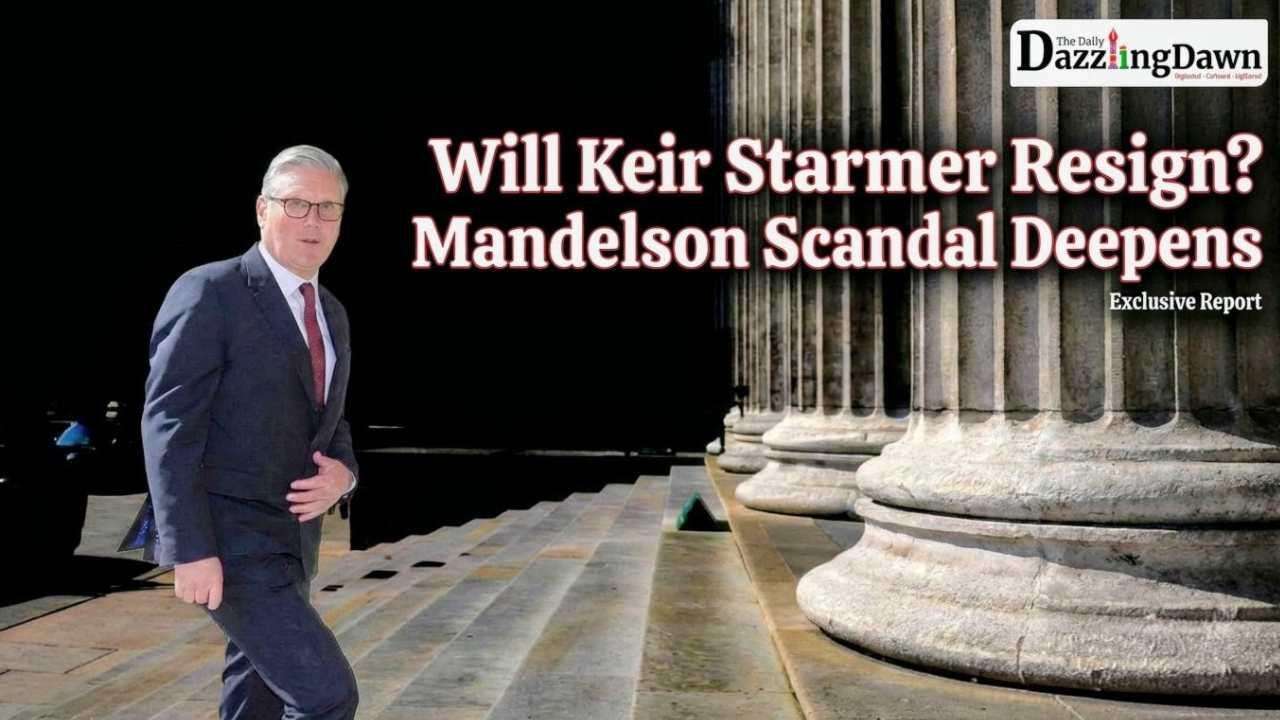
The Prime Minister’s political survival now hinges on a precarious defense against allegations of systemic negligence following the Mandelson vetting failure.
The stability of the Starmer administration is facing its most rigorous test to date as the fallout from Lord Mandelson’s aborted diplomatic appointment evolves from an administrative oversight into a full-blown constitutional row. While Prime Minister Keir Starmer has signaled no intention to resign today, the narrative surrounding his leadership is being aggressively reshaped by emerging evidence of a "dismissive" culture within Number 10 regarding national security protocols.
The crisis reached a new fever pitch following the testimony of Sir Olly Robbins, the recently dismissed Permanent Under-Secretary of the Foreign Office. Robbins informed a select committee that his department operated under "constant pressure" from the Prime Minister’s private office throughout January 2025 to expedite Mandelson’s clearance. This testimony directly challenges the government’s assertion that due process was strictly followed, suggesting instead an environment where political ambition may have sought to bypass established security guardrails.
Read more: Monday Morning: Starmer Resigns or Fights till Friday?
Inside the Labour Party, the atmosphere is one of disciplined but anxious silence. While Cabinet members have publicly rallied behind the Prime Minister’s decision to sack Robbins for an "error of judgment," backbenchers are privately expressing concern over the optics of the scandal. The revelation that the government attempted to find an ambassadorial role for Matthew Doyle—only for him to receive a peerage despite later-disclosed links to a convicted offender—has compounded the sense of a "pattern of behavior" that critics argue prioritizes political patronage over rigorous scrutiny.
The Conservative Party and Reform UK have seized upon these developments with distinct strategies. Reform UK leader Nigel Farage has shifted his critique from the Prime Minister’s honesty to his fundamental competence, arguing that the appointment was made prematurely and against explicit warnings from the Cabinet Secretary. Farage suggested to journalists that the existence of "red flags" was apparent long before formal vetting failed, implying that the Prime Minister’s insistence on Mandelson was a failure of common sense as much as a failure of process.
Meanwhile, the Liberal Democrats have taken the most aggressive stance, with leader Sir Ed Davey explicitly calling for the Prime Minister’s resignation. Davey characterized the evidence provided by Robbins as "incredibly damning," arguing that the scandal is no longer a lapse in judgment but a defining characteristic of the current administration.
The focus now shifts to the impending results of a government-ordered review into the vetting process for political appointees. Critics argue this review is a tactical maneuver to buy time, while Whitehall insiders suggest it may reveal even deeper fractures between the executive and the civil service. The central question remains: did the Prime Minister’s office actively ignore warnings, or was there a genuine communication breakdown? As Downing Street officials now refuse to repeat the phrase "due process was followed," the answer appears increasingly complex.
For the Prime Minister, the strategy is clear: insulate the political leadership by attributing the failure to individual civil servants while praising the wider "hard-working" workforce. However, as more details emerge regarding the "constant pressure" applied to the Foreign Office, the boundary between administrative error and political interference is becoming dangerously blurred.