





.svg)
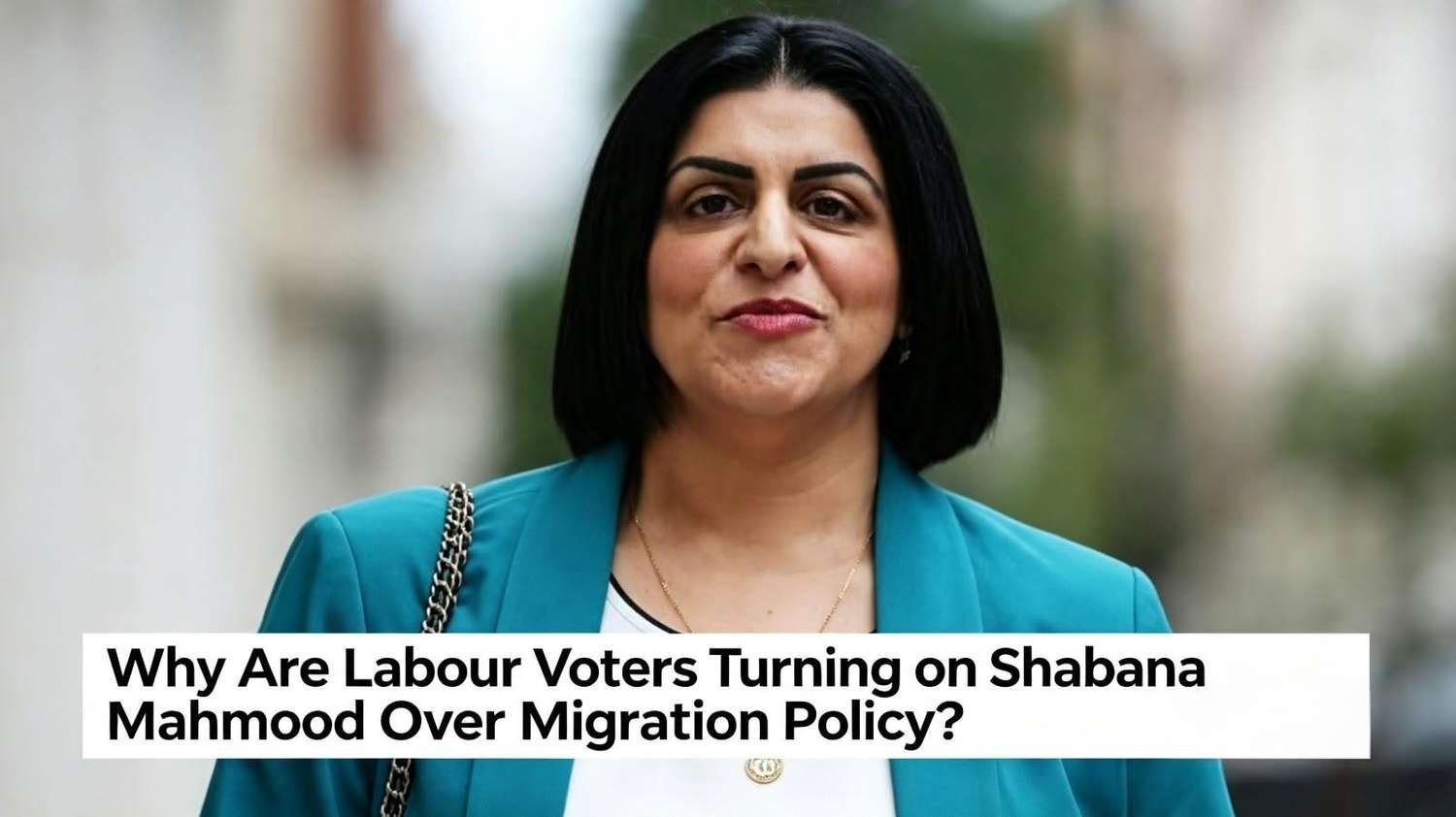
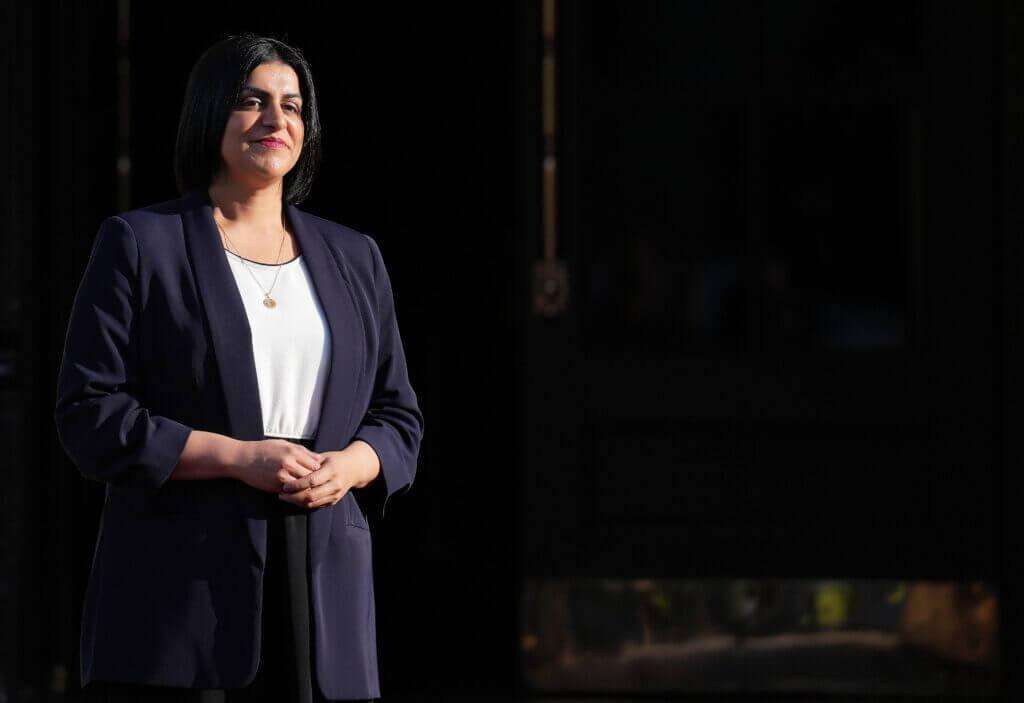
Home Secretary Shabana Mahmood has definitively reasserted her authority over Britain’s evolving border strategy, delivering a sharp rebuke to critics who claim her approach mirrors populist rhetoric. Addressing an audience at the Duchess Theatre, the Home Secretary confronted what she described as an attempt by "white liberals" to dictate the political boundaries of her identity.
Read Also: ILR Firewall: How Mahmood’s Identity Shielding Redefines the Border War
The confrontation followed a series of interruptions by activists who accused the government of adopting a platform indistinguishable from Reform UK. In a candid response, Ms Mahmood told a journalist that she would not allow "tin-pot" detractors to "delegitimise" the concerns of millions of Britons regarding the current scale of migration. She emphasised that her background as a British Muslim woman does not preclude her from enforcing a robust immigration system, stating that those attempting to "put her in a box" should essentially "f*** right off."
New High-Threshold Settlement Standards
At the heart of the Home Office’s new directive is a fundamental shift in how the state grants Indefinite Leave to Remain. Under the most recent updates, the government has formalised a ten-year mandatory waiting period for settlement. This is not merely a temporal requirement but a performance-based one. Applicants must demonstrate English proficiency to A-level standards, maintain a clean criminal record, and prove they are free of debt to the state.
Read more: British Indians Back Nigel Farage in Growing Numbers
For those deemed reliant on public funds, the Home Secretary has signaled an even more stringent path, suggesting waiting periods could extend between 20 to 30 years. This move is designed to protect social housing and the welfare state, with official forecasts suggesting that without these interventions, up to 1.6 million people would soon qualify for access to the public purse. Ms Mahmood told a journalist that the previous system operated on a level of influx comparable to "freedom of movement," which she argues has eroded public consent for the refugee system entirely.
Regularised Refugee Reviews and Next Steps
Moving forward, the Home Office is transitioning away from permanent asylum grants. A new policy of "temporary protection" will see refugee status reviewed every 30 months. If a migrant’s home country is reclassified as safe during this window, the individual will be expected to return. This "rolling review" system is the primary mechanism the government intends to use to deter small boat crossings by removing the guarantee of a permanent life in the UK.
Internal pressure remains high, as trade unions and certain sectors of the Labour backbench have already begun mobilising to dilute these measures before the next legislative session. However, the Home Secretary’s recent rhetoric suggests the government is leaning into these tensions rather than retreating.
The Statistical Reality of 2026
The policy shift arrives against a backdrop of fluctuating migration figures. While net migration peaked at 944,000 in the year ending March 2023, it has seen a sharp decline to 204,000 as of September 2025. This decrease is largely attributed to a record-breaking volume of departures, the highest in a century. Government data confirms that between 2021 and 2024, approximately one in every 30 UK residents arrived in the country, a statistic the Home Secretary uses to justify the necessity of her "foundational" reforms.