





.svg)
A silent friction has emerged at the intersection of British consumer demand and corporate risk management, as the rapid influx of Chinese-manufactured vehicles into the United Kingdom confronts a wall of underwriting resistance.
Fresh market intelligence confirms that while Far Eastern brands are achieving historic sales volumes on British soil, the domestic insurance ecosystem is quietly disengaging from the risk. The structural disconnect has left thousands of motorists facing a stark reality: vehicles purchased for their competitive retail pricing are becoming either prohibitively expensive to operate or entirely uninsurable.
An investigation by the Daily Dazzling Dawn reveals that this resistance is driven not by the mechanical integrity of the vehicles, but by a severe deficit in actuarial data and unresolved repair logistics. Traditional underwriting relies on decades of historical claims, localized crash-testing analytics, and established component supply chains. When a completely new corporate entity enters the British market, insurers are stripped of these predictive metrics, choosing instead to price their uncertainty directly into the premium or withdraw coverage entirely.
The Actuarial Wall
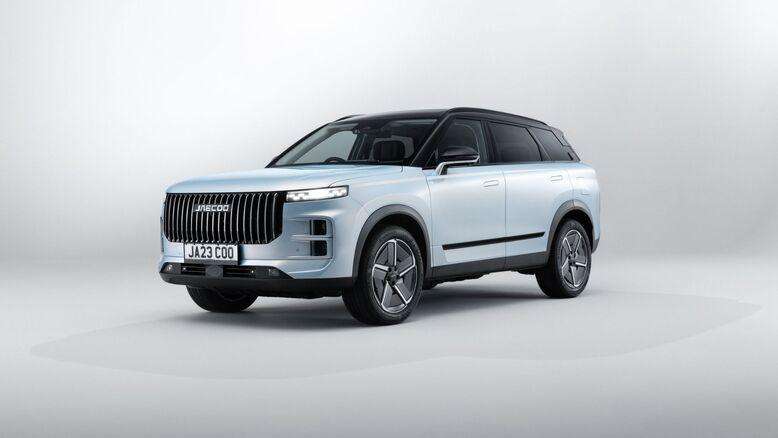
The scale of the underwriting retreat was recently exposed through localized profiling conducted by automotive trading platform Carwow, which sought coverage for a 27-year-old motorist residing in Hampshire across four prominent new market entrants: the hybrid Jaecoo 7, the electric XPeng G6, the BYD Seal U, and the Skywell BE11.
The corporate response from major UK insurance syndicates was highly fractured. Axa declined to provide terms on any of the four models evaluated. Hastings Direct restricted its risk exposure entirely, opting to offer coverage solely for the BYD Seal U. Direct Line refused to underwrite two of the vehicles, while Admiral rejected one. Aviva, which recently expanded its market dominance through the acquisition of Direct Line, remained the sole major provider willing to offer terms across all four platforms.
For consumers who do secure coverage, the financial penalty is substantial. The Daily Dazzling Dawn has verified that the average annual premium for these newer Far Eastern models stands at £901, representing a fixed £255 premium over traditional internal combustion alternatives. In specific cases, the disparity is acute. Insuring a hybrid Jaecoo 7 averaged £1,103 annually, nearly double the £577 required for a petrol-powered Skoda Karoq. Similarly, the XPeng G6 attracted an average quote of £936, far exceeding the £639 benchmark of a conventional Hyundai Kona. The BYD Seal U cost an average of £876 compared to £730 for a petrol Kia Sportage, while the Skywell BE11 commanded a £685 premium against the £638 required for a petrol Ford Kuga.
The Logistics Bottleneck
Beyond the absence of historical claims data, the insurance gridlock is heavily exacerbated by structural vulnerabilities in the UK's automotive repair network. Risk intelligence figures indicate that repair-related costs accounted for 64% of total domestic insurance claims, representing a £1.9 billion drain on the sector.
The primary operational vulnerabilities involve structural component design and localized parts distribution. Traditional European and Asian manufacturers maintain deep regional warehousing networks within the UK. Conversely, newer entrants often require critical replacement parts, such as body panels or specialized electronic modules, to be shipped directly from central hubs in Asia. During these transit windows, insurers remain liable for secondary costs, including courtesy vehicle provision, which can quickly exceed the profit margin of the policy itself.
Technical assessments from Thatcham Research highlight that contemporary vehicle construction methods present distinct challenges for high-voltage battery casings and advanced sensor arrays. Minor low-speed impacts that would result in a straightforward component replacement on a traditional vehicle are frequently resulting in premature total loss write-offs because standardized, modular repair protocols do not yet exist for these newer platforms. The cost of individual replacement parts has also experienced severe inflation. Standard components like advanced LED headlamps have risen to over £1,500, while basic body panels have seen sharp increases, forcing underwriters to take an inherently conservative stance when evaluating unfamiliar vehicle architectures.
Recognising that this insurance bottleneck threatens to stall their Western expansion, major manufacturers are shifting away from pure showroom sales toward structural integration with British institutions.
In a significant move designed to restore market confidence, BYD has entered into a landmark 12-month agreement with Thatcham Research. The partnership focuses on embedding insurability directly into the early stages of vehicle design, optimizing models to minimize damage from low-speed collisions and establishing certified UK-approved repair networks.
Industry analysts suggest this friction follows a historical pattern, drawing direct parallels to the arrival of Japanese imports in the 1970s and South Korean brands in the 1990s, both of which faced initial insurance penalties before establishing deep local footprints. Automotive representatives confirmed that their technical teams are actively cooperating with domestic insurers to accelerate the sharing of diagnostic data and lower total cost of ownership metrics. Until these data gaps close and parts pipelines mature, the initial savings enjoyed by buyers at the dealership will continue to be eroded at the insurance broker's desk.