





.svg)
The political landscape surrounding the newly unveiled Immigration and Asylum Bill presents an intricate structural paradox for Home Secretary Shabana Mahmood. While the government attempts to signal a decisive departure from past enforcement failures through a framework based on contribution and legal compliance, the operational realities across British public services threaten to stall the momentum. Central to the legislative package is the implementation of a single "core protection" model, which reduces the baseline refugee residency permission from 60 months to 30 months, and the introduction of a strict "visa brake" targeting nations deemed high-risk for visa exploitation.
However, the mechanism requiring asylum seekers to financially contribute to state-provided accommodation once they enter the workforce is already meeting fierce structural skepticism. Legal analysts and administrative experts question how a population navigating temporary 30-month status extensions will find stable, higher-income employment, particularly when facing a projected default 20-year qualifying period for permanent settlement. This introduces a friction point within the domestic economy: the policy risks creating an underclass of long-term temporary residents, limiting their economic mobility while simultaneously demanding tax-yielding fiscal contributions.
The Frontline Deficit
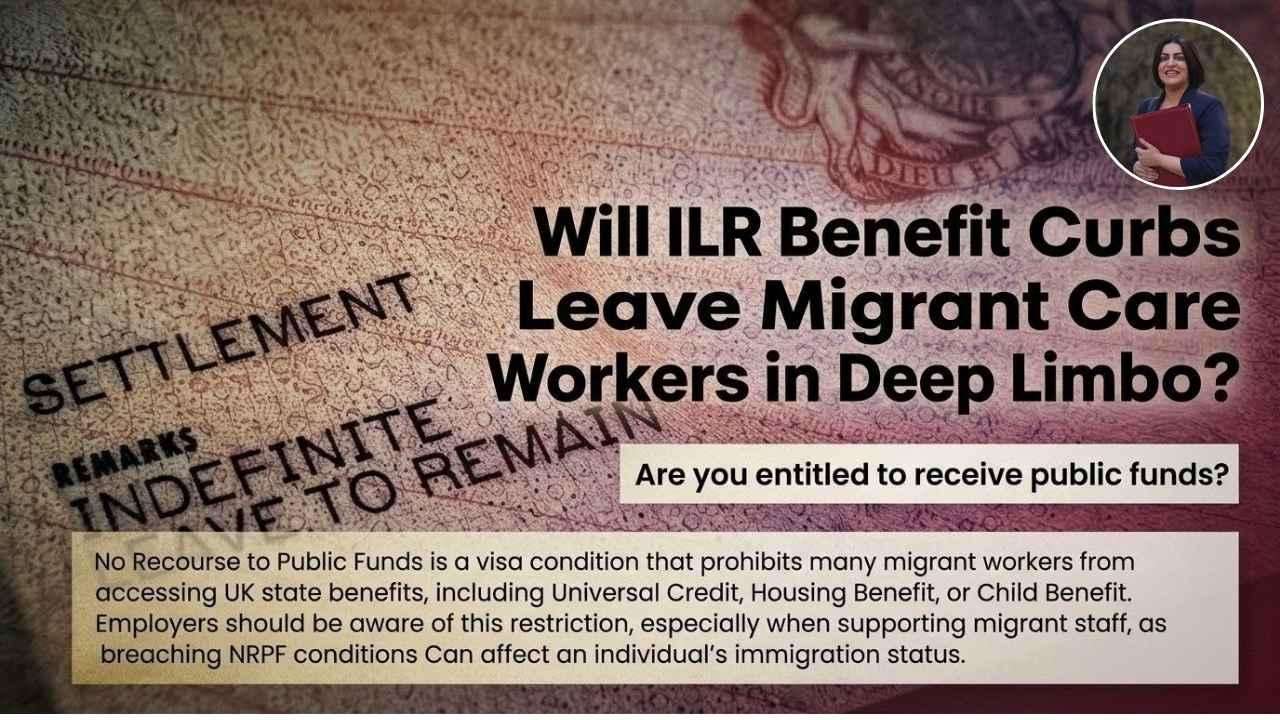
Beyond the borders, the immediate consequence of tightening the wider migration framework is manifesting acutely within the United Kingdom's adult social care infrastructure. In an effort to curb net migration, the Home Office has aggressively scaled back the health and social care visa pathways under the skilled worker scheme and revoked numerous corporate sponsorship licences following compliance investigations. Frontline reporting reveals that these regulatory interventions have caused an 81% decline in health and care visas issued to overseas applicants.
This reduction has left thousands of active care workers in immediate professional limbo. Under current statutory guidance, an international healthcare worker whose employer loses a sponsorship licence is bound by a strict 60-day deadline to secure an alternative licensed sponsor or face mandatory departure from the country. This system links an individual's legal status directly to a single employer, which workforce representatives note discourages staff from raising concerns regarding workplace exploitation or substandard conditions.
With international staff constituting nearly a third of the independent care workforce, the sudden contraction of this labor supply threatens to destabilise local care provisions. While regional initiatives—such as the devolved £500,000 displaced social care workers' scheme—attempt to mitigate the damage by matching stranded migrants with alternative providers to recapture lost frontline care hours, these localized interventions cannot fully offset a nationwide structural deficit.
The Parliamentary and Judicial Quagmire
The true test for Mahmood will be navigating the legislative passage of the Bill through an increasingly fractious Parliament. By opting for primary legislation rather than administrative policy tweaks, the government intends to insulate these reforms from domestic judicial review. A statute thoroughly debated and passed by Parliament carries constitutional weight that domestic courts cannot easily set aside.
Nonetheless, severe turbulence awaits on the backbenches. The Left of the Labour Party remains deeply uncomfortable with shifting toward temporary refugee status and restricting asylum support, viewing these measures as a capitulation to right-wing rhetoric. Conversely, the opposition benches argue that the abolishment of traditional immigration judges in favor of executive-appointed "professionally trained adjudicators" undermines judicial independence and will do little to accelerate the forced removal of individuals who have exhausted all appeal avenues.
Furthermore, international legal entanglements persist. Even if the Bill succeeds in narrowing the domestic interpretation of Article 8 of the European Convention on Human Rights (the right to private and family life) to prevent what the Home Office terms "belated modern slavery presentations," it remains bound by international law. European foreign ministers gathering to discuss ECHR frameworks may offer a platform for multilateral reform, but until treaties are formally renegotiated, the Strasbourg court retains the ultimate power to halt deportations.
The immediate focus shifts to the upcoming parliamentary committee stages, where backbenchers are preparing amendments to challenge the 20-year settlement pathway and the replacement of the immigration judiciary. Concurrently, the Home Office is under intense pressure to deliver tangible results from its "one-in, one-out" returns pilot with France and its broader diplomatic negotiations regarding third-country asylum processing hubs, following the recent multilateral endorsement by Council of Europe members.
Operational delivery will ultimately dictate the success of the policy. If the closure of visa pathways continues to deplete the social care sector before domestic recruitment drives can plug the vacancies, the government will face a severe domestic crisis. Mahmood must prove that her department can efficiently process claims and execute lawful removals without causing a catastrophic breakdown in the delivery of essential public services at home.
An investigative assessment by daily dazzling dawn sheds light on the reality that writing legislation is simpler than managing its real-world fallout. A social care professional who migrated to the UK under the skilled worker route shared their experience after their employer’s sponsorship was abruptly terminated. "I discovered the decision via an automated notification in my inbox, not from my employer," they told a journalist. "The entire foundation of the life I was building here vanished instantly. I was applying for dozens of roles daily, but without an active sponsor, responses never came while the bills continued to accumulate. We came here with the genuine intent to work and support the vulnerable, yet we are left feeling entirely disposable."
Industry leaders warn that the systemic pressure is reaching a tipping point. As a senior care association chief executive told a journalist: "The current trajectory risks a severe contraction in service delivery, meaning vulnerable individuals face having their community care packages systematically reduced or withdrawn entirely."
An immigration policy shift cannot succeed on rhetoric alone; it requires functional administrative machinery that balances border enforcement with the preservation of essential public services.