





.svg)
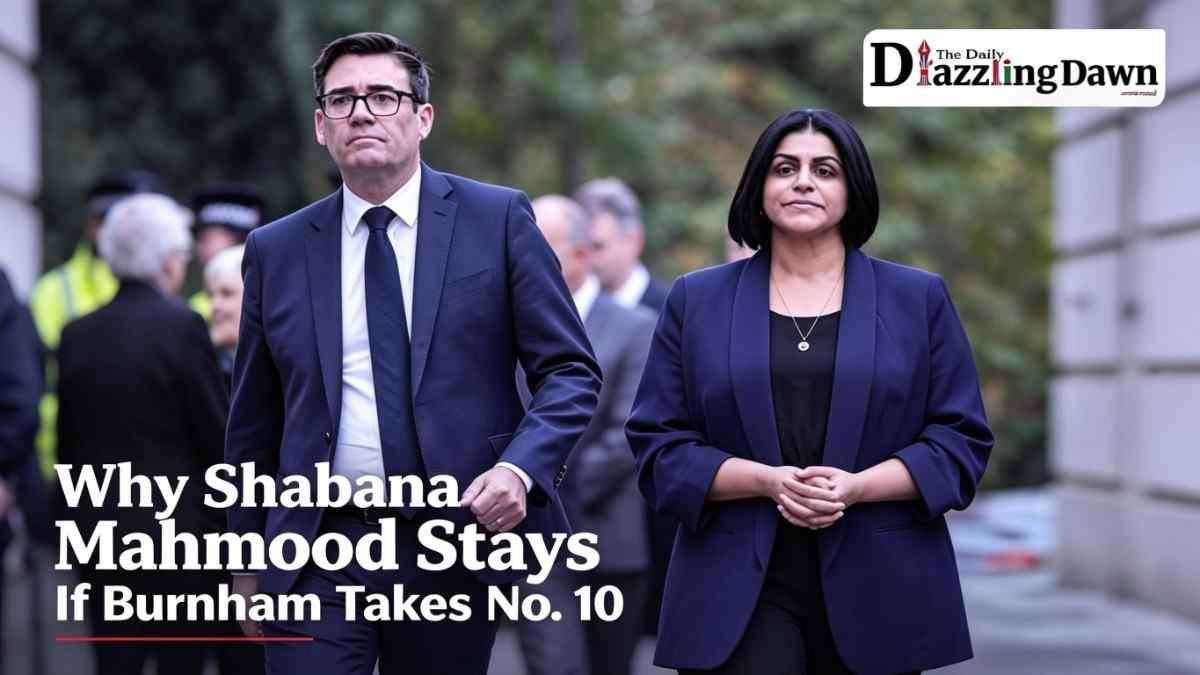
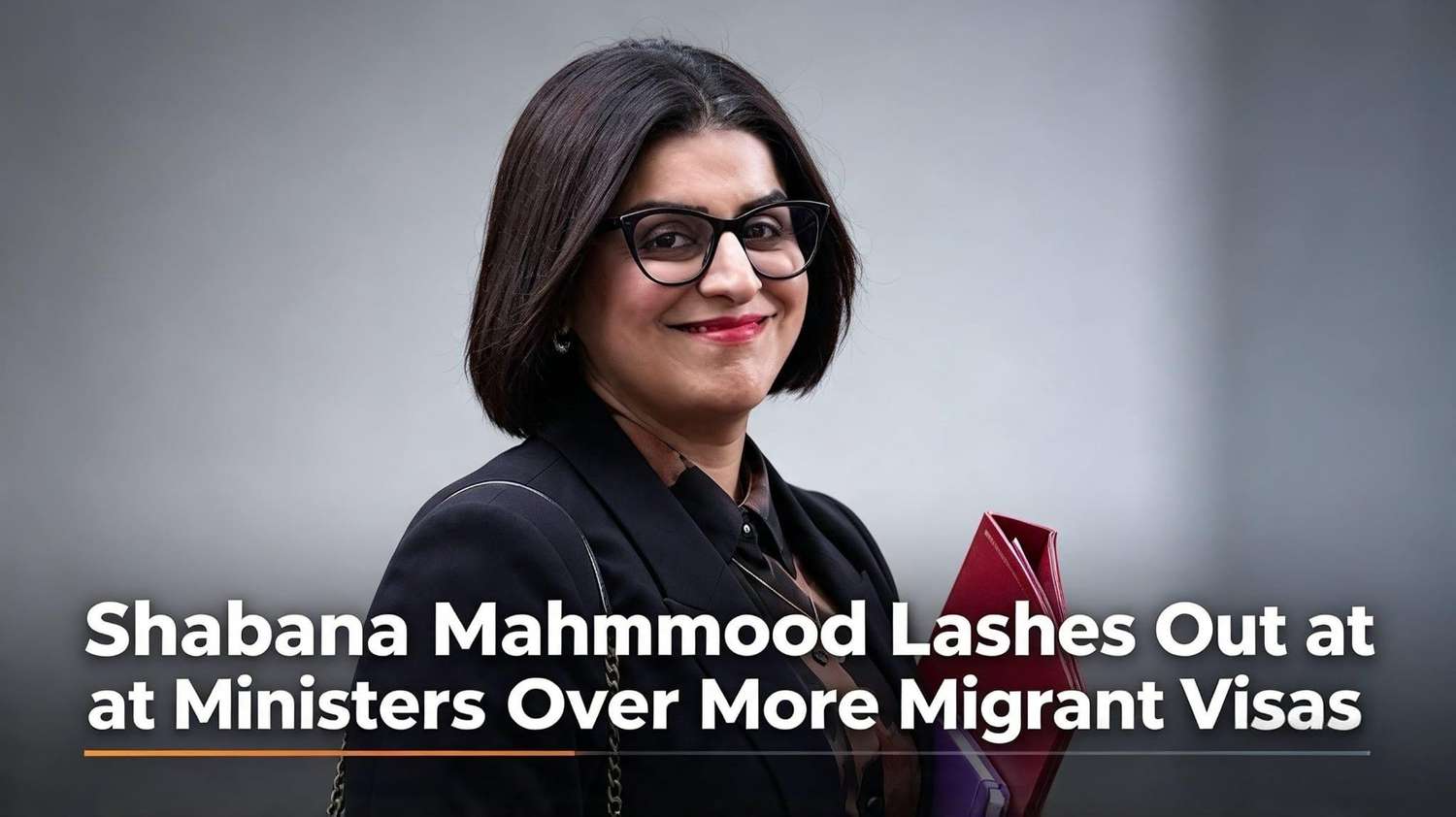
Home Secretary’s Draconian Visa Controls Become a Battleground for the Soul of the Ruling Party-The architectural foundations of British migration policy are undergoing a profound, high-stakes recalculation, exposing a significant ideological shift in the battle for the Labour Party's future. As Greater Manchester Mayor Andy Burnham launches his official leadership campaign—stepping back into the Westminster orbit via the upcoming Makerfield by-election—his calculated endorsement of Home Secretary Shabana Mahmood’s stringent immigration and asylum overhauls has upended the traditional boundaries of factional loyalty. Far from a routine policy alignment, political insiders suggest this tactical alliance reveals why a potential Burnham-led government would not only keep Mahmood in her post but rely on her as its ideological anchor.
An investigation by the Daily Dazzling Dawn reveals that behind closed doors, this relationship is born out of electoral self-preservation. Facing a severe electoral threat from a surging Reform UK party—which captured fifty percent of the vote across Makerfield's wards in recent local elections—Burnham has recognized an existential reality. To rebuild Labour’s fractured relationship with provincial, working-class communities, he must discard his old "Open-Borders Andy" moniker and embrace a socially conservative "Blue Labour" identity. Mahmood’s aggressive policies provide the exact shield he needs. By supporting her strategy of transforming refugee status from permanent resettlement to a temporary thirty-month sanctuary, and extending the pathway to Indefinite Leave to Remain from five to ten years, Burnham is signalling to traditional heartlands that he will govern with cultural conservatism.
However, this alliance faces an immediate, volatile test. High-ranking sources have confirmed a growing cabinet dispute between Mahmood and Foreign Secretary Yvette Cooper. The tension centers on a sweeping "visa brake" enacted by the Home Office, which unilaterally halted study and work visas from conflict-affected nations, including Afghanistan, Sudan, Myanmar, and Cameroon. The policy was designed to close what Mahmood termed a "back door to automatic asylum," citing data that thousands of individuals entering on legal student visas later submitted asylum claims.
The Daily Dazzling Dawn has obtained a joint letter sent directly to the Home Secretary from elite higher-education associations, representing prominent institutions such as the University of Cambridge, Manchester, Oxford, and Imperial College London. The leadership of these universities strongly protested the inclusion of Chevening scholars—a prestigious, government-funded program for outstanding global leaders—in this draconian ban, labelling it an unproportionate, blunt measure against individuals who have already passed rigorous state vetting. Cooper reportedly intervened, raising urgent humanitarian concerns for vulnerable female scholars from Kabul and Khartoum. Yet, demonstrating her uncompromising authority, Mahmood flatly rejected the Foreign Secretary's appeals, insisting that no loopholes will be tolerated.
This unyielding stance explains exactly why Burnham needs Mahmood in his corner. Should Burnham successfully navigate the Makerfield by-election and trigger a formal leadership challenge under party rules, preserving Mahmood as Home Secretary becomes non-negotiable. She possesses the authentic working-class, Northern-adjacent appeal and the steel required to absorb the inevitable backlash from over one hundred progressive Labour backbenchers, trade unions, and senior figures who have condemned the reforms as "un-British." For Burnham, Mahmood is the ultimate mechanism to neutralize the Reform UK challenge while maintaining economic reindustrialization goals. Their relationship, described currently as a mutually beneficial pact, is designed to endure. By anchoring his prospective premiership to her ironclad border policies, Burnham is betting that cultural conservatism is the only path left to secure the keys to Downing Street.
Key Policy Reductions-
The Visa Brake Escalation-The Home Office has suspended entry routes for specific high-risk nations to counter a reported surge in international students transitioning to asylum status. This emergency mechanism remains active despite intense pressure from the university sector to safeguard elite scholarship pathways.
Earned Settlement Extension- The qualifying residency period required for foreign workers to achieve permanent settlement has doubled. Under the new framework, applicants face prolonged compliance scrutiny, strict tax-contribution audits, and mandatory English language benchmarks.
Temporary Sanctuary Transition- The UK has formally abandoned the permanent resettlement model for successful asylum seekers. Refugee protections have been reconfigured into rolling thirty-month periods, with future status conditional on changing safety dynamics in origin states.

.jpg)