






.svg)
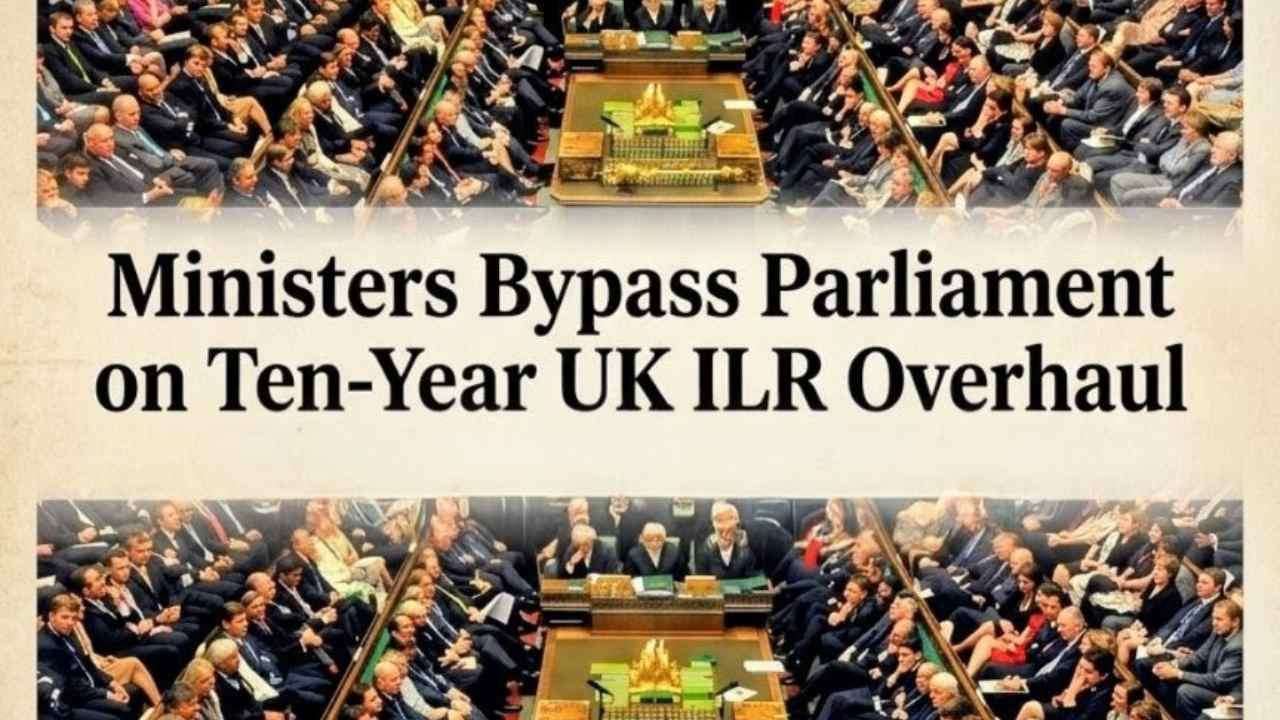
A profound constitutional shift is quietly unfolding within the corridors of Westminster, exposing a stark reality: Parliament remains remarkably powerless to intercept or amend the most sweeping changes to UK immigration architecture in half a century. As the Home Office prepares to execute a radical overhaul that doubles the standard qualifying period for Indefinite Leave to Remain from five to ten years, an investigation reveals that this monumental tightening of borders will bypass a parliamentary vote entirely, exploiting executive mechanisms established under the Immigration Act 1971.
This systemic isolation of parliamentary scrutiny forms the backdrop to an escalating political arena, where the incoming leadership race to succeed Keir Starmer has fractured into a bitter ideological battle over the economic utility of foreign nationals. In an exclusive disclosure delivered directly to journalists ahead of a seminal address at the Institute for Public Policy Research, leadership hopeful Wes Streeting unveiled an aggressive global talent strategy designed to exploit geopolitical shifts across the Atlantic. Streeting told journalists that Britain must aggressively reposition itself as a global sanctuary for scientific advancement, responding directly to an American administration perceived as hostile to foreign expertise.
Read More: UK Immigration Fractures Under Kebab Visa Exploitation and Street Unrest
We should open our door to the best and the brightest," Streeting told journalists. "Trump is saying to world-leading scientists, engineers, AI experts – you’re not welcome here. I would tell them: we’ll welcome you with open arms. Voters who want lower levels of migration aren’t opposed to inviting tomorrow’s Nobel prize winners to make their discoveries here in Britain.
Streeting’s proposed framework outlines a dedicated £250 million global talent programme operating directly out of Number 10, targeting the recruitment of 20,000 elite scientists and artificial intelligence specialists within the next three years. However, immigration specialists speaking to journalists have highlighted a severe structural contradiction between this high-skilled recruitment drive and the imminent reality of the Home Office's "Earned Settlement" model, which is scheduled for full implementation. Under the incoming rules, permanent settlement will cease to be an automatic reward for temporal residence, transforming instead into a highly conditional, merit-based matrix heavily weighted toward high taxable income and stringent social integration metrics.
The incoming structural changes introduce an unprecedented mechanism of variable timelines, where the new ten-year baseline can be compressed or extended based on a migrant's quantified "net contribution" to the state. High-earning individuals generating taxable incomes exceeding £125,140 can accelerate their path to permanent residency to just three years, while frontline medical professionals and teachers will retain a five-year pathway. Conversely, the framework penalises reliance on public infrastructure; even temporary recourse to public funds can extend the required residence period to fifteen or twenty years, while complex immigration histories could see the path to settlement deferred by up to three decades.
Legal analysts have expressed deep anxieties to journalists regarding the retrospective application of these rules, warning that thousands of high-skilled professionals currently on the traditional five-year path will find the goalposts moved mid-journey. This sudden shift is expected to trigger a wave of high-profile public law litigation centered on breaches of legitimate expectation and human rights. Despite the profound legal and social implications of these measures, the executive's reliance on secondary legislation means the rules will take effect automatically unless an absolute statutory motion to annul is passed—a parliamentary intervention that has only succeeded twice in the last fifty years.
The tension over border control has reached a boiling point in the crucial Makerfield byelection, where a heavily fractured right-wing vote is fundamentally altering the political calculations of both major parties. In a fiercely combative bid to consolidate the anti-immigration electorate, Reform UK leader Nigel Farage published an extensive manifesto on his newly launched Substack channel, advocating for a total prohibition on foreign nationals accessing social housing and welfare. Farage told journalists that under his proposed policies, any foreign national unable to transition to private sector accommodation within a three-month grace period would face swift administrative deportation.
The rhetorical escalation from the political right has drawn sharp rebukes from institutional figures and civil society leaders, who warn of severe systemic consequences for the UK housing market and local authorities. Speaking to journalists, the chief executive of the housing charity Shelter, Sarah Elliott, fiercely condemned the proposals, stating that such divisive plans risk escalating homelessness, placing unsustainable pressure on local councils, and tearing apart the foundational fabric of local communities. The cultural secretary, Lisa Nandy, similarly told journalists that the public had grown exhausted of anger and division, urging a return to constructive policy debate.
Despite Farage's intensified rhetoric, internal polling data leaked to journalists indicates that Reform UK’s electoral prospects in Makerfield are being significantly undermined by an aggressive challenge from the more extremist Restore Britain party, led by former Reform MP Rupert Lowe. Recent surveys conducted by More in Common and the UCL Policy Lab place the Labour candidate, Andy Burnham, securely in the lead at 45 percent, with Reform trailing at 40 percent and Restore holding a potentially decisive 8 percent. This fragmentation of the right-wing base has triggered panic among campaign strategists, especially following investigations revealing that prominent Restore activists recently attended a hard-right "remigration" summit in Portugal.
As the operational deadline approaches, the British immigration system stands on the precipice of its most volatile transformation in modern history. This investigative report by the Daily Dazzling Dawn underscores that while executive powers ensure the Home Office can reshape the socio-economic demographics of the nation without traditional legislative consent, the long-term stability of this strategy remains highly suspect. The brewing legal challenges against retrospective rule changes, combined with intense political pressure to fill critical shortages in the technology and healthcare sectors, suggest that while Parliament may be effectively sidelined, the true battle over who gets to call Britain home will ultimately be decided in the courts.